Why Worship? Why Worship Together?

It’s Sunday morning, and we gather together as Christians to worship God.

The specific experiences are as varied as the number of churches, but most worship services have a few things in common.

We sing together—sometimes off-key, sometimes hymns too slowly, sometimes choruses too repetitively, too repetitively, too repetitively.

We pray together—sometimes faltering, sometimes mumbling, sometimes with too little genuine feeling, sometimes with too much “Lord, we just, Lord, want to just ask, Lord…”

We break bread together—not all of us every Sunday, not always in a ritual, sometimes with too little ritual.

We read Scripture and reflect on it together—sometimes with poor exegesis, sometimes with too little Jesus, sometimes going past noon with dinner waiting in the crockpot.

Why exactly do we do all these things, worshiping in these and other ways Sunday morning after Sunday morning? And is this “worship” really all that important?

Revelation 4-5 speaks directly to these kinds of questions—and gives us some surprising and challenging answers.

Let’s start with the big picture, stating the obvious: Revelation 4-5 is all about worship. (That much at least everyone can agree on.)

But notice where this vision is in the book of Revelation. Revelation 1 is introduction, setting up the rest of the book. Revelation 2-3 are specific letters to the seven specific churches Revelation is written to—in a sense still introduction, setting the stage for the main act. And then we hit Revelation 4-5—the first major vision John sees, determining the course of everything else that follows.

The first major vision at the heart of the book—and it’s all about worship.

This tells us that worshiping God is an essential activity. And not just worshiping God individually—worshiping God collectively, gathering together with others in worship, is essential. It grounds our way of life. It sets the tone for everything else.

But why is this? And how exactly does this work?

Let’s focus in on some of the details of this vision.

At the centre of it all, the object of all this worship, is God, seated on his heavenly throne, ruler over all creation. God, the Indescribable One, only imagined in colours and light.

Elder 2Four “living creatures” are immediately around the throne, one on each side: a lion, an ox, a human being, and a flying eagle. These represent all living things—later they are heard saying “Amen” to the declaration of “every creature in heaven and on earth and under the earth and on the sea, and all that is in them” (that’s pretty comprehensive). All creatures of our God and king, giving honour and praise to God.

Twenty-four “elders” surround them, seated on thrones, dressed in white robes with golden crowns on their head. These represent all God’s people, the twelve tribes of Israel and the twelve apostles of Christ—as we hear later when the twelve tribes and twelve apostles are brought together in the gates and foundations of the New Jerusalem. All God’s people, bowing in reverence to God, singing God’s praises.

All creation, all God’s people, from the beginning of the world until its end, worshiping God.

So here’s one answer to our question of “why worship God”: Our collective worship is a participation in something fundamental to all creation, something that all creation is intrinsically engaged in.

The birds of the air, the flowers of the field—they honour their Creator simply by being what God created them to be, doing what God created them to do. Simply by being as God made them to be, existing as God made them to exist, all living things worship God.

Likewise, humans honour our Creator simply by being the way God made us to be, living the way God made us to live. We glorify God in our humanness, by being fully human. Simply by being as God made us to be, existing as God made us to exist, we worship God.

This ceaseless praise of God is intrinsic to creation; it is the very grain of the universe.

And so we are encouraged to see our worship together as a participation in this eternal, ceaseless worship of God by all creation and all God’s people. We are encouraged to see our worship together as giving voice to this never-ending, underlying rhythm of worship that is happening all around us.

But there’s more.

As we keep moving through this vision in Revelation 4-5, we hear some very specific declarations of praise. As the elders and living creatures give voice to the worship of all creation, their voice says some specific things.

God is holy. God is other. God is unlike any other. God is unique.

God is almighty. God is the source of all true power, power that creates and gives life.

God is eternal. God was. God is. God will be.

God is Creator. All that is, is because God is.

God is Redeemer. All that is good, is good because God loves.

Elder 1Here, then, is a second answer to our question of “why worship God”: Our collective worship is worldview-shaping, crafting the lenses through which we see our world and understand our place in it.

Good worship—worship in both spirit and in truth—is instructive. It teaches us; we learn from it.

Through our worship together we understand God’s role in the world as Creator and Redeemer. All things exist because God is. And although there is hurt and brokenness in our world, and in ourselves, all things can be redeemed because God loves. We learn this in part through our worship together.

Through our worship together we understand the world as God’s beloved creation. God does not hate us. God does not despise the work of his hands. God loves all creation, and imbues it with his grace and glory. We learn this in part through our worship together.

And through our worship together we understand our role as redeemed priest-kings and priestess-queens extending God’s reign throughout the earth. God calls us as God’s people to a particular task, a particular way of being in the world. God calls us to faith, to hope, to love. We learn this in part through our worship together.

Revelation 4-5 gives us a third answer to the question of “why worship God,” and it’s the most surprising one of all: Our collective worship is a profoundly political act; it is a powerful statement about how we should order our lives as human societies.

It’s all too easy for us to pass over the significance of the “throne.” For us, thrones are something from ancient times or fairy tales, or from the Bible. Of course God sits on a throne! God is king, after all!

But when was the last time you saw a king or a queen or an emperor or empress actually sitting on a throne, wielding some real power?

The “throne” doesn’t really mean much to us. But no one in the time of Revelation would miss the significance: the throne was a thoroughly political symbol, even the most potent political symbol one could use. And, in a world filled with absolute claims to absolute power, it was also about as subversive as you could get.

“Worship” is about “ascribing worth”; it is about declaring value. Worship is an expression of devotion and commitment, an expression of allegiance. When we come together and “worship God,” then, we are declaring our allegiance to God above all other claims to power and authority in the world.

But this vision is even more politically subversive than that.

Lion-Lamb 2In Revelation 5 we see a scroll, and we’re told that “no one can open the scroll”—no one in heaven or on earth or even under the earth, no creature, no human being, no human ruler, no angelic being. It’s not clear what the scroll represents—the title deed to the universe, perhaps, or the unfolding of human history. Either way, it’s the kind of thing that any good Roman would expect the emperor to rightfully possess and be able to open at will.

Yet it is the “Lion of the tribe of Judah” who alone can open it—Israel’s Messiah, Israel’s promised king from the tribe of Judah, descendant of king David. This is as any Jew in Revelation’s day would expect—but there’s another twist.

The “lion” is in fact a “lamb,” a “lamb who has been slaughtered.” The Messiah, Israel’s king, has not gained the right to rule by crucifying his enemies, but by being crucified. The true Lord and Ruler of the cosmos has not changed the tides of human history by killing his enemies, but by being willing to die for them.

God reigns not as a tyrant, not as a bully, not through coercion or violence or any other form of raw power. God reigns through the humble, self-giving, suffering servant, who gives himself for the world. God reigns through forgiveness and compassion. God reigns in love.

When we come together and worship God, then, we are saying “no” to any other way of being in the world, any other way of ordering our lives as human societies. We are saying that no human society that will stand the test of time, no civilization that will last, can be built on deceit or corruption or coercion or violence or injustice of any kind.

When we come together and “worship God” we are worshiping the God who exercises power and authority through self-giving love. We are declaring our allegiance to this God above all other claims to power and authority in the world.

So the next Sunday you’re in church and the person next to you is singing that hymn a little off-key, or the organist is dragging a little, or you’re on your twenty-fourth time through the chorus of “Oceans,” or the Scripture reader stumbles over “Melchizedek,” or the preacher is droning on while the roast is drying out, remember this: there’s more going on here than meets the eye.

You are participating in the worship of all creation. You are giving voice to the wordless praise of all living things.

Your mind and heart, your very soul, is being shaped by God. God is training you to see the world differently, preparing you to step out and find your God-ordained role in this world.

You are making a declaration of allegiance. You are standing unequivocally with the God who loves, the God who brings life, the God who gives his life in love.

Come, let us sing to the Lord. Come, let us worship and bow down.

Together.


Here’s the next post in this series on Revelation: “The Horrors of the Apocalypse”

All images are from a mandala of Revelation 4-5 created by Margie Hildebrand.

© Michael W. Pahl

Seeing God Face to Face

Seeking God’s Face

“Come,” my heart says, “seek his face!”
Your face, O Lord, do I seek.

There are many ways to think about Christian spirituality, but these words from Psalm 27 do a pretty good job of summing it all up. You could say that the spiritual life is all about “seeking God’s face.”

Different words are used by different people, of course. Pursuing God, desiring God, knowing God, experiencing God, loving God. Being filled with the Spirit, walking in the Spirit. Being at one with our Creator, touching the transcendent, sensing the divine.

Different words are used by different people, both Christians and others. But they all reflect the same longing: there is a spiritual dimension to being human.

There is something within us that craves something beyond us.

“Come,” my heart says, “seek his face!”
Your face, O Lord, do I seek.

This longing to experience God, to “seek God’s face,” comes through in different ways throughout the biblical stories.

In Genesis 3 God walks with Adam and Eve in the garden in the cool of the day—until that fateful day when sin enters the story, and they hide from the Lord God. They are ashamed because of their selfish, prideful actions, and they no longer want to see God’s face.

In Exodus 33 Moses asks to see Yahweh’s divine glory. God allows Moses to see a measure of his glory, but God says to him, “you cannot see my face; for no one shall see me and live.” Even that measure of divine glory, that glimpse of Yahweh’s back, is enough to make Moses glow with the radiance of his experience of God.

In Isaiah 6 Isaiah sees a vision in the temple: the Lord God, sitting on a throne, high and lofty, surrounded by heavenly beings. Really, though, Isaiah can only see God’s feet: God’s face is too high, too holy, too transcendent, too far beyond for anyone to see.

Each of these Old Testament stories, and many others besides, point to this “something within us that craves something beyond us,” this human longing to know God, to touch the transcendent, to sense the divine. Yet the people in each of these stories never quite get there. They get a taste of God, a fleeting glimpse, or they hide from God or put God behind all kinds of protective barriers.

And so that longing of Psalm 27 continues:

“Come,” my heart says, “seek his face!”
Your face, O Lord, do I seek.

Seeing God’s Face

There is a profound shift that happens in the New Testament with all this: yes, there is still something within us that craves something beyond us—but that something beyond us has now come among us.

We no longer need to search desperately for the face of God—because God has already shown his face, and it’s the face of Jesus.

This is what’s behind John’s words in John 1: “The Word became flesh and lived among us, and we have seen his glory…full of grace and truth… No one has ever seen God. It is God the only Son, who is close to the Father’s heart, who has made him known.” God has shown her face, and it’s the face of Jesus.

This is what’s behind Paul’s words in Colossians 1 and 2: Christ “is the image of the invisible God”; “in him the whole fullness of deity dwells bodily.” God has shown his face, and it’s the face of Jesus.

This is what’s behind the anonymous author of Hebrews words in Hebrews 1: “In these last days God has spoken to us by a Son… He is the reflection of God’s glory and the exact imprint of God’s very being.” God has shown her face, and it’s the face of Jesus.

James Tissot (French, 1836−1902). Jesus Goes Up Alone onto a Mountain to Pray (detail), 1886−94. Opaque watercolor over graphite on gray wove paper, 1138 x 61⁄4 in. (28.9 × 15.9 cm). Brooklyn Museum, Purchased by public subscription, 00.159.137From Matthew to Revelation, the New Testament writings are united in the conviction that the man Jesus of Nazareth shows us the God of Israel. The man Jesus, who lived a certain way and taught certain things, who healed the sick and forgave sinners and cast out evil powers, who suffered and died and was raised to life again—this man Jesus shows us who God is.

God has shown God’s face, and it’s the face of Jesus. So to “seek God’s face” we need to seek the face of Jesus.

How do we do this? How can we, two thousand years after Jesus walked this earth, see Jesus, and so see the face of God?

As the Bible itself acknowledges, we can no longer see Jesus in the flesh (John 20:29; 1 Peter 1:8). But we can still see the imprint of Jesus, we can still discern the Spirit of Jesus. How do we do this?

Well, we can read the Bible’s stories of Jesus, the Gospels. Read Matthew, or Mark, or Luke, or John. And as you read, ask yourself some questions.

What does this tell me about Jesus? What does this tell me about Jesus’ character, his desires, his motivation, his way of thinking, his way of life?

And so, then, what does this tell me about God, who God is, how God relates to us? The character of Jesus is the character of God. The desires of Jesus are God’s desires. The things that motivate Jesus to speak or act, those are the things that motivate God. How does Jesus think? That’s a window into how God thinks. How does Jesus live his life? That’s a parallel to how God acts in the world.

And then, what does this tell me about who I am, who I can become? No, we are not God, we cannot be God. But we are all created in God’s image, we can reflect God in all these ways.

So the character of Jesus shows us the character we should seek to develop ourselves. The desires of Jesus show us what we should desire. The things that motivate Jesus to speak or act, those are the things that should motivate us. How does Jesus think? That’s a pattern for how we should think. How does Jesus live his life? That’s a model for how we should seek to live our lives in our world today.

So we can see the face of God in Jesus by reading the Bible’s stories of Jesus. But we can also read Jesus’ Bible, our Old Testament. Read Genesis, or Deuteronomy, or the Psalms, or Isaiah, or Daniel, or Amos. Read any Old Testament book—but read it in the light of Jesus.

So ask yourself: How does this particular passage parallel Jesus’ character, his desires, his motivation, his way of thinking, his way of life? How do I see the God revealed in Jesus, here in this Old Testament book?

Then re-read the Bible’s stories of Jesus. Go back and do it all again.

We can read the letters and other writings of Jesus’ first followers, our New Testament. Read Acts, or Romans, or 1 Corinthians, or Ephesians, or Philippians, or Hebrews, or James, or 1 John, or Revelation.

And ask yourself: How does this particular passage describe Jesus? How does this New Testament book take the character and attitudes and life and death and resurrection of Jesus, and apply it to the specific situation of these early Christians and their world?

Then re-read the Bible’s stories of Jesus. Go back and do it all again.

We can think about Jesus, ponder his way of life, mull over his teachings, contemplate his sufferings, revel in his resurrection. We can gather together with other Christians and consider Jesus together, honour Jesus together, cry out to Jesus together, bow down to Jesus together.

Then re-read the Bible’s stories of Jesus.

We can talk about Jesus. Read well-researched books about Jesus. Watch time-tested films about Jesus. Study classic paintings of Jesus. We can see how other people have envisioned the man from Galilee.

Then re-read the Bible’s stories of Jesus.

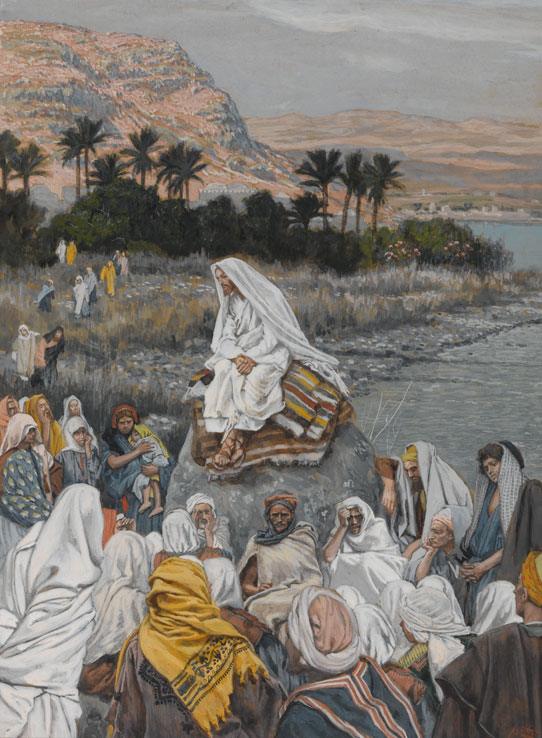
James Tissot (French, 1836–1902). Jesus Sits by the Seashore and Preaches, 1886–96. Opaque watercolor over graphite on gray wove paper, 103⁄16 x 79⁄16 in. (25.9 × 19.2 cm). Brooklyn Museum, Purchased by public subscription, 00.159.109We can look for Jesus in other people. The poor, the stranger, the suffering. The merciful, the gentle, the steadfast, the kind. We can look for Jesus in ourselves. In our own hardships and sorrows, in our own moments of joy and delight, in our own sometimes-surprising feelings of empathy and compassion and forgiveness.

Then re-read the Bible’s stories of Jesus.

You get the picture.

We can see the imprint of Jesus, the Spirit of Jesus, in lots of different places, and so see God’s face. But we see Jesus most clearly, most completely, in the stories and teachings of Scripture. Indeed, this is what the Bible is for.

The Bible is not an encyclopedia of all truth—though it speaks the truth we most need to hear. It is not a comprehensive moral handbook—though it gives us guidance on how to live.

No, the Bible is first and foremost a witness to Jesus. We read the Bible to see Jesus.

And then, as we learn about Jesus from the Bible, we can learn to see Jesus in other places. And when we see Jesus, we see who God is, and we see who we can become as those created in God’s image.

Seeing God Face to Face

Let me leave you with two Bible verses to ponder.

2 Corinthians 3:18 says that as we “see the glory of the Lord as though reflected in a mirror, we are being transformed into the same image from one degree of glory to another.” Paul is talking about looking to Jesus, seeing God’s glory in Jesus, and being transformed in the process, being re-made in the image of God in Jesus. That’s just what I’ve been talking about: seeing Jesus, and so seeing God, and so seeing who we can become as those created in God’s image.

But you’ll notice the little phrase, “as though reflected in a mirror.” It’s an acknowledgment that we don’t see Jesus face to face. Even in looking to Scripture to see Jesus, even in carefully discerning the imprint of Jesus, the Spirit of Jesus, diligently seeking Jesus’ face in all the ways I’ve talked about, it is still only like seeing a reflection of Jesus in a mirror.

1 Corinthians 13:12 picks up on that same idea, but gives us some powerful encouragement: “For now we see in a mirror, dimly, but then we will see face to face. Now I know only in part; then I will know fully, even as I have been fully known.

“Come,” my heart says, “seek his face!”
Your face, O Lord, do I seek.

There is something within us that craves something beyond us—and that something beyond us has now come among us in Jesus.

God has shown his face, and it’s the face of Jesus.

For now, we see Jesus’ face by looking for his imprint in the Scriptures, by looking for his Spirit in his followers and in the world. But one day—one day!—we will see Jesus face to face.

And then our craving for something beyond us—the transcendent, the divine, the presence of God—will be fulfilled. Then our quest to seek God’s face will finally be at an end—an end which will be just the beginning of a new and even better story “which goes on forever: in which every chapter is better than the one before” (C. S. Lewis, The Last Battle).

This is adapted from my sermon at Morden Mennonite Church on February 21, 2016. Artwork is by James Tissot; click on pictures for more details. Cross-posted from http://www.mordenmennonitechurch.wordpress.com. © Michael W. Pahl

You Are Not Alone

This post in an adapted excerpt from my sermon in the series “Four Things,” preached at Morden Mennonite on January 31, 2016. See others in the series: “Loved,” “Forgiven,” “Needed.” Here is the audio of the full sermon:

It’s one of the most basic needs we have: the need for human connection. It’s one of the most common fears we have: the fear of being alone. They’re two sides of the same coin: fear on the one side, desire on the other.

As soon as our eyes begin to focus as babies, we are looking for faces: eyes and noses and smiles. And, as babies, we need that human touch: loving, gentle, firm, safe.

At the other end of our lives, not much has changed. We still look for kind faces with warm smiles. We still crave that loving human touch. Right to the end.

This desire to be connected to others, and its flip side, the fear of being alone, drives us far more than we realize. All social groupings are at bottom fueled by that need for contact with other persons. We form friendship bonds, and partnership bonds, and permanent pair bonds, because we have a deep need to connect with others, and a deep fear of being isolated from others.

Put another way, there’s a reason why solitary confinement is one of the most horrific punishments that can be inflicted on people. Even the most introverted among us craves social interaction with other persons. The difference among us is only a matter of degree.

We long for meaningful connection; we fear being alone.

There’s an interesting feature of the creation stories in the book of Genesis that many people have noticed.

When you read through the first story in Genesis 1, you hear this repeated refrain: “And God saw that it was good.” God separates the land and the waters, and it is good. The earth brings forth vegetation, and it is good. God separates the light from the darkness, and it is good. God creates every living creature, and it is good.

Seven times in Genesis 1, the Creator God shapes something, forms something, makes something, fills something—and then declares it to be “good.”

But then comes Genesis 2, the second creation story. And smack in the middle of it, you read this: “Then the Lord God said, ‘It is not good.’”

Keep in mind, this is before sin has even entered the picture. This is when everything is supposed to be untainted and unspoiled and perfect in its goodness. And in the middle of this very good creation is something that is “not good.”

Here’s the whole statement: “The Lord God said, ‘It is not good that the Human should be alone.’”

The very first thing in the Bible noted as “not good,” even in the pristine paradise of Eden, is human isolation, a lack of meaningful connection with others—being all alone in a big wide world.

We long for meaningful connection; we fear being alone. This parallel desire and fear is not only built into our DNA; it’s built into our most primal stories, our first Scriptures.

And to each of us, God speaks these words of good news: “You are not alone.”

You are not alone. Others are with you: companions on the journey of life, partners in the purpose of life. And God is with you: even if all others fail, God will never leave you or forsake you. You are not alone.

Right from the very beginning of the human story, then, the Bible highlights our need for connection with others, that it is “not good” for us to be alone. But as interesting as that is, what’s even more interesting is what God does about it.

We typically think of the story this way: God says, “It’s not good for the Man to be alone,” and then we jump immediately to the end of the story, where there is a Man and a Woman who come together to be “one flesh” in marriage.

But that’s not actually the way the story is told. The Hebrew word for “Man” here is adam, which can mean “man” or “male human.” But it can also mean “human” or “human being” generally, and in the context it’s clear that’s what it means here.

Because right after God says, “It’s not good for the adam to be alone,” God doesn’t immediately make a womanGod makes the animals. You see, the distinction is not between the Man and the Woman, but between the Human and the Animals.

All the Animals are paraded before the Human, and none of them is the “suitable companion” that God says the Human needs. And so God makes another Human, “bone of bone and flesh of flesh”—exactly the same, a fully human counterpart—to be the first Human’s “suitable companion.”

In other words, the problem is not that a man needs a wife, or that a woman needs a husband. The problem is that a human needs another human—we need meaningful human connection, human companionship. And God has provided for that need by creating other humans, other people around us, to give us the connection and companionship that we require. Marriage, then, is one specific and important way in which this basic need for human relationship is fulfilled—but it is not the only way.

I know, that way of reading the story goes against the grain of our received interpretations of Genesis 2. But it’s really the best way to understand the story. After all, if that need for companionship is only satisfied through marriage, then there have been a lot of single people through history who have not fulfilled God’s purpose for relationships—including Jesus.

So here’s the important takeaway from all this: We are not all mandated to get married, but we are all created for human companionship—and God provides us with human companions on the journey of life, human partners in the purpose of life.

You are not alone. Others are with you: companions on the journey of life, partners in the purpose of life. You are not alone.

Rubens - Jesus on CrossBut there’s more. God is with you: even if all others fail, God will never leave you or forsake you.

This can be hard for us to believe, to really believe. We can at times feel abandoned by God—usually when we also feel abandoned by others. We can, in other words, feel like Jesus on the cross, crying out in our hearts, “My God, my God, why have you forsaken me?”

Yet, as Jesus himself would have known, God never really abandons us, God is always with us. Even that Psalm that Jesus quotes—his words on the cross are the opening words of Psalm 22—that Psalm goes on to say, “God did not hide his face from me, but heard when I cried to him” (22:24).

So even in our loneliest moments, those times when we feel most isolated from others, most disconnected, even completely abandoned—God is with us.

If you feel like this—lonely, isolated, disconnected, abandoned—listen to these words from Scripture; let them wash over you:

From Isaiah 43:5: [God says,] “You are precious in my sight, and honored, and I love you…Do not fear, for I am with you.”

From Hebrews 13:5: God has said, “I will never leave you or forsake you.”

You are precious in God’s sight, and honoured, and God loves you. Do not be anxious or afraid, for God is with you. Indeed, God will never leave you or forsake you.

You are not alone. Others are with you: companions on the journey of life, partners in the purpose of life. And God is with you: even if all others fail, God will never leave you or forsake you. You are not alone.

Cross-posted from http://www.mordenmennonitechurch.wordpress.com. © Michael W. Pahl.

“We should re-think our theology? Say what?”

Earlier this summer I preached a sermon on grieving the losses in our lives, whether it’s the loss of someone we love through death or the loss of something we have invested with great significance—a relationship, a career, a home. In the sermon I talked about the need to adjust to the new reality of life without that person or entity we have cherished so much.

I gave some practical suggestions of the kinds of adjustments that might need to be made, adjustments in how we think, in how we live our lives day by day. And one of those suggestions was this: we might need to re-think our theology in light of the loss we have experienced.

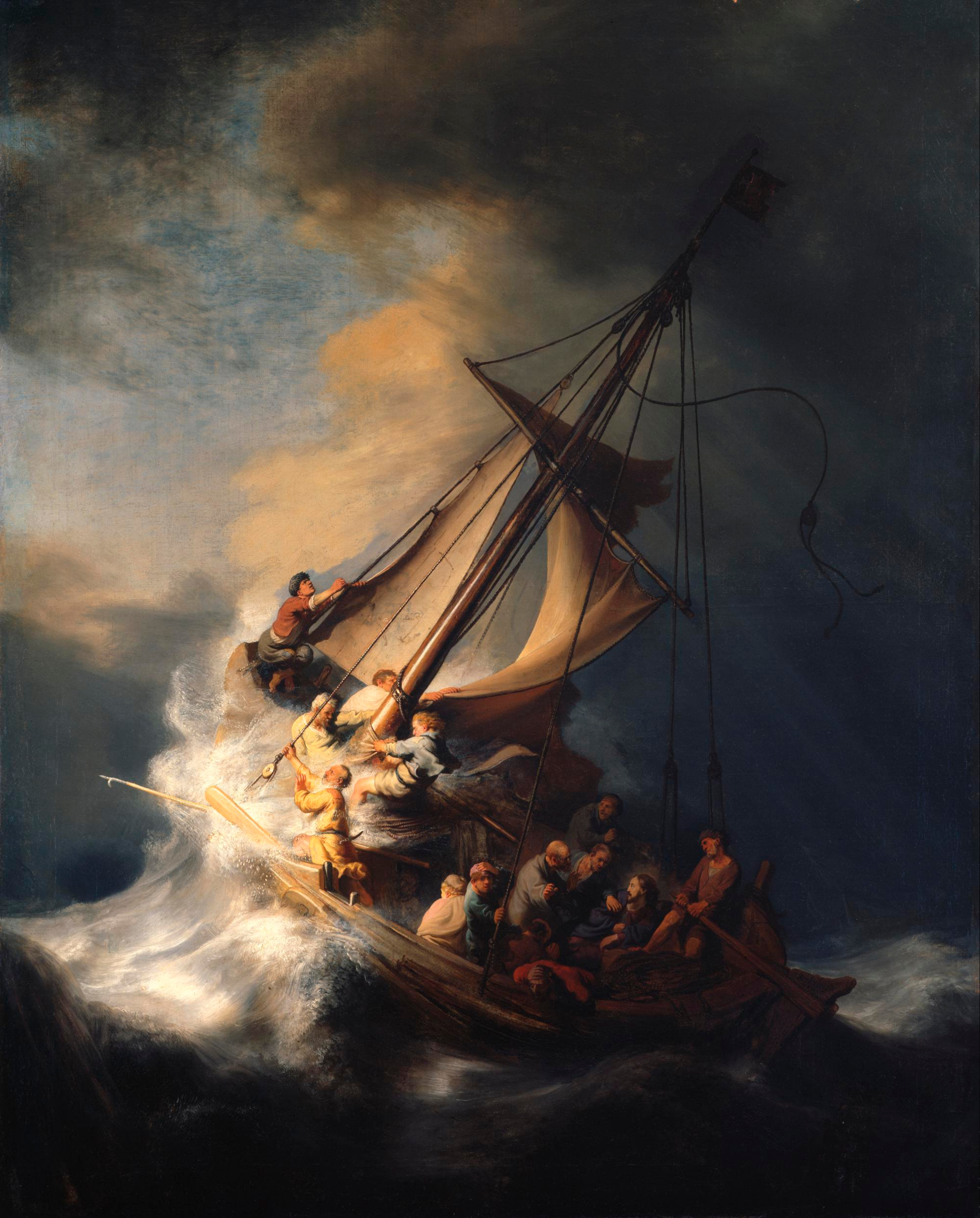
I got a bit of push-back on this. “Re-think our theology? No, our theology shouldn’t change according to our experience. Our theology should be a rudder that guides us through the difficult waters. It should be an anchor that holds us firm through the storms of life.”

I understand the impulse behind this push-back. We know we can’t always trust our feelings; how much less when we’re shell-shocked after a traumatic experience. And there is a lot of truth to the idea that whether or not we survive the storms of life depends in large measure on how well we have prepared ourselves—physically, emotionally, psychologically, and also theologically—during the calm before the storm.

It’s also true that the New Testament in various ways speaks of a body of Christian teaching common to all followers of Jesus—and so doesn’t change with the changing times. At its heart is the first-order, foundation-level “gospel” of Christ crucified and risen which Paul claims all the apostles proclaimed (1 Cor 15:1-11). This bare-bones, good-news story about Jesus focused on his death and resurrection, brought together with some early Christian traditions about God (e.g. Matt 28:19; 1 Cor 8:6), became the framework for this common Christian teaching—eventually expressed succinctly in the earliest creeds such as the Apostles’ Creed.

So what do I mean when I say we may need to re-think our theology in light our life experiences?

“Theology” is a human endeavour. It is something we as human beings do, our attempts at making sense of our experiences of God and of everything else in relationship to God.

There are many different theologies out there, even many different Christian theologies. In fact, if we want to get very specific, there are as many different theologies as there are human beings trying to make sense of God and the world around them. That’s a lot of theologies.

Even if we focus just on one particular branch of Christian theology—say, Anabaptist theology—it’s pretty obvious that this theology changes over time. Anabaptists today don’t believe everything in exactly the same way as the original Anabaptists did. We might try to remain faithful to what we believe are the essentials of Anabaptism, but there’s been a lot of theological water under the Anabaptist bridge in five hundred years—and a lot of streams branching off as theological differences have emerged.

This is also true of our own individual theologies. If you’re in your middle years like I am, I sure hope you don’t believe all the same things about God as you did when you were a child, or a teenager, or a young adult. If you do, pretty much any Christian would say your faith has not grown, you have not been maturing spiritually.

For myself, the basic structure of my theology hasn’t changed much since my early university days. But the details of my theology have altered significantly since then, and even how I understand that basic structure is very different. And then there are the peripheral matters—things you won’t find in the New Testament’s gospel summaries, for instance, or in the Apostles’ Creed, say. Many of these have changed 180° for me, or simply fallen by the wayside as unworthy of my strong conviction.

When I say our theology may need to change—or even that, over the course of our life, our theology had better change—this is what I mean by “theology”: our particular ways of understanding and expressing and prioritizing our beliefs about God and everything else in relationship to God.

But if our theology can or even should change over time, what is it that doesn’t change?

The answer, of course, is God.

Our understanding of God changes, but God doesn’t change. Our experience of God changes, but God doesn’t change.

YHWH LoveGod—Being, Person, Love—is the same God, always. Put in biblical terms, the God who created the heavens and the earth, is the God of Abraham, Isaac, and Jacob, is Yahweh the covenant God of Israel, is the Word made flesh in Jesus of Nazareth, is the Spirit indwelling the Church and blowing where it pleases in the wider world.

We don’t put our faith in theology. We put our faith in God.

Our theology supports our faith in God—but it is not God.

Our theology helps us make sense of our experience of God—but it is not God.

Our theology gives us some tools to think about God and speak of God—but it is not God.

It is God who guides us through the difficult waters. God is the anchor that holds us firm through the storms of life. If, when these storms come, we have put our faith in a system of beliefs and not in the true and living God, we may find our “faith” shattered beyond repair.

And sometimes, that’s exactly what we need.

Cross-posted from http://www.mordenmennonitechurch.wordpress.com. © Michael W. Pahl.

“All you ever do is talk about Jesus and love. Why don’t you preach the gospel?”

Okay, so I’ve never heard it put quite that starkly. And I don’t hear this in quite the critical tone of that title, at least not directly. (What’s said about me when I’m not around, well, that may be a different story!)

But I do hear some version of these kinds of questions fairly frequently, especially related to my preaching, mostly in a sort of puzzled tone:

“Why do you talk about Jesus and love all the time?”

sometimes juxtaposed up against

“Why don’t you preach the gospel?”

When that happens, I can’t help but smile to myself.

Many Christians have a particular idea of what it means to “preach the gospel.” For them it means to preach an “evangelistic sermon.” It means giving a Billy Graham-esque explanation of the gospel: that Jesus died on the cross in our place, taking the punishment that we deserved for our sin, and that if we confess our sins to God and believe in this message we can be saved, given the assurance of eternal life with God even beyond the grave. This gospel preaching is often completed with an altar call, an appeal to pray a particular prayer confessing one’s sins and expressing belief in this message.

If I don’t do these things, then, according to many Christians, I’m not “preaching the gospel.”

The problem is, this way of thinking about “preaching the gospel” is not really all that biblical.

Sure, it uses some biblical terms and ideas, words like “gospel” and “sin” and “Jesus” and “cross” and “belief” and “confession” and “salvation” and “eternal life.” But many of those words don’t mean what this popular notion of “preaching the gospel” means by them, and the way those terms and ideas are put together in this popular perspective doesn’t reflect the way the New Testament authors put those terms and ideas together.

Take a look at a few New Testament summaries of the “gospel” or “good news”:

“The beginning of the good news of Jesus Christ, the Son of God…” introducing Mark’s entire story of Jesus. (Mark 1:1)

“Jesus came to Galilee, proclaiming the good news of God, and saying, ‘The time is fulfilled, and the kingdom of God has come near; repent, and believe in the good news.’” (Mark 1:14-15)

Jesus “unrolled the scroll and found the place where it was written: ‘The Spirit of the Lord is upon me, because he has anointed me to bring good news to the poor. He has sent me to proclaim release to the captives and recovery of sight to the blind, to let the oppressed go free, to proclaim the year of the Lord’s favor’…Then he began to say to them, ‘Today this scripture has been fulfilled in your hearing.’” (Luke 4:16-21)

“…the gospel of God, which he promised beforehand through his prophets in the holy scriptures, the gospel concerning his Son, who was descended from David according to the flesh and was declared to be Son of God with power according to the spirit of holiness by resurrection from the dead, Jesus Christ our Lord, through whom we have received grace and apostleship to bring about the obedience of faith among all the Gentiles for the sake of his name.” (Rom 1:1-5)

“Now I would remind you, brothers and sisters, of the good news that I proclaimed to you, which you in turn received, in which also you stand, through which also you are being saved… For I handed on to you as of first importance what I in turn had received: that Christ died for our sins in accordance with the scriptures, and that he was buried, and that he was raised on the third day in accordance with the scriptures, and that he appeared to Cephas, then to the twelve…Whether then it was I or they, so we proclaim and so you have come to believe.” (1 Cor 15:1-11)

“Remember Jesus Christ, raised from the dead, a descendant of David—that is my gospel.” (2 Tim 2:8)

That’s just a sample—the noun “gospel” or “good news” (euangelion) and the verb “preaching the gospel/good news” (euangelizomai) together occur about 125 times in the New Testament, and several of those sketch out what this “gospel” message is that’s being preached.

For sure, some of these passages can be read to fit the popular, Billy Graham-esque idea of the “gospel” I’ve described above. But many, if not most, just don’t make sense in that understanding of the gospel.

The gospel is about all of Jesus’ life, not just his death on the cross?

The gospel is about the kingdom of God?

The gospel is good news for the poor, the blind, the imprisoned, the oppressed?

The gospel is about Jesus being a descendant of David?

The gospel is about Jesus being Lord?

Many of these ideas are prevalent in New Testament descriptions of the gospel, or of the early Christians’ gospel preaching in Acts, yet they are conspicuously absent from the popular Christian notion today of what the gospel is and what it means to “preach the gospel.”

Yet any understanding of the “gospel” we have must try to make sense of the entire witness of the New Testament to the gospel, not just a few ideas read into a few select passages. This means, also, that any understanding of the “gospel” we have must be flexible enough to allow for the varied descriptions of the gospel we find in the New Testament.

The “gospel” is euangelion, it is “good news,” a “good message,” a message of good things, a message that should bring joy to its hearers.

The “gospel” is “according to Scripture,” anticipated by and in continuity with the Jewish Scriptures, the Christian Old Testament.

The “gospel” is about God, the one true and living Creator, the one in whom all things exist, the one in whom we live and move and have our being, the one who works in and through all things to bring about good purposes.

The “gospel” is about the man Jesus of Nazareth, about his life, teachings, good deeds, miracles, death on a Roman cross, and resurrection from the dead.

The “gospel” is about Jesus, that this crucified and resurrected Jesus of Nazareth is the Jewish “Messiah” or “Christ,” the “Son of God,” who is the promised King descended from David who fulfills ancient Israel’s longings for God’s eternal reign of justice and peace and flourishing life for the Jews, for all people, and for all creation.

The “gospel” is about Jesus, that this crucified and resurrected Jesus of Nazareth is therefore “Lord,” the rightful ruler over God’s people, all people, the entire world.

The “gospel” is about “salvation” from “sin,” God rescuing the world through this crucified and resurrected Jesus of Nazareth from all the ways we humans harm each other and the rest of creation through our attitudes, words, and actions, and so work against God’s purposes and desires for us and all creation.

Simply put, the gospel is the good news that God has acted in Jesus to make right all that has gone wrong in the world because of human sin.

This “act of God in Jesus” is an act of grace and mercy, an act of undeserved favour, an act of restorative, self-giving love. And God calls us to respond to this divine love by persistently turning from our harmful, destructive ways (“repentance”), resolutely declaring our allegiance to the world’s true Lord, the crucified and risen Messiah Jesus (“faith”), and daily following in his footsteps of restorative, self-giving love for others and all creation (still “faith”).

Read the Gospels—there’s no “four spiritual laws.” The gospel is not about individual sinners being saved from hell to heaven, but about a sinful world being redeemed so that God’s reign of life and justice and peace might come on earth.

Read Acts—there’s no “sinner’s prayer.” The gospel addresses human sin, right down at its roots, but it does so in a way that impacts not just personal sins but also social sins, systemic sins, all the ways we harm and destroy.

Read Paul’s letters—there’s no “altar call.” The gospel does call for a response, but it’s a summons of allegiance to one who has given himself in humble, selfless love.

And all this is why, when I hear someone say something like, “All you ever do is talk about Jesus and love. Why don’t you preach the gospel?”—I smile to myself.

Yes, all I talk about is Jesus and Jesus’ way of love.

That’s because I’m preaching the gospel.

© Michael W. Pahl

How Should We Then Love?

Love is All We NeedScripture and Jesus on Love | What is Love?
Love, Above All | How Should We Then Love?

I started the week by getting up on my soapbox and boldly declaring: “Love is all we need, folks! All we need is love!”

In our complex, chaotic, confusing world, we Christians don’t need greater certainty about our particular brand of doctrine. We don’t need to find the latest and greatest or oldest and truest form of worship. We don’t need more political engagement, more activism for the Christian cause.

Theology, liturgy, politics, and more are not inherently wrong, of course, and can even be very good, even vitally important—but none of these is the one thing we most desperately need.

We need to love each other.

All we need is love.

Love is all we need.

I’ve spent the last three parts in this series making my case for this claim, and sketching out what this love looks like.

I say, “Love is all we need,” because I believe Scripture points us to this. I believe Jesus points us to this. That was part two.

I say, “Love is all we need,” because I believe all other divine commands and human virtues—including holiness and truth-speaking—are subsumed under love, governed by love, even defined by love. That was part four.

I say, “Love is all we need,” because I believe the love Scripture and Jesus point to is not mere tolerance, or mere affection, but something far more, far more substantial, far more necessary. That was part three.

But what does this love look like in practice? In the nitty-gritty of the real world, where the rubber meets the road of life, what might it look like for us to love each other in the way of Jesus?

The New Testament itself gives some practical suggestions.

Here’s Jesus: “In everything do to others as you would have them do to you” (Matt 7:12; Luke 6:31). This has been analyzed and critiqued from every possible angle, but it seems to me this Golden Rule is simply Jesus’ rough-and-ready guide for putting “Love your neighbour as yourself” into action.

Before you speak or act, pause and think:

How would I feel if someone said this to me? If it would be a good or necessary feeling, say it. If not, zip it.

If I were this person, how would I react if someone did this to me? If my reaction would be positive, do it. If not, don’t.

What would I want someone to do for me if I were in this situation? Do it for them, if you’re at all able.

Then there’s the Good Samaritan story, Jesus’ own commentary on “Love your neighbour as yourself” (Luke 10:25-37). In the story, the Samaritan shows compassion for the Jew—typically hostile neighbours, these—caring for one who was violated, left destitute, left for dead. He treats the man’s injuries, brings him to a place of rest and ensures his continued care, all on his own dime, irrespective of who this man was or whether he was “worthy” of such care.

In a similar vein, James connects this neighbour love with how the poor are treated—not just in terms of caring for their material needs, but also in terms of showing them honour and respect (Jas 2:1-9). And John asks this piercing question: “How does God’s love abide in anyone who has the world’s goods and sees a brother or sister in need and yet refuses help?” (1 John 3:16-18).

“Go,” Jesus says after telling of the Good Samaritan, “and do likewise.”

That woman violated by her abuser—care for her in this way.

That family left destitute after a sudden job loss—love them like this.

That returning veteran dead inside from the trauma of war—show her compassion like this.

That whole mass of people without adequate health care, education, or even food for the table—treat them in this way.

That Muslim immigrant, that gay couple, that redneck conservative or that flaming liberal, whatever your “despised other” is—shower them with this kind of love.

Another angle on putting this Christ-like love into action can be seen in the many “one another” passages, mostly found in Paul’s letters. If “love one another as Jesus has loved us” sums up all the virtues and ideals for Paul, then all the “x one another” passages are expressions of this love.

“Love one another” means “patiently tolerate one another” (Eph 4:2)—yes, those people you dislike, or disagree with.

“Love one another” means “accept one another” (Rom 15:7)—welcome others with open arms, open homes, open tables, even those you might not normally associate with.

“Love one another” means “encourage one another” (1 Thess 5:11)—don’t tear down others with harsh or cruel words, but build them up with kind words (even on the internet).

“Love one another” means “honour one another” (Rom 12:10)—show respect to everyone, even the “nobodies” and “nothings” among you, those on the fringes around you.

“Love one another” means “bear one another’s burdens” (Gal 6:2)—we’ve all got them, those difficult burdens of life, so let’s lend each other a hand with them.

“Love one another” means “do not judge one another” (Rom 14:13)—unless you wear a robe to work and bang a gavel all day, that’s not your job, ever.

“Love one another” means “forgive one another” (Eph 4:32; Col 3:13)—just let it go, release them from the heavy burden of guilt and yourself from the choking tangle of bitterness.

And many more—all specific attitudes and actions that flesh out what it looks like to love one another in the way of Jesus.

The Golden Rule, the Good Samaritan, these “one another” commands—all of these connect to some ideas I’ve suggested already.

In my third post I described this Jesus-love this way: freely giving ourselves for others so that they might experience flourishing life together with us, even if we feel they don’t deserve it, even when it hurts us to do so. This “flourishing life” that is the goal of love, I suggested, is at minimum having our basic, universal human needs met—and this, too, can give us a window on love in action.

Clean air is a basic human need—so love might mean pushing for tougher regulations on polluting industries.

Clean water is a basic human need—so love might mean giving money for clean water initiatives in developing countries.

Nourishing food is a basic human need—so love might mean volunteering at a breakfast program in your local elementary school.

Adequate warmth in clothing and shelter is a basic human need—so love might mean donating blankets and jackets to an inner city soup kitchen before winter hits.

Simple health and safety is a basic human need—so love might mean supporting restorative justice programs in your community. 

Positive relationships with others is a basic human need—so love might mean learning about the complexity of human sexuality so you can better empathize with LGBT persons.

A sense of belonging in a group is a basic human need—so love might mean inviting your new-to-town neighbour to your weekly bowling night.

A sense of meaning or purpose, of experiencing and contributing to beauty, truth, and goodness in the world, is a basic human need—so love might mean starting a community children’s choir or a neighborhood book club.

There is no one-size-fits-all answer to the question, “How should I love others?” Each person is unique, each interaction between people is unique—and each person needs love, every single time we interact with each other.

We can’t do all these things I’ve suggested in this post. We can’t do everything we could ever imagine. We can’t love everyone. We can’t even love all the time.

But we can love this person. We can love in this moment. We can start with one act of love, however small, and let it grow from there.

That’s how kingdoms are born, after all.

Treat others the way you would like to be treated, in your attitudes, your words, your actions toward them.

Give yourself—your time, your energy, your attention, your compassion, your money, your things, your very self—for others.

Do these things, striving for flourishing life together: our basic needs as human persons met, all shared together.

And do these things for all others you encounter: neighbours and enemies, friends and strangers, family and foreigners, good and bad alike.

Sounds simple, and in a way it is. Love cuts through the chaos and confusion of our complex world, it slices through all our insistence on right doctrine or correct morality or proper ritual, right down to what matters most.

But it’s not easy. It is the most difficult thing we can do in life, loving each other.

It’s also the most important.

This kind of love is the foundation for true justice.

This kind of love is the basis for lasting peace.

This kind of love is the source of flourishing life.

This kind of love is the love that God is, the love that God has shown us in Jesus, the love that God calls us as followers of Jesus to live out, energized by the Spirit.

We need to love each other.

All we need is love.

Love is all we need.

Love is All We NeedScripture and Jesus on Love | What is Love?
Love, Above All | How Should We Then Love?

Cross-posted from http://www.mordenmennonitechurch.wordpress.com. © Michael W. Pahl.

What is Love?

Love is All We NeedScripture and Jesus on Love | What is Love?
Love, Above All | How Should We Then Love?

In my first post I got on my soapbox and boldly declared: “Love is all we need, folks! All we need is love!”

diversityIn our complex, chaotic, confusing world, we Christians don’t need greater certainty about our particular brand of doctrine. We don’t need to find the latest and greatest or oldest and truest form of worship. We don’t need more political engagement, more activism for the Christian cause.

Theology, liturgy, politics, and more are not inherently wrong, of course, and can even be very good, even vitally important—but none of these is the one thing we need always and forever.

We need to love each other.

All we need is love.

Love is all we need.

I say this, because, as I outlined in my last post, I believe Scripture points us to this. I believe Jesus points us to this.

But what is this love? What does it look like?

Some people hear “love” and think “affection,” a surge of warmth and fondness toward others. Some people hear “love” and think “tolerance,” acknowledging and accepting others and their actions with a kind of benign smilingness. Some, perhaps conditioned by Christianity, hear “love” and think “self-sacrifice.” Some, of course, hear “love” and think “romance” or even “sex”: physical, emotional, even erotic intimacy.

But the love I’m talking about is not merely affection for others, though feelings of affection are good and beautiful. This love is not merely tolerance of others, though it is important that we acknowledge and accept others’ differences. This love cannot be reduced to simple self-sacrifice, though it is true that we need to break through our selfishness and give of ourselves to others. And although physical and emotional intimacy is a necessary, God-given gift, by itself this is not the love that saves us.

Acceptance. Affection. Self-sacrifice. Intimacy.

Each of these is good and necessary. Each of these gives a glimpse of love, one angle on a multi-faceted love. But none of these by itself is the love we need.

When the biblical authors attempt to describe “love” they consistently point to God’s love for us. In the New Testament, more particularly, they point to God’s love for us in Jesus. To get even more specific, the New Testament often points to Jesus’ suffering and death to portray what true love is all about.

Image: NASA

Image: NASA

So, for example, in the Hebrew Bible we hear of God’s hesed, Yahweh’s loyal love for ancient Israel, standing at the very centre of God’s self-revelation (e.g. Exod 34:6; Ps 145:8-9). We see this loyal love in action from creation on, Yahweh providing and protecting, giving and forgiving, rescuing and restoring, time and time and time again.

In the Gospels we hear Jesus speaking of an Abba Father who cares for the least and last, who seeks the lost, who loves sinners with a ring-and-robe and fatted-calf-feast kind of love (e.g. Luke 15). In the Epistles we hear that “God shows his love for us in that while we still were sinners Christ died for us” (Rom 5:8), that “we know love by this, that Jesus laid down his life for us—and we ought to lay down our lives for one another” (1 John 3:16), and that we are to be “imitators of God” by “living in love, just as Christ loved us and gave himself up for us” (Eph 5:1-2).

“God is love,” we are told, and Jesus comes as “the image of the invisible God,” the “exact imprint of God’s very being,” the ultimate revelation of the God who is love (1 John 4:8, 16; Col 1:15; Heb 1:3; John 1:18).

So in light of God’s love for us, and especially God’s love for us in Jesus, what is this love, this one thing we really need? A few reflections, and then a summary description.

Love starts with a stance of openness. It doesn’t stand aloof, arms crossed in suspicion or scorn, waiting for the other to prove themselves. Love steps forward with arms open wide, even running toward the other. It sees the other as a person, inherently worthy of welcome, of compassion, of affection, of respect. It sees these things, even when the other person cannot see it themselves.

Love is freely given. It is “freely given” in that it is voluntary, not coerced. A forced “love” is no love at all. It is also “freely given” in that it expects nothing in return. That is barter or bribery, or crass capitalism—it is not love.

Love is a giving of oneself. Our time, our attention, our listening ear, our gracious words, our empathy, our loyalty, our experiences, our material resources—all the things that make us who we are as persons, all the things we value as humans, given for the other person. This puts us in a precarious position, because we love without knowing how our love will be perceived, without knowing how it will be received. There is always risk in love.

Love is given whether the recipient deserves it or not. It is loving anyone we cross paths with day by day, our “neighbours.” It is loving “strangers” or “sinners,” those who are different than us in any way, even in ways we vehemently disagree with. It is loving even those who oppose us in anything, even if they do so violently: our “enemies.”

Love is given even when it hurts the giver. This is not an excuse for abuse—remember, love is freely given, never coerced, never forced. This is not the weak being oppressed by the strong, but the strong giving themselves for the weak. Love, at one time or another, in one way or another, will always suffer for the other person. To love is to suffer.

The goal of this love is mutual flourishing, giver and receiver together. The objective is life shared together: not merely surviving but thriving. It is the opposite of what Christians call “sin,” those attitudes and actions that cause harm to others and ourselves.

Think of our most basic needs as human beings. We’ve got those basic physical needs, what we need just to exist: clean air and water, nourishing food, adequate warmth in clothing and shelter, simple health and safety. Then there are those basic psychological, emotional, and social needs we all have, without which we are diminished as persons: positive relationships with others, a sense of belonging in a group, a sense of meaning or purpose, of experiencing and contributing to beauty, truth, and goodness in the world.

These are universal human needs. They can give us a minimal, rough sketch of what “flourishing life” can look like. Which means they can give us a working description of what love should strive for: ensuring others have these basic human needs met, meeting these basic needs for others, for one another together.

This, then, is love: freely giving ourselves for others so that they might experience flourishing life together with us, even if we feel they don’t deserve it, even when it hurts us to do so.

Let that sink in a little.

Go back and read that again.

As you do, pause to think about different people in your life, people you encounter day by day—those you’re close to, those you’re not, those you like, those you don’t.

What would it look like to love them like this?

What would our world be like if we loved one another like this?

Stay tuned for part four.

Love is All We NeedScripture and Jesus on Love | What is Love?
Love, Above All | How Should We Then Love?

Cross-posted from http://www.mordenmennonitechurch.wordpress.com. © Michael W. Pahl.

The God Who Is

How do you imagine God?

It might seem like a strange question. Most Christians probably don’t consciously imagine God in a certain way. “God is spirit,” we know, and cannot be depicted in any physical form (John 4:24; Exod 20:4).

da Conegliano - God the FatherBut I think we do all have a working sketch of God in our heads, a kind of rough outline of what we imagine God to be like, at least at a subconscious level. This working sketch of God isn’t so much found in our theology—we can quickly recite something resembling an orthodox doctrine of God, using terms like “Trinity,” “Father,” “omnipotent,” “eternal,” and the like. Rather, you can see how we really think about God, that “working sketch of God” we have, in how we talk about God when we move beyond the theological jargon, how we think and speak of God in our everyday life.

And I’m more and more convinced that most people—not just most Christians, but most people—imagine God to be just like us, only bigger and better. God is a bigger and better—stronger, smarter, and saintlier, infinite, immortal, and invisible—version of ourselves.

You can see this in the way people look for evidence for God’s existence, some finding it, others not. It’s as if God is a being just like us, who exists in time and space in the same way we do, and so inevitably leaves behind traces of his presence. God is just like us, only invisible and everywhere, so if we find the right clues we can do a little CSI forensic work and prove beyond a reasonable doubt that God exists—or reject God’s existence on the same basis.

You can see this in the way people cling to language and metaphors for God as if the word is the thing itself—as if God really is a “he,” or a “Father,” or even a “god.” Most Christians, when pushed a little, would probably deny that God is male (that whole “God is spirit” thing), but many will still insist that masculine language for God is the only appropriate way to speak of God, instead of seeing this language for what it is: traditional language born of ancient patriarchal cultures.

You can see this in the way people pray. For some, it seems as if they believe we are literally coming into a king’s throne room, asking for royal favours. For others, it’s as if we are having a casual conversation with our best buddy—who just happens to be all-powerful and all-knowing.

You can see this in the way people speak of their “personal relationship with God”—and then in how they allow God in some areas of their life and keep God out of others, compartmentalizing their relationship with God just as we do all our other relationships.

You can see this in the way people think God meticulously controls everything that happens, from earthquakes and plane crashes, to that near-miss pulling out on the freeway or that amazing performance in the big game. For many people God is like a chess master manipulating the pawns on his board, or a puppeteer pulling the strings to make the world dance.

You can see this in these and many other ways. When you strip away all our theological jargon, most of us imagine God to be like us, only bigger and better.

Of course, one could well say that there are good reasons for thinking this way. The Bible mostly uses this kind of “God is like us only bigger” language to describe God, and it’s surely natural for us as humans to think and speak of deity in terms of our own human experience (what other experience can we use?).

But the Bible in many different ways points beyond this “God is like us only bigger” notion. God is the one “in whom we live and move and have our being” (Acts 17:28). God is the one “from whom and through whom and to whom are all things” (e.g. Rom 11:36). God is YHWH, “I Am…” (Exod 3:13-15; and yes, the ellipsis is intentional).

Much of historic Christian theology and wider religious thought also points beyond this way of thinking about God as “like us only bigger.” Even just a bit of thoughtful reflection in light of the universe in which we find ourselves should dispel this idea.

So how then should we imagine God?

Well, we can start by ridding ourselves of the idea that we can come up with some kind of “pure description” of God, a way of thinking and speaking about God that is exactly as God is. All our language and thought reflects our human experience, our human cultures, and this is just as true of our language for God as it is of our language for dogs. In fact, this is even more the case when we are speaking of the Transcendent, the Infinite, the Divine—our language is inevitably metaphorical, it can only and always be analogy.

Understanding this can help us to properly use the language of the Bible for God, or the traditional terms of Christianity, or even popular God-talk. There is nothing inherently wrong with speaking of God as “he” or “Father,” for example. This language can even be helpful and good, as long as we understand that these words are mini-metaphors: “he” points to God’s personhood and not God’s maleness, and “Father” suggests that God reflects some ancient Jewish ideals of fatherhood and not that God is literally the male progenitor of offspring.

Of course, the flip side of this means that the biblical and traditional language for God is not the only language that can be used for God. There is no biblical or theological or wider religious reason why God cannot be spoken of as “she” and “Mother,” for instance. And sometimes the traditional language may cause problems in a particular culture and should be avoided. Imagine speaking of God as “King,” for example, in a culture where the only examples of monarchy have been irredeemably bad.

But is there a kind of bottom-line, trans-cultural, universal way to imagine God? The short answer is “no” (go back and read the last three paragraphs again). But there is a longer answer that qualifies this “no” somewhat, a way of thinking about God which I’ve found helpful.

You can get at this by looking at ways of thinking of the Divine that are common to historic Christian theology and even shared among the major religious traditions. When you do this, there are a few general notions that, though still mini-metaphors shaped by our human experience, are probably about as close as we can get to describing the essence of the Divine.*

Cianelli - Warm EmbraceFirst, God is Being. God is not a being, one being among many others. God is Being itself. God does not possess energy, as things in the universe do. God is Energy itself, pervading and sustaining the universe. God does not exist, as all things in time and space exist. God is Existence itself, and all things exist because God is, all things exist from and in and through and for God (pause on each of those prepositions for a moment). God does not live, in the way that living things are alive and not-dead. God is Life itself, the one in whom we live and move and have our being.

Second, God is Person. God is conscious self-awareness, conscious self-distinction, Consciousness itself. God is personal, relatable, the ultimate Subject who is and who acts in relation to the other. Just as God is the ground of being, so God is the ground of personhood: all things can be only because God is, and all persons can know and be known only because God sees and knows all things.

Third, God is Love. God not only relates to all things as a personal self, God relates to all things always and only in other-delighting, self-giving love: God loves. Even more, God is love: God cannot be anything other than love, the self joyfully given for the other. If God is Being, and God is Person, and God is Love, then the goal of all persons, who exist in God and are known by God, is love: loved by God, loving God, and loving others, in mutual enjoyment and delight.

Being. Person. Love. This is God.

Of course, this sharpens the claim at the heart of the Christian faith: it is this God who “became flesh and dwelt among us” (John 1:14) in Jesus of Nazareth, “in whom all the fullness of God was pleased to dwell” (Col 1:19), in whom “the whole fullness of deity dwells bodily” (Col 2:9), who is “the reflection of God’s glory and the exact imprint of God’s very being” (Heb 1:3).

And this—transcendent Being, Person, and Love, embodied in the man Jesus who lived, taught, healed, suffered, died, and rose again—this is how I imagine God.

How about you? How do you imagine God?


Note: These thoughts run roughly parallel to those of David Bentley Hart in his book The Experience of God, though he uses the triad of Being, Consciousness, and Bliss to describe God and our experience of the Divine. I’ve been thinking of God in terms of Being-Person-Love for some time, but Hart’s book has helped solidify this for me.

© Michael W. Pahl