The Bible, the Gospel, Jesus, and “The Word of God”

Ask Christians today what they think of when they hear the phrase, “The Word of God,” and they’ll probably say, “The Bible.” For many Christians the two are even synonymous: “The Bible” = “God’s Word,” and “God’s Word” = “The Bible.” The idea is that the Bible as a whole is a divine message for humanity, even the divine message for humanity.

I don’t typically use the phrase, “The Word of God,” to describe the Bible, however. That’s not because I don’t believe God speaks to us through the Bible (see here on that). I believe the Bible is inspired or “breathed into” by God and so is useful for teaching, for rebuke, for correction, and for training in God’s ways (that’s 2 Tim 3:16). Most importantly, I believe the Bible witnesses to Jesus and salvation through him (that’s 2 Tim 3:15, often missed when 2 Tim 3:16 gets quoted).

Rather, I avoid describing the Bible as “the Word of God” because the Bible itself doesn’t describe the Scriptures this way.

The Bible speaks of many “words of God,” or “words of the Lord,” to use a phrase that’s roughly parallel in Scripture.

  • Particular commands, promises, and teachings can each be a “word of God” or “word of the Lord.”
  • Specific prophetic utterances can each be a “word of God” or “word of the Lord.”
  • In the New Testament, the gospel, the good news message about Jesus, is frequently called “the word of God,” “the word of the Lord,” or using similar “word” phrases (“word of Christ,” “word of life,” etc.).
  • And, of course, Jesus himself is called “the Word” which came from God and “became flesh” among us.

But nowhere does the Bible clearly use the phrase “the word of God” to refer to a collection of previously written Scriptures.

Sure, some passages can make sense like that. We hear Jesus say to the religious leaders, “You make void the word of God for the sake of your tradition,” and it can make sense to think of that as referring to the Jewish Scriptures, our Old Testament. But in the story Jesus is referring to a specific “word of God,” the particular command to “Honour your father and your mother”—not “the Scriptures” as a whole.

Or, we hear Hebrews say that “the word of God is living and active, sharper than any two-edged sword, piercing until it divides soul from spirit, joints from marrow; it is able to judge the thoughts and intentions of the heart,” and it can make sense to think of that as referring to the Scriptures. However, given the opening words of Hebrews, about God speaking “in many and various ways by the prophets” and now “in these last days…by the Son,” it’s more likely that “the word of God” here refers to any true “message from God.” It may even have the specific sense of “the gospel,” since that’s how the phrase seems to be used elsewhere in Hebrews.

That’s the thing about the uses of “the word of God” or “the word of the Lord” in the Bible—some can make sense to us today as referring to the Bible, but that wouldn’t have made sense to those for whom the Bible was first written. That’s not least because they simply wouldn’t have thought of “a bound collection of written Scriptures” in the way we think of “the Bible”—they didn’t have any “bound collection of written Scriptures.” But it’s also because they tended to think of “word of God” or “word of the Lord” as a discrete “message from God,” a particular divine message given at a particular time for a particular purpose. Furthermore, while these various “words of God” could certainly be compiled together and written down, they were still typically thought of as oral proclamation, as spoken messages.
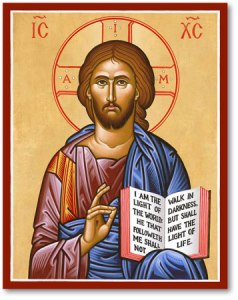
This is why the earliest Christians so frequently used “the word of God” or “the word of the Lord” or “the word of Christ/life/truth/grace/ salvation/etc.” to describe the gospel message (see lists of passages here, here, here, here, and here). This gospel was an orally proclaimed message from God, with a specific content, given at a specific time in human history and for a specific purpose. This is, in fact, by far the most common use of this kind of “word” language in the New Testament.

And this is what makes John’s description of Jesus as God’s eternal “Word” so interesting. God has spoken many “words,” given many divine messages, in the past: commands, teachings, promises, and prophetic pronouncements. But Jesus is the “Word” behind all those “words,” the Divine Message extraordinaire—and this ultimate Divine Message has been “made flesh and dwelt among us.” The eternal Word behind all those divine words has become embodied in a particular human person, Jesus of Nazareth.

So what’s the upshot of all this? How should we as Christians think about the Bible, the gospel, Jesus, and “the word of God”?

The Bible records many “words of God”: commands, teachings, promises, and prophetic pronouncements, given to particular people in a particular time and place for a particular purpose. We need to pay close attention to those divine messages—they are among those inspired Scriptures that are useful for us to learn God’s ways—but we must recognize that not all of these past “words of God” are directly applicable to us today.

The Bible describes the saving “word of God”: the gospel of Jesus Christ, the good news that in Jesus, the crucified Messiah and risen Lord, God has acted to make right all that has gone wrong in the world because of human sin. We need to hear this gospel well, and repeatedly, and respond to this good news with repentance, faith, and obedience.

And the Bible witnesses to the living “Word of God”: Jesus of Nazareth himself, the embodiment of the eternal Divine Message that stands behind all these messages from God, the one in whom all these “words of God” find their coherence and their fulfillment. We need to look to Jesus as the clearest and most complete revelation of God and God’s will, seeing the eternal message of God embodied in his life, teachings, death, and resurrection, and respond to the living Jesus with loving devotion and faithful allegiance.

———————————————–

For more on how we should think about the Bible, see my post, “What is the Bible, and How Should We Read It?”

For an in-depth, academic examination of the language of “word of God,” “word of the Lord,” and the like, see my JSNT article “The ‘Gospel’ and the ‘Word,’” as well as my LNTS book Discerning the ‘Word of the Lord.’

© Michael W. Pahl
You Know, “Love One Another” Really Is Enough

The 4th-century theologian Jerome tells a story about the Apostle John. John was old and frail, unable to walk, so his disciples would carry him into the gathering of believers on the Lord’s Day. Every week these were his words to the congregation: “Little children, love one another.”

This went on week after week, until at last, more than a little weary of these repeated words, his disciples asked him, “Master, why do you always say this?”

“Because,” John replied, “it is the Lord’s command, and if this only is done, it is enough.”

We have no way of verifying Jerome’s story, but it certainly sounds like John—that is, the author of the Gospel and Epistles of John. Those writings are filled with exhortations to love.

I can sympathize with John in this story. I, too, feel the pressure of this regular question: “Michael, why do you always talk about ‘love’?” Sometimes this is simple curiosity, but often the criticism is plain: this teaching, that we are to “love one another,” is somehow seen as insufficient.

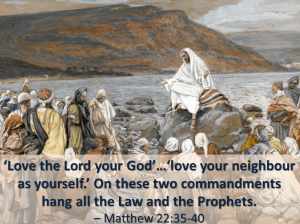
That’s odd, quite frankly. After all, Jesus was emphatic about what the greatest commandments of God were: love God and love others, and you can’t have one without the other. In fact, Jesus says, this love of God/others sums up everything else God commands. All Scripture hangs like a seamless coat on this single hook: love God by loving others.
And Jesus’ first followers were equally clear on this. Loving others is the benchmark of genuine faith, they said—if you don’t love others you’re not a true disciple of Jesusyou don’t even truly know God. You want to fulfill God’s Law? Love others, they said, simple as that. The only thing that matters, in fact, is a faith that works itself out in love. Love is the virtue that binds together all other virtues. It is the most excellent way to live. It’s the one thing that remains always and forever.

According to both Jesus and the Apostles, love is it.

So it’s more than a little odd when Christians, whether back in John’s day or our own, get impatient with those of us who emphasize love above all else.

But why do some Christians react this way? Why is a simple insistence on loving others so wearisome, even so aggravating, to some?

Some insist that “love one another” is too wishy-washy. It’s too soft on sin, not strong enough on holiness. What about God’s judgment of sin seen throughout the Bible, after all, even in Jesus’ own teaching?

Others say that “love one another” is too simplistic, too impractical. The world is far too complicated for mere love, especially once we get beyond one-on-one relationships. What place does “love one another” have in the worlds of bottom-line business or high-stakes politics, or in sovereign countries defending their national interests?

These sound like the criticisms Jesus received, come to think of it. “Soft on sin, weak on holiness,” some of the most religious folks muttered around Jesus. “He sets aside God’s commands!” others among them frowned. “Love our enemies? That will only get us crucified by them!” all the “Make Israel Great Again” zealots exclaimed.

Yes, indeed.

I think much of the problem is that we don’t really know the love that Jesus taught, the love that Jesus lived. And if we know this love, we don’t really trust in this love, not really. This can be true of both “sides,” it seems to me, both those who think love alone is the stairway to a heaven of harmonious society, and those who think “love alone” is the highway to a hell of moral relativism.

Many imagine this love to be mere tolerance. They imagine “love one another” to mean “live and let live,” a sort of “Whatever floats your boat, as long as you let me float mine.”

Others imagine this love to be a kind of affection, good feelings toward others. “Love one another,” then, means “Get rid of all that negativity—good vibes for everyone!”

Still others imagine this love to be basic decency. “Be nice to each other, use your manners, be polite”—this is what “Love one another” means.

Now there’s nothing wrong with tolerance, or affection, or basic decency. In fact, these are a bare minimum for being human together, I would think. They’re bottom-line attitudes and behaviours for a functioning human society.

But these, in themselves, are not the love that Jesus taught, the love he lived. Jesus’ love transcends mere feelings of affection, and it’s exponentially harder than simple kindness or even basic tolerance. People don’t get crucified for being nice.

So what is this love that Jesus says is the be-all and end-all of human living? Thankfully we’ve got a lot to go on in the Gospels, both from Jesus’ teaching and from the way he lived.

Love starts with a stance of openness toward another person. It’s like a father scanning the horizon for a long-lost son. It’s like a holy man embracing a lowly child. It’s like a busy healer stopping in a crowd to find the ill woman who touched him.

Love is freely given, expecting nothing in return. It’s like patiently healing crowds of the world’s poorest, no cost to user. It’s like forgiving the sins of society’s worst offenders, no blood sacrifice required.

Love is given whether we feel the recipient deserves it or notneighbours, strangers, sinners, even enemies. It’s like someone welcoming the least among us: clothing the naked, visiting the prisoners, feeding the hungry, caring for the sick. It’s like a despised enemy-of-us compassionately tending the wounds of one-of-us.

Love is giving one’s very self for the other, even when it hurts the giver. It’s like someone standing up to injustice on behalf of the over-burdened, shifting the target to their own back. It’s like a king giving himself to be crucified by an oppressive power in order to save his people from annihilation.

The goal of this love is mutual flourishing: giver and receiver, all people, experiencing abundant life together. It’s like a final banquet where the lost and found, the last and first, the least and greatest, all feast together with food enough for all who want to be there.

This is the love Jesus taught. This is the love Jesus lived, all the way to the cross. This is love: freely giving ourselves for others so that they might experience flourishing life together with us, even if we feel they don’t deserve it, even when it hurts us to do so.

Make no mistake: there’s nothing wishy-washy about this love. It’s damned hard (sorry, but it is). Seriously, think about the people you know. Think about the people you fear. Think about the people you despise. Think about the people you condemn. Then imagine loving them like that.

This love is in no way soft on sin—but it can turn our “sin lists” upside down. Yes, Jesus speaks God’s judgment on human sin. But it is the most religious who earn Jesus’ harshest criticism, especially religious people with power, because they wield their religion like a club instead of spreading it like a salve. Injustice of all kinds gets roundly condemned by Jesus, including injustice masquerading as justice. Jesus stands alongside the most vulnerable in society: the poor, children, foreigners in an ethnocentric world, women in a patriarchal world. Those who abuse their religion, or abuse their power, or otherwise cause harm to the vulnerable—these are the ones who get threatened by Jesus with divine judgment.

In a world of Jesus-love, then, sin and evil still exist—if anything they are even sharper, more pungent. In a world of Jesus-love, sin and evil are things to be actively, albeit non-violently, resisted, even if this demands your very life. In a world of Jesus-love, your own personal sins are for you to repent of, others’ personal sins are for you to forgive, and the world’s public sins are for you to resist.

This love is, in fact, what holiness is really all about. Jesus overturns common conceptions of “clean” and “unclean,” “pure” and “impure,” “holy” and “profane.” Compassion trumps purity, every time. Heal on a holy day? Touch an unclean leper? Share a meal with impure sinners? In all these ways and more, Jesus agrees with the more liberal of his fellow Jews—liberal with love, that is. Mercy is the new holiness.

And this love is the most practical, the most necessary thing in the world.Eye for an eye” is still the norm in our world, whether in our private vendettas, our societal notions of justice, or our national defense strategies. In fact, “eye for an eye” might actually be better than what we often see, which is more about “pre-emptive strikes” and “total war”—both as nations and as individuals (think about that a moment). How long until the whole world is blind?

I’m reminded here of a quote by G. K. Chesterton: “The Christian ideal has not been tried and found wanting. It has been found difficult; and left untried.” That’s how I hear criticisms that love is simplistic or impractical. We prefer our sanctified greed and justified violence to the narrow path of loving in the way of Jesus. How long until we’re really willing to trust in Jesus alone for our salvation?

I’m with the Apostle John in this: “love one another” really is enough. Who’s with me?

© Michael W. Pahl

Michael Pahl’s Handy-Dandy Handbook of Christian Words and Phrases

Have you ever had two people understand something you’ve said in two very different ways? It happens to all of us sometime. I’ve had it happen to me when I preach, more than once. This happens even when I use common Christian words or phrases derived from the Bible—maybe especially when I do so. It can be a little disconcerting, to say the least.

Part of this is just me needing to look for ways to communicate more clearly. Part of it, however, is our natural tendency to hear what we expect to hear. When we’re in a church and someone speaks about “faith” or “heaven,” for example, or they say “Jesus saves us from our sins,” we are inclined to hear those things in a particular “churchy” or “Christianese” kind of way.

But many of these words or phrases don’t mean for me what they often mean in popular Christianity. The reason? I don’t think the popular understandings actually reflect the biblical ideas behind these words or phrases, at least not completely.

Well, if you’re ever in doubt about what I might mean when I talk about “salvation,” or when I say, “Jesus is Lord,” I’ve created this nifty little guide: Michael Pahl’s Handy-Dandy Handbook of Christian Words and Phrases. Who knows? Maybe I’ll start handing this out before I preach every Sunday.

God. God is depicted in a myriad of different ways in Scripture. These are all metaphors: God is in some sense comparable to a “Father,” for instance, or a “Mother,” or a “Lord,” or a “Rock,” just to name a few. Even “God” is a metaphor: God is analogous to the “gods” of other nations and religions, comparable to what we typically think of when we think of a “deity.” Some biblical descriptions, however, take a different tack: God is YHWH, “I Am Who I Am,” for instance, or God is “the one in whom we live and move and have our being,” or “God is love.” When I speak of “God,” I’m thinking more along those lines: God is “the ground and source of all being, personhood, and love.” I don’t imagine that God is merely “a being,” a distinct being within the universe, like us only bigger and stronger and immortal and invisible.

heaven. The Bible doesn’t speak of “heaven” as “our eternal home.” The New Testament understanding of life after death is simply being “with the Lord” or “with Christ.” In the end this includes living in transformed bodies in a renewed earthly creation (“resurrection” to a “new heavens and new earth”). In the Bible “heaven” means either 1) “the skies,” 2) “God’s dwelling,” or 3) a roundabout way of saying “God” (e.g. “kingdom of heaven” = “kingdom of God”). I don’t use the word “heaven” very often myself because of how it is misunderstood, but when I do it’s along the lines of 2) above: “the ‘place’ where God is most ‘fully present.’” Usually I use the word to speak of the biblical hope of “heaven” come down to earth, God’s presence being fully realized among us within a renewed creation.

sin. We tend to think of “sin” as “personal moral failure”: we’ve crossed a boundary established by God, and these boundaries are mostly related to our private lives or individual relationships. This way of thinking about sin isn’t wrong, it’s just incomplete, and if this is the only way we think about sin then it can be unhelpful and unhealthy. I think a better (and more holistically biblical) way of thinking about sin is as “all the ways we harm others, ourselves, and the natural world through our settled thoughts, our words, our actions, and our inaction.” This “harm” can be thought of as “preventing or hindering flourishing life.” With regard to people this can most practically be understood as keeping them from having their most basic needs met: needs for clean air and water, nutritious food, basic health, security and freedom, meaningful relationships, love and respect. This sin is more than just “personal moral failure,” then—it also includes collective sins such as systemic injustice, as well as actions that harm the natural world.

salvation. In Scripture the language of “salvation” is most often about “rescue” or “deliverance” from some real-life peril, but it also can include ideas of “healing” and “restoration,” whether physically or relationally, individually or collectively. Then there’s all the related biblical words like “redemption,” “reconciliation,” and so on, which are really variations on the “restoration” idea. When I speak of “salvation” or being “saved” or God as “Saviour,” I mean something along the lines of “God delivering us from all the ways we harm others, ourselves, and the natural world, and bringing about a full and flourishing life for all creation.” I don’t mean “God rescuing us from future eternal torture so that we can live a disembodied existence somewhere else forever with God.”

kingdom of God. In much popular thinking the “kingdom of God” or “kingdom of heaven” is equivalent to “heaven,” which is thought of as “our eternal home” (see “heaven” above). But for early Jews, including Jesus and the authors of the New Testament, “kingdom of God” was a way of referring to “God ruling over God’s people and all the peoples of the earth.” When I use the phrase “kingdom of God,” I’m trying to capture Jesus’ particular understanding of this earthly rule of God, something along the lines of “God’s vision of a world of justice, peace, and flourishing life, which becomes a reality when people live according to God’s way of love.”

Jesus Christ. “Christ” is not Jesus’ second name; “Christ” is a title. And it’s not a title of divinity; it’s a human title. “Christ,” or “Messiah,” was most commonly a way of referring to the human kings in the line of ancient Israel’s King David. Eventually it came to refer to the ultimate Messiah, “the king from David’s dynasty who brings about God’s kingdom on earth.” The phrase “Jesus Christ,” then is a mini-creed: “Jesus is the one who makes real God’s vision of justice, peace, and life on earth.”

Son of God. This phrase has a dual meaning in the New Testament. Some writings, Mark’s Gospel, for example, use “Son of God” in one of its Old Testament senses, as a way of referring to the kings in the line of David. In this sense the phrase is equivalent to “Christ” or “Messiah,” and has no overtones of divinity. Other writings, most notably John’s Gospel, use “Son of God” with a clear implication of divinity. I believe both to be true of Jesus, and how I use this phrase tends to depend on which New Testament books I’m talking about: Jesus is “the one who makes real God’s vision of justice, peace, and life on earth,” and Jesus is “the one who uniquely embodies God, showing us most clearly and completely who God is and how God works in the world.”

Jesus is Lord. This doesn’t mean “Jesus controls everything that happens.” Nor does it merely mean “Jesus is the boss of me.” “Lord” in the ancient world had connotations of “master,” yes, but it was also a common way of speaking of human rulers—kings, emperors, and the like. With none of these was the idea that they controlled a person’s life circumstances; it was that they commanded their obedience or allegiance. To say that “Jesus is Lord,” then, means that “Jesus is greater than all human rulers and any powers-that-be in this world, and so he holds our ultimate allegiance in all things.”
gospel. The New Testament word “gospel” means “good news.” The “gospel” is not merely that “God sent Jesus to die for our sins so that we can be forgiven and go to heaven when we die.” It’s the “good news that God has acted in Jesus—through his life, teachings, death, and resurrection—to make right everything that has gone wrong in the world.” In other words, it’s a way of summing up pretty much everything I’ve described above.

faith. We tend to think of “faith” either as “believing certain things to be true,” or “trusting in someone to do something.” The New Testament language of “faith” includes those ideas, but also others: “faith” (pistis) can mean everything from “belief” to “trust” to “faithfulness” to “fidelity” to “allegiance.” When I use the word “faith” I can mean any or all of those, following the New Testament usage. All of those are the response God desires from us: “believing what God says to be true, trusting in God through all things, being faithful to God and following God’s way of love.”

love. Some people hear “love” and think “affection,” a surge of warmth and fondness toward others. Others hear “love” and think “tolerance,” acknowledging and accepting others and their actions with a kind of benign smilingness. Some, perhaps conditioned by Christianity, hear “love” and think “self-sacrifice.” Others, of course, hear “love” and think “romance” or even “sex”: physical, emotional, even erotic intimacy. None of these are bad, but on their own they are incomplete. In the New Testament, love is consistently portrayed as loving the way Jesus loved. It is more along the lines, then, of “freely giving ourselves for others so that they might experience flourishing life together with us, even if we feel they don’t deserve it, even when it hurts us to do so.” This love, I’m convinced, is at the heart of who God is, what Jesus taught and lived out unto death, and how God’s “salvation,” the “kingdom of God,” comes about.

How do you understand these words? What often-misunderstood “Christian words” would you add?

© Michael W. Pahl

Do Christians Really Need to Believe in Jesus’ Resurrection?

It’s a question I’ve heard many times over the years: “Do Christians really need to believe in Jesus’ resurrection?”

It is, after all, a pretty difficult idea to accept. And this is not just a modern difficulty—it’s been obvious to humans for a very long time that dead people stay dead.

It can also seem irrelevant, even unnecessary. Many Christians focus on Jesus’ death, some on Jesus’ teachings and way of life. What difference does it make whether Jesus was raised from the dead or not?

I used to think the answer to the question, however, was a straightforward and resounding, “Yes, of course we have to believe in Jesus’ resurrection!” But now I think the question requires a little more nuance.

Jesus’ resurrection is specifically mentioned dozens of times in the New Testament, by almost every author. The one notable exception is the author of the letter we know as the Epistle of James, yet even there Jesus’ resurrection is probably behind phrases like “our glorious Lord Jesus Christ” (Jas 2:1).

This particular example from James points to the reality that even where Jesus’ resurrection is not explicitly mentioned in the New Testament it’s almost always there in the background. It can be seen in language of Jesus and “glory,” Jesus as “Lord,” Jesus as “exalted” or “at God’s right hand,” and more.

Jesus’ resurrection is everywhere in the New Testament. It is even affirmed in the Gospel stories well before their resurrection accounts. All four Gospels foreshadow Jesus’ resurrection before the end, even having Jesus predict it in advance.

Jesus’ resurrection is also in all the earliest and universal creeds of Christianity. The informal “Rule of Faith,” the early Old Roman Creed, the later Apostles’ and Nicene Creeds—these all have Jesus’ resurrection at the centre, often with the language of the very primitive “Gospel Creed” cited by Paul in 1 Corinthians 15:3-5, that Jesus “was raised on the third day.”

All this is to say that the resurrection of Jesus is pretty important to Christian faith and life.

But here’s where the nuance comes in.

The New Testament emphasizes Jesus’ resurrection throughout, yes. But there is a diversity of perspectives in the New Testament as to exactly what Jesus’ resurrection looked like and how best to understand it.

Some New Testament accounts give rather bare-bones descriptions of Jesus’ resurrection state, as if what had happened were little more than the resuscitation of a corpse. Others view Jesus’ resurrection as still “bodily” in some way, yet with a “body” of a different kind than our present, earthly bodies. Some use “vision” language to describe Jesus’ post-resurrection appearances, while others are sure to emphasize the real flesh-and-blood nature of their encounter with the risen Jesus.

And then there’s what Jesus’ resurrection means. The idea that Jesus’ resurrection was a divine vindication of Jesus runs right through the New Testament, but beyond that there’s plenty of diversity. Jesus’ resurrection as participation in the coming new creation, as foretaste of the future resurrection, as victory over sin and death, as manifestation of God’s power—all these and more get explored by various New Testament authors.

So, part of the nuance required with saying that “Yes, Christians should believe in Jesus’ resurrection,” is recognizing that there is room for a diversity of perspectives on exactly what happened in Jesus’ resurrection and what this event means.

But there’s more. There’s a fascinating statement in the conclusion to Matthew’s account of the resurrected Jesus. It’s often skipped over because we Christians are so eager to get to the Great Commission. The risen Jesus has gathered with the Eleven disciples, and there in Matthew 28:17 are these words: “When they saw him, they worshiped him; but some doubted.”

“Some doubted.” Even after everything they had witnessed, even with the resurrected Jesus standing in front of them, “some doubted.” To me this only makes sense as an expression of doubt that the Jesus standing before them was truly who he said he was, that Jesus had truly been resurrected from the dead. Doubt like this, even among the Eleven remaining apostles!

All this suggests that however vital the resurrection of Jesus is to Christian faith and life, there is room among followers of Jesus for diverse understandings of Jesus’ resurrection, and even for those who doubt whether it really happened at all.

But why is Jesus’ resurrection so important?

Put another way, why do we need Jesus’ resurrection in Christian theology? What would we lose if we simply left off this particular belief? Would it have been such a big deal if Jesus’ story had just ended with his death?

Well, I wrote a whole book about this that you can check out. But I’d highlight these as the most significant reasons.

First, Jesus’ resurrection is Jesus’ vindication by God. The powers-that-be had given their verdict on Jesus: guilty, and therefore to be shamed and cast out and executed on a cross. However, by raising Jesus from the dead God reverses that verdict: Jesus is declared righteous by God, he is glorified and worthy of all honour, he is brought to God’s right hand, and he is given true life untouched by sin and death.

This has a whole world of implications. That God has vindicated Jesus means that Jesus’ teaching is as Jesus claimed it to be: having the authority of God. It means Jesus’ way of life is as Jesus claimed it to be: evidence of God’s kingdom, the outworking of God’s good news for the world. It means Jesus’ death was not simply a horrific tragedy, the death of an innocent man; it is the very undoing of the ways of the world, the way of death, and so it is the epitome of God’s love and wisdom and power.

This was a world-changing belief for those early followers of Jesus, that the crucified Jesus of Nazareth had been raised from the dead by God. This is why we have the Gospels, why we have the New Testament, why Jesus is more than just a historical footnote as yet another failed Messiah: because these early Jesus-followers believed Jesus had appeared to them, resurrected and fully alive.

Caravaggio, The Incredulity of Saint Thomas

Second, Jesus’ resurrection is creation’s affirmation by God. This is why the bodily nature of Jesus’ resurrection is so important (however “bodily” is understood). By resurrecting Jesus in body God affirms the essential goodness of our bodies, the goodness of the created order, the goodness of human existence and human history.

This also has several profound implications. Christianity, the way of Jesus, is not some kind of disembodied ideal, trying to renounce our human desires or deny our essential humanity. These things are given by God, and they are good—and this is affirmed not only by humanity’s creation but also by Jesus’ resurrection.

This means that salvation, then, is not some kind of disembodied ideal. Salvation is not about escaping our bodies, flying up and away from the world, and living eternally as spiritual beings up in heaven. Jesus’ resurrection affirms that God’s desire in salvation is to transform us and our world, restoring humanity and creation to God’s original intention, all things experiencing justice and peace and flourishing life, heaven come down to earth.

And the fact that God has raised Jesus from the dead means that all this—this whole grand sweep of salvation—has begun, and it is assured to one day reach its completion.

So, “Do Christians really need to believe in Jesus’ resurrection?”

Jesus’ resurrection is vital to Christian faith and life. It’s a pillar—even, I would say, the very foundation—of Christian theology and ethics and mission.

However, if you find yourself thinking of Jesus’ resurrection differently than others, or even if you’ve got your doubts about whether it really happened, there is plenty of room for you among the followers of Jesus—just like there was for those first disciples.

—————————————-

As a companion to this, be sure to check out my post, “Why in the World Do I Believe in Jesus’ Resurrection?” As well, you might want to see my reflections on “faithful doubting”: “Confessions of a Faithful Doubter.”


© Michael W. Pahl

Giving Up Lent for Lent?

It’s the first day of Lent today, that season in the church calendar that leads up to Easter.

Which also means it’s the day we all get to hear what particular vice people are giving up for Lent—usually coffee, chocolate, or social media, it seems.

I don’t want to sound cynical. I really don’t.

road-to-the-crossThere is something admirable about giving up a personal pleasure for a time. It can even be a truly good thing to do. That’s especially so if that pleasure is verging on an addiction that is doing damage to your physical or psychological wellbeing or your relationships. By all means, give it up for a time. Give it up forever, if need be. But sometimes that 40 days is just what’s needed, gaining some perspective on what really matters before taking up the particular pleasure once again.

But I do have some problems with the “giving up for Lent” trend.

Sometimes it seems the things we give up are not the things we should really be giving up. Our Lenten fasts can be a smokescreen of sorts, making us think we’re doing something good and sacrificial while the bigger problems, our real vices, go unexamined.

Vices like greed, lived out in our comfortable lifestyles with more than a few of our favourite things.

Vices like bigotry, manifested in our locker room talk and our coffee shop conversation.

Vices like idolatry, seen in all those ways we look for providers or saviours instead of God.

Vices like pride, evident in our look-what-we’ve-done arrogance and our look-down-on-them derision.

These things and more need to be given up—and not just for 40 days. We need to scour our souls regularly for these deeper vices, these more damaging of sins, and strive to give them up all 365 days a year.

Another thing: sometimes it seems this “giving things up for Lent” is being confused for true religion. We may be tempted to think that by doing this we are better Christians, or truly spiritual, or more religious. (See “pride,” above.)

True religion, as the Epistle of James reminds us, “is this: to care for orphans and widows in their distress, and to keep oneself unstained by the world.” In other words, true religious piety is not about giving up pleasures for a time. It’s about loving others in the way of Jesus, especially the most vulnerable among us, and sticking to Jesus’ narrow way of love no matter what the world around us says or thinks.

I’m not alone, of course, in thinking thoughts like this about “giving up things for Lent.” These are in fact the criticisms of Lent-keepers that many of my Anabaptist forebears have spoken.

However, I still observe the church calendar, including the season of Lent, and I encourage others to do the same—and my reason is thoroughly Anabaptist.

It’s because observing the seasons of the church year can help us to focus our attention on Jesus. The church calendar is, in its essence, an annual re-telling of the story of Jesus.

Here’s how I’ve described this previously:

Every December in Advent we start by entering into ancient Israel’s deep longing for God to act, yearning for God’s kingdom to come. At Christmas, at the world’s darkest hour, we hear the angels and shepherds and Mary and Simeon and more: God has acted, the Messiah has come, Jesus is born!

At Epiphany we watch as Jesus is revealed to the world at his birth and baptism (eastern and western churches differ on this, but in the west these bump together in the first couple weeks of January). Over the next several weeks, through winter’s chill, the days get longer and the light shines brighter as we see Jesus’ life and hear his teachings.

Then Lent arrives in February or March, just as winter’s death attempts its final assault, and we meditate on Jesus’ road to the cross, through Palm Sunday’s celebration of the humble Messiah, to Maundy Thursday’s participation in the Last Supper, to Good Friday’s holy grief and Holy Saturday’s dark vigil. But life conquers death, spring casts off winter’s cloak, and Easter Sunday dawns with joyful celebration: Jesus is risen!

Forty days later, Ascension Day: Jesus returns to the Father. Ten days later, Pentecost: the Spirit of Jesus comes among us as spring hits its stride, and the Church steps out in following Jesus to the ends of the earth. And then we’re in ordinary time, nearly lulled to sleep through summer’s warmth and autumn’s bounty, prodding ourselves awake to watch and wait for the return of Jesus and the fullness of God’s kingdom at Christ the King Sunday, at the end of November.

And then it begins again.

This is very much a northern-hemisphere-centric understanding, of course. You might say it’s a particularly Canadian Anabaptist way of thinking about things, with our peculiar Canadian love-hate relationship to winter. But forget the connection with the northern seasons—the simple mapping of the story of Jesus onto a recurring annual cycle provides a way of keeping Jesus and his life and teachings in the forefront of our consciousness.

Here’s how I put it in that earlier post:

Every year, year after year, our very sense of time is shaped around the birth and baptism, life and teachings, suffering and death, resurrection and return of Christ. In every season of the year, Sunday after resurrection Sunday, the story of Jesus is superimposed upon us, and we’re invited, with a healthy dose of holy imagination, to enter into the story of Jesus—and for it to enter us.

And that’s why this Anabaptist is not giving up Lent for Lent—because I need to be reminded regularly of the way of Jesus, the way of the cross, the way of self-giving love for the flourishing of all.

lent

Gaia’s Story

Temple of Apollo, Acrocorinth in background (Holy Land Photos)

Temple of Apollo, Acrocorinth in background (Holy Land Photos)

Over the past six weeks I have been preaching through 1 Corinthians 1-3. I’ve done narrative preaching before, but in this series that was the focus: throughout the series I told the story of Gaia, a fictional woman from first century Corinth who hears Paul’s words for the first time. The story follows Gaia as she works through the implications of Paul’s words for herself and the community of Jesus-followers in Corinth.

Here are the audio recordings of “Gaia’s Story,” along with a link to a concluding post I wrote on our church blog giving some of the historical and biblical background to the story. The goal was not complete historical accuracy but historical verisimilitude, with a larger focus on speaking the essential ideas of 1 Corinthians 1-3 to a modern audience.

Episode 1: “The Fellowship of Jesus” (1 Corinthians 1:1-9)

Episode 2: “Jesus is Not Divided” (1 Corinthians 1:10-18)

Episode 3: “Jesus, Crucified King” (1 Corinthians 1:18-31)

Episode 4: “Jesus, God’s Wisdom” (1 Corinthians 2:1-3:4)

Episode 5: “Co-Labourers with Jesus” (1 Corinthians 3:5-17)

Episode 6: “No Foundation but Jesus” (1 Corinthians 3:10-11, 16-23)

Addendum: Some Notes on “Gaia’s Story”

Why I Do Not Cease Teaching and Writing

I have been teaching the Bible and writing about Christian theology in various ways, in a variety of settings, for over twenty years now. This has mostly been a rewarding task. I love learning new things or discovering new ways of seeing things, and I love seeing the same light bulb turn on for others. But this has also, at times, proven to be disheartening, even tremendously discouraging.

So why is it that I keep teaching and preaching? Why do I keep blogging and writing? Well, beyond the basic fascination I have with the Bible and theology, deeper than the enjoyment I get from interacting with others about these things, there is simply this: our world—including we who are Christians—desperately needs the gospel of Jesus Christ.

I am convinced of this: the gospel is our only hope. Jesus offers us the only way to true life.

“Wait a minute, Michael. That sounds so exclusive, so fundamentalist even. I thought you were one of those progressives.”

Well, I don’t know what box I fit into, to be honest. I say a hearty “Amen!” to all the gospel texts—John 3:16, “I am the Way, the Truth, and the Life,” “There is no other name given under heaven by which we can be saved,” “The gospel is the power of God for salvation,” and more. Yet I’m convinced that many modern understandings of the gospel are in fact misunderstandings of the gospel.

While I would be delighted to have more and more people claiming to be followers of Jesus, I’m far more concerned about having more and more people actually following Jesus. While I would be thrilled to have crowds of people claiming the name of Jesus, I’m far more interested in seeing human beings—regardless of their religion—living out the way of Jesus. This is, in fact, the point of the Great Commission: not to make converts to a religion, but to make disciples of Jesus.

And when I hear key Bible words like “salvation” and “life,” I don’t hear these as “salvation from hell to heaven” or “living forever with God after death.” Yes, we have the promise of being “with the Lord” beyond death. But the biblical language of “salvation” is about rescue and restoration: rescuing us from all the ways we harm ourselves, others, and our world (our “sin,” in other words) and restoring us and all humanity and all creation to the way God originally intended things to be. This is why these words, “salvation” and “life,” are so often connected to other key words in the Bible: God’s “kingdom,” “new creation,” “justice,” “peace,” “liberation,” “reconciliation,” and more.

So here’s what I mean when I say “the gospel is our only hope” and that “Jesus offers us the only way to true life”: if we truly want to experience permanent justice, lasting peace, and flourishing life as human individuals, as a human race, and as a planet—salvation, in other words—the only way forward is to follow the way of love and peace as embodied in Jesus.

Jesus’ “gospel of the kingdom” teaching can be summarized with the word “love”: we are to love God with every dimension of our being, and we are to love other persons as we love ourselves. These two loves are inseparable: our love for God is shown by our love for others. Jesus taught that loving others means giving ourselves for their good, even when this means sacrifice or suffering for us. He taught that those whom we are to love include not only persons who are like us, but also those who are different from us, even those who are opposed to us, who may even wish us harm.

Jesus’ gospel teaching on love included the way of peace. This way of peace is the difficult path of nonviolent resistance to sin and evil powers: resisting harmful attitudes, words, and actions both within ourselves individually and among us collectively, in order to effect positive change; but doing so in creative, nonviolent ways that seek restoration and reconciliation and not retribution, ways that may involve the voluntary suffering of oneself in order to bring about a greater good for all.

Jesus’ way of love and peace requires a devoted faith in God: freely committing ourselves to the God who is love, whatever may come. It also requires a resilient hope in God: persistently trusting in God to bring about good even, potentially, through our own suffering and death.

All this Jesus not only taught, he lived it out: forgiving sinners, welcoming outcasts, showing compassion, healing freely, standing up to oppressive powers-that-be, even enduring suffering and death because of sin and evil, ultimately experiencing true justice and peace and flourishing life through death, having been resurrected by God. Jesus taught the gospel, and he lived out the gospel—and so he modeled the gospel and planted the seed of the gospel in the world.

If we truly want to experience permanent justice, lasting peace, and flourishing life as human individuals, as a human race, and as a planet—true salvation—the only way forward is to follow this way of love and peace as embodied in Jesus: loving God through loving others, nonviolently resisting sin and evil both in ourselves and in the world, trusting in God to bring about good among us and in the world through this way of Jesus.

This is what I mean when I say that the gospel is our only hope. This is what I mean when I say that Jesus offers us the only way to true life.

And this is why I do not cease teaching and writing. This is what motivates me to keep on keeping on, even when I get discouraged, even in the face of opposition. Our world is filled with too much bigotry, cruelty, injustice, and oppression, for me to stop speaking the gospel. There are too many different being excluded, too many vulnerable being exploited, too many sick who are dying and poor who are trampled on for me to stop teaching the way of Jesus. There is too much guilt and shame and ignorance and fear for me to stop proclaiming the good news of Jesus Christ.

menno-simonsAll you Mennonite history buffs will know that I’ve pilfered the title of this blog post from Menno Simons himself. He wrote a tract with this title, and some of the themes of my blog post are echoes of the original Menno Simons tract (other themes from his tract I’m happy to leave aside). Let me conclude with a couple of my favourite quotes from the very Menno in Mennonite:

True evangelical faith is of such a nature that it cannot lay dormant; but manifests itself in all righteousness and works of love; it dies unto flesh and blood; destroys all forbidden lusts and desires; cordially seeks, serves and fears God; clothes the naked; feeds the hungry; consoles the afflicted; shelters the miserable; aids and consoles all the oppressed; returns good for evil; serves those that injure it; prays for those that persecute it; teaches, admonishes and reproves with the Word of the Lord; seeks that which is lost; binds up that which is wounded; heals that which is diseased and saves that which is sound. The persecution, suffering and anxiety which befalls it for the sake of the truth of the Lord, is to it a glorious joy and consolation.

And then Simons’ concluding words:

Beloved sisters and brothers, do not deviate from the doctrine and life of Christ.

Amen, brother Menno. Amen.

© Michael W. Pahl

The Bible is clear: God endorses slavery.

There are at least seven passages in the Bible where God is depicted as directly permitting or endorsing slavery. Two of these are in the Law of Moses: God permitted the Israelites to take slaves from conquered peoples permanently, and the Israelites could sell themselves into slavery temporarily to pay off debts (Exod 21:2-11; Lev 25:44-46). The other five passages are in the New Testament, where slavery as a social institution is endorsed and slaves are called to obey their masters “in everything” (Eph 6:5-9; Col 3:22-4:1; 1 Tim 6:1-2; Tit 2:9-10; 1 Pet 2:18-20).

But slavery is viewed positively in Scripture well beyond these commands. Owning slaves was seen as a sign of God’s blessing (Gen 12:16; 24:35; Isa 14:1-2), and there are literally dozens of passages in the Bible that speak of slavery in passing, without comment. Slavery was simply part of life, and most people saw it as just the way things always were, even the divinely ordained order of things.

slaveAnd yes, in case there is any doubt, this was real slavery: “the slave is the owner’s property” (Exod 21:21). Both Old and New Testaments called for better treatment of slaves than many of the peoples around them, and the Law of Moses in particular called for better treatment of fellow Israelites as slaves. But slaves could be beaten (Exod 21:20-21; 1 Pet 2:18-20), and slaves could be taken as concubines (Gen 16:3-4; Exod 21:8-11) or even raped without serious consequence (Lev 19:20-22).

These passages are all pretty straightforward. One could even say that the Bible is clear on this: the institution of slavery is permitted by God, endorsed by God, and owning slaves can even be a sign of God’s blessing. This has in fact been the Christian view through history: it’s only in the last 150-200 years that the tide of Christian opinion has shifted on slavery.

So why do Christians today believe slavery is wrong? Why don’t we believe “slavery is permitted by God, endorsed by God, and owning slaves can even be a sign of God’s blessing,” even though the Bible is pretty clear on this?

Well, there are two main reasons, it seems to me.

The first reason is simply that our society has shifted on this. The reasons for this are complex, but in basic terms this shift has happened because 1) a vocal minority first called for the abolition of slavery, which 2) eventually prompted governments to enact legislation abolishing slavery, and 3) the simple passage of time has normalized this disapproval of slavery among us as a western society.*

It is instructive to read arguments back and forth between Christians on African slavery during the 19th century. Christians in support of slavery—mostly powerful white landowners—pointed to all the biblical texts I’ve outlined above, along with things they saw in the Bible that supported the inferiority of Africans in particular.

But a segment of Christians—former slaves and white activists—joined others in opposing slavery. These Christians emphasized biblical teachings like “love of neighbour” and the Golden Rule and all people created in God’s image and “there is no longer slave or free in Christ.” It took decades of arguing their case, often being shamed and vilified by opposing Christians—the dispute even touched off a bloody civil war—but eventually their view won out.

The passage of laws legalized their view, and the passage of time has normalized their view. We no longer worry about the social instability that abolishing slavery might cause, nor are we concerned that somehow we’re being unfaithful to God by not following the biblical teachings on slavery.

This points to the second main reason Christians today believe slavery is wrong in spite of the clear biblical passages that permit or endorse slavery: we have developed a different hermeneutic, a different way of reading the biblical texts on slavery.

The early Christian abolitionists paved the way. Rather than emphasizing the specific Bible passages that directly approve of slavery, they looked at other biblical texts and themes that they saw as more big-picture, more transcultural and timeless: the creation of humanity in the “image of God,” the “liberation” and “redemption” themes of the Exodus, the love teachings of Jesus, and the salvation vision of Paul. That is, they set the stage for a way of reading the Bible that was not grounded in specific texts of Scripture, but in a trajectory of “Exodus to New Exodus centred on Christ,” or “Creation to New Creation centred on Christ”—a larger biblical narrative with Jesus at its heart.

And so when Christians today read the slavery passages in the Bible, this is what we do. “Sure,” we’ll say, “the Bible says this here—but we know from Genesis 1 that all people are created in God’s image, and we know from Galatians 3 that there is no longer slave or free in Christ, and don’t forget about God redeeming Israel from slavery and Jesus’ teaching to love our neighbour as ourselves.”

In other words, we no longer take the slavery-approval passages as direct and straightforward teaching for all times and places. Rather we take these as instances of the way things were done in the past but not the way God really wants things to be. They are descriptive of what once was; they are not prescriptive of what is to be.

So the next time we hear someone talk about the “clear teaching of Scripture” on women’s roles, or saying that “the Bible is clear” on homosexuality, or whatever the topic might be, think about this: the Bible is at least as clear on slavery, yet thank God we no longer believe that slavery is God’s will. We’ve read the Bible, and we’re following Jesus.

————————————-

* I’m well aware that slavery still exists in the world, but I don’t know of any Christians who approve of it. Maybe that’s just because I don’t hang out with those Christians. [Note: Since posting this I’ve become aware of a growing contingent of Christians, especially of the Christian Nationalist strain, who actually argue that slavery was good and could even still be a good thing today. Ugh.] I’m also well aware that the abolition of slavery has not brought about full freedom and equality and justice for people of African descent in the western world. My focus here is on the institution of slavery itself, but that’s just one side of the coin: racism, both personal and institutional, is the other, and is still ongoing. See also my comments below, in particular on whether recent western slavery was radically different in kind than ancient Greco-Roman slavery.


© Michael W. Pahl

I’m an Atheist

Okay, it’s confession time: I’m an atheist.

It’s true. But probably not in the way you’re thinking.

atheistEarly Christians were sometimes called “atheists,” did you know that? Not because they didn’t believe in God, but because they didn’t believe in the Romans’ gods. In a world in which there were many “gods” and “lords,” for Christians there was only the one true God, the Creator, and one true Lord, Jesus.

So this is what I mean when I say I’m an atheist. I’m using the word in its ancient sense. I mean there are plenty of “gods” that I don’t believe in—even some that are popular among Christians. Some of these are “gods” that I simply do not believe exist. Others are “gods” that, even if they do exist, do not hold my allegiance.

Here are a few of these gods I don’t believe in:

I don’t believe in a god who is a “supernatural being.” That is, I do not believe God is a bigger, stronger, and smarter version of ourselves—who also happens to be immortal and invisible. In fact, I do not believe God is “a being” at all, as if God is merely one being among many in the universe, albeit the most powerful one. Instead, I believe God is being itself, the One “in whom we live and move and have our being,” the One “from whom and through whom and for whom are all things.” God is that without which nothing would exist. God is being, not merely a being.

I gave up looking for “evidence” of God a long time ago, or denying God’s existence for lack of such evidence: “a being” might leave traces of its existence, but “being” just is. I also no longer look to God as an all-controlling chess master, or a benevolent grandparent, or a strict police officer. Some of these sorts of projections of ourselves are helpful metaphors, useful analogies for God (like God as “father” or “mother”). Others, I’m convinced, are distortions of the true and living God (like God as all-controlling chess master).

I don’t believe in a god who is simply a force, some kind of energy field or “higher power.” (Great, I just ticked off two groups I like: Star Wars fans and Alcoholics Anonymous.) Rather, I believe God is person—not only “personal” but personhood itself, consciousness itself, awareness of self in distinction from other and in relation to other. Just as there is something rather than nothing because God is, so also there is consciousness in the universe because God is.

I don’t believe in a god who commits violence, or commands it, or even endorses it. I believe “God is love”—not only “loving” but love itself, the giving of self for other, for the good of the other. God cannot be other than love; God cannot not love. God always and only works for the good of the other. That which brings flourishing life and well-being: this is God. That which damages or degrades or destroys: this is not-God. Just as there is something rather than nothing because God is, and there is consciousness in the universe because God is, so also there is good in the world because God is.

This is a hard thing for most Christians to accept, partly because many passages in the Bible don’t reflect this view of God, and partly, I think if we’re honest, because we like having a way to justify our own violence. Not outlandish, over-the-top violence, of course. Just our civilized violence, our sanitized violence: the death of vicious enemies over there, or of condemned criminals among us here, demons all. Yet because of Jesus I am convinced that God is love, not harm, and that God brings life, not death—even for enemies and criminals. Isn’t that the gospel?

I don’t believe in the gods “Prosperity” and “Security.” “Prosperity” goes by other names: “Wealth,” “Profit,” or simply “Success.” Jesus called it “Mammon,” and he said one cannot serve both this god and the one true God. Then there’s “Security,” also known as “Comfort” or “Safety.” Prosperity and Security are the twin gods of the modern nation-state. Listen to any political campaign, and these gods are sure to be invoked: “The Economy” and “National Security,” they’re often called. These twins are sacrosanct: they are so obviously good things, who would dare to question them? Who doesn’t want prosperity and security for themselves and those they love?

Yet Jesus never promised prosperity and security to his followers, and he so dramatically gave these up himself. The problem with them? When prosperity and security hold our highest allegiance, whether as individuals or as a society or as a nation during an election year, then we pursue them at the expense of others—including the ailing earth, the needy neighbour, the suffering stranger, and the enemy “other.” The end result is only loss for us all.

There’s a whole pantheon of gods I don’t believe in: the powers-that-be, or the “powers of this age.” These are all our social and political and economic structures and systems, along with the human leaders that support them and the internal “spirit” or ethos that drives them. Presidents and prime ministers, governments and administrations, nations and nationalism, kingdoms and empire, colonialism and racism, theocracy and democracy, capitalism and socialism and so many more.

These, too, are not all inherently bad. Some can bring social order out of chaos, after all. Many even originate out of a desire for the common good. But when we put all our hope in these people and processes, when we give our total allegiance to a nation or an ideology, we’re giving them a power that only belongs to God. Then we’re sure to be disappointed and that power will probably be abused. And when these powers-that-be perpetuate structural evil or systemic injustice, they become “evil powers.” And then they must be resisted, not followed; they must be defied, not deified. Some can be redeemed, but only through deep, collective repentance.

I admit it, I’m an atheist. But by that I simply mean I’m with the Apostle Paul: “There is no God but one. Indeed, even though there may be so-called gods in heaven or on earth—as in fact there are many gods and many lords—yet for us there is one God, the Father, from whom are all things and for whom we exist, and one Lord, Jesus Christ, through whom are all things and through whom we exist” (1 Cor 8:4-6).

—————————————-

Related to modern atheism is another term: humanism. Check out Humanist Canada’s website to learn more. Many Christians have been “humanists” since humanist ideals were first formulated in the late Renaissance. I consider myself to be in the tradition of “Christian humanism.”

© Michael W. Pahl

“All Scripture is inspired by God” doesn’t mean “All Scripture is equally important”

I think most Christians assume that the Bible is a monolithic entity, like a seamless cloth or a fissure-free rock.

We may know that there are in fact 66 books, but we view these as essentially different chapters of the same, single book. We may know that there were different human authors in different time periods and cultural settings, but we view this as effectively irrelevant—every book has the same divine author behind them, and that’s what really matters. And since this divine author produced every jot and tittle in the book, every statement is important, even every word.

road-to-nowhere-1For most Christians, in other words, the Bible is a “flat” text: it’s all from God, so you can’t elevate any passages or books above any others, or ignore any passages or books either. It’s all inspired by God, so it’s all equally important—and we need this “whole counsel of God.”

In theory, that is. In practice no Christians actually do this. Every Christian prioritizes some biblical texts or themes above others, whether unknowingly or through some elaborate theological justification. But most won’t admit they do—no one wants to be accused of having a “canon within the canon.”

Well, I’m here to admit to my own “canon within the canon,” and to declare that this is actually okay. In fact, I think the Bible itself points us to this. Here are three reasons why I think “all Scripture is inspired by God” cannot mean that “all Scripture is equally important.”

First, the New Testament authors don’t use all Scripture equally.

Estimates of New Testament citations of the Old Testament vary—there are no quotation marks in the Greek text, so sometimes it can be hard enough to tell for certain that something is a direct quotation, let alone a more indirect allusion. One good estimate, though, is from the United Bible Society’s Greek New Testament (4th edition): 343 direct quotations of some portion of the Old Testament, and 2,309 allusions and verbal parallels to Old Testament texts.

Here’s what’s interesting: there are some clear patterns in all these quotations and allusions, patterns that show that some Old Testament books and ideas were more significant to the New Testament authors than others.

The top five most-used books? By a pretty fair margin it’s the Psalms and Isaiah, followed by Genesis, Exodus, and Deuteronomy. Some of these are, of course, longer books, so you’d expect more quotations from them. But other lengthy Old Testament books are further down the list, not cited nearly as often, including Leviticus and Numbers, Samuel and Kings, Chronicles and Ezra-Nehemiah, Job and Jeremiah and Ezekiel.

But it’s not just that some Old Testament books are cited much more frequently. It’s the way in which they are cited, the particular passages that are used, and how these fit within the New Testament texts.

The “in the beginning” of creation, the creation of humanity “in God’s image,” the Abrahamic covenant, the Exodus of Israel from Egypt, the “love your neighbour” command, the “love God” command, the Davidic and Royal Psalms, the “Servant” and “Good News” passages of Isaiah—these are some of the texts and stories and themes that show up over and over again in the New Testament, that shaped the theologies of the New Testament authors. These, in fact, are what provide the basic plot points of a larger narrative that underlies much early Christian theology.

Other Old Testament passages, including some that many Christians today really like—the “days” of Creation, the Flood story, most of the particular laws of Moses, the Conquest narrative, specific stories of Israel’s kings—these get hardly a mention in the New Testament.

In other words, the New Testament authors prioritized some books and passages over others in their own Scriptures, our Old Testament. They had a “canon within the canon”—a set of biblical texts and themes that stood out from the rest as more significant.

Second, the Gospels portray Jesus as reading Scripture in a selective way, a way that points to himself.

This follows much the same pattern as the rest of the New Testament noted above. In the Gospels Jesus’ ministry is cast primarily in the light of the prophet Isaiah and the Psalms of David. Other prophets—both storied prophets like Elisha and writing prophets like Daniel (especially Daniel’s “son of man”)—also get a strong nod. The Creation of humanity, the Abrahamic covenant, and Moses and the Exodus are important for shaping the life and teachings of Jesus, though these are mostly filtered through the lens of how Isaiah used these stories and themes.

tissot-sermon-of-the-beatitudesBut specific laws of Moses? By and large these are cited by Jesus only to qualify them in some way, or to offer a different interpretation of them than Jesus’ opponents, or even to overturn them entirely if they don’t fit within Jesus’ larger understanding of what God was doing in the world through him. The major exceptions to this? The commands to love God and neighbour.

All this means that when Luke says that “beginning with Moses and all the prophets, Jesus interpreted to the disciples the things about himself in all the Scriptures,” this can’t mean that Jesus is behind every rock or shadow in Scripture. Or that when Matthew says that Jesus has “not come to abolish the Law or the Prophets,” that “not one jot or tittle shall pass from the Law until all is accomplished,” this can’t mean that every command of Moses must be directly applicable to Jesus’ followers.

Third, the New Testament describes Jesus, not Scripture, as the ultimate revelation of God and God’s will for humanity.

The New Testament writings are remarkably unified on this, though they describe this in different ways.

There’s Matthew, picturing the resurrected Jesus as having “all authority in heaven and on earth” and so calling disciples to “obey everything he has commanded” in his teachings—indeed, his teachings are the “rock” upon which his followers are to build their lives. There’s John, calling Jesus the eternal “Word of God” made flesh, the one who has made the invisible God known to humanity, and decrying those who “diligently search the Scriptures” to find salvation without realizing that Jesus, the True and Living Way, stands among them.

There’s Paul, describing the gospel of Jesus the crucified Messiah and resurrected Lord as “of first importance” and the basis of salvation, and declaring Jesus to be “the image of the invisible God” who has supremacy above all things. There’s Hebrews, depicting Jesus as “the radiance of God’s glory and the exact representation of his very being,” the one through whom God has authoritatively spoken in these last days, even in distinction from the Hebrew prophets of old. There’s Revelation, portraying Jesus as the one who speaks God’s word like a sword, bringing encouragement to God’s people and judgment on God’s beastly, death-dealing enemies.

All these New Testament depictions of Jesus point to the same conclusion: Jesus is the ultimate revelation of God and God’s will for humanity, not anything else, not even Scripture. This means, then, that as Christians we read Scripture in order to know Jesus, and then we strive to follow this Jesus whom Scripture has revealed. And this in turn means that there is a natural prioritization within the Bible: those texts that more clearly and directly speak of Jesus have greater priority for Christians than those that speak of Jesus less clearly and directly.

Don’t misunderstand me. I believe that “all Scripture is inspired by God and is useful for teaching, for reproof, for correction, and for training in righteousness” (2 Tim 3:16). We can potentially learn good things for a godly life from any passage in Scripture.

But in terms of fundamentally shaping our worldview, our theology, the essential framework of our faith? In terms of providing the basic lens through which we even read the rest of Scripture? The Bible itself points to a layered “canon within the canon”: first, the New Testament descriptions and interpretations of the life, teaching, death, and resurrection of Jesus; and second, the Old Testament texts and stories and themes that shaped these New Testament understandings of Jesus.

That’s my “canon within the canon,” and I’m not afraid to admit it.

————————-

A few extra notes on this:

1) What I’ve described, of course, is a Christian way of reading the Christian Bible. However, most of the Christian Bible (our “Old Testament”) is also the Jewish Scriptures, the Tanakh, and Jews will naturally read their Scriptures differently than Christians. Although I think the “canon within the canon” approach I’ve described above makes the best sense as a Christian, I see great value in the approach that many Jews take to their Scriptures. A common Jewish approach is not to take the Scriptures as a “flat,” monolithic text either, but rather to see the various biblical texts as diverse voices, even sometimes conflicting voices, within a conversation that we as readers are invited to participate in and learn from.

2) Yes, the “all Scripture” in 2 Timothy 3:16 is the Jewish Scriptures, essentially the Christian Old Testament. However, I think the basic idea applies to all the ancient human writings the historic Church has identified as “Scripture,” including our New Testament: they are all “inspired by God” or “God-breathed,” and therefore “useful” for “teaching, reproof, correction, and training” in the way of God. However, I also think the same basic prioritization I’ve described here also applies to the New Testament: the New Testament writings do not equally clearly or directly point to the life and teachings, death and resurrection of Jesus.

3) For a more scholarly sketch of my approach to these things from a different angle, see my book chapter called “Scripture and Tradition: Seeking a Middle Path.”

Second image: James Tissot, “Sermon of the Beatitudes”

© Michael W. Pahl