I’m not a visual artist. I cannot draw, I cannot paint. My stick figures don’t even look like stick figures.
But over the last ten or fifteen years I’ve begun to develop an appreciation for the visual arts. I think it really started when we lived in England and we took advantage of all the free museums and art galleries. And so I’ve been working out what kind of art I like: John Constable’s English Romantic landscapes, Claude Monet’s French Impressionism, among others.
I also have an interest in religious art, Christian religious art in particular. Ancient Eastern icons. Rembrandt’s portrayals of the life of Christ. Depictions of God—like the famous one in Michelangelo’s Creation of Adam, or this one by Pieter de Grebber.
It seems that when we attempt to portray God visually, this is where we often end up: God is an old man with a white beard. He might be a kindly grandfather figure, benevolent and benign. Or he might be an untouchable monarch in all his pomp and state. Or he might be a judge, robes swirling, scowling with the full force of the law. But he’s an old man with a white beard, regardless.
And, in our portaits of God, we imagine God as up there, out there, somewhere other. God is heavenly holy, unreachable, untouchable. God is immensity. God is eternity. God is omni-potency.
But did you know that God has actually given us a self-portrait? This portrait of God is an “exact representation of God’s being,” as Hebrews 1 puts it. It is the “very image of God,” as Colossians 1 says. And—although God has nothing against old men with white beards—God’s self-portrait is nothing like our typical picture of God.
This perfect portrait of God is Jesus.
This means that the perfect portrait of God is a baby, born of water. Umbilical cord twisting toward his mother. Amniotic fluid matting his dark hair against his olive skin. Eyes tight shut, mouth open, wailing his newborn cry.
The perfect portrait of God is a child. Toddling, falling, and getting back up. Forming first words—“Abba,” perhaps. Laughing at silly games, scraping knees in play, being comforted in a young mother’s warm embrace. God’s kingdom belongs to such as these.
The perfect portrait of God is a teenager. Learning, questioning, questioning again—even the chief rabbis in Jerusalem. Taking on responsibility, taking on independence, taking on hopes and fears to guide his years ahead. God’s kingdom belongs to these as well.
The perfect portrait of God is a young adult, born of spirit. Living and loving, laughing and lamenting among kith and kin in a small village in Galilee. Acquiring his father’s craft, creating something out of nothing but a bit of formless wood or stone.
The perfect portrait of God is a grown human, fully alive. Devoted to God in faith, committed to others in love, tenacious in hope for good things to come. Doing justice, loving mercy, walking humbly with God. The whole Law is summed up in these things.
The perfect portrait of God is Jesus. And this changes everything.
God is not in the earthquake, not in the storm, not in the fire—but in the still silence of a sleeping baby, a mother’s gentle whisper.
God is not in our chariots and horses, our instruments of power and death—but in our acts of tender love and humble compassion.
God is not in our strength, nor in our riches, nor in our wisdom—God is in the poor in spirit, the humble in heart, in those who must rely on God even for their daily bread.
God is not in our might and power—but in the Spirit, God’s persistent yet gentle wind of peace.
God is not in our impressive words written or spoken—but in the Word made flesh, full of grace and truth.
God is in a baby, wrapped in swaddling clothes, and lying in a manger.
Joy to the world! The Lord is come! Our Lord, Emmanuel, “God With Us.”
Three months ago I broke my foot. I’ve been hobbling around on crutches or limping around with a walking cast for thirteen weeks.
Three-plus months, thirteen weeks, and this is the picture that met me when I sat in the doctor’s office the other day.
I know, I thought the same thing.
“Um,” I ventured, “that jagged zig-zaggy bit there…is it supposed to be like that?”
Sure, I was told, it’s “not ideal.” It is, however, “sufficiently aligned.” And “fusing nicely.”
Good enough to ditch the walking cast and start doing some weight-bearing physiotherapy.
I know, I thought the same thing.
“Really?” I said to the doctor. “You’re sure about that?”
“Yes,” he reassured me with a smile, “this is what healing looks like.”
This is what healing looks like.
Almost everyone I know doubts this. I’ve showed the picture to several people. Heard from a few with medical connections. I hear back a collective, “Hmm…”
Yet I have to trust the doctor. He’s an orthopedic surgeon. This is his life, broken bones and such things, especially in the foot. Yes, it’s not ideal, but it’s “within acceptable range.” And it doesn’t actually feel too bad. Some stiffness and soreness, a little tenderness and still some swelling. All normal. My motion is ahead of where one might expect, my physiotherapist says.
This is what healing looks like.
Healing looks like unexpected zig-zags and jagged edges. Slow-forming calluses and even slower fusion. Soreness, stiffness, tenderness, swelling. Not necessarily ideal, but sufficient. “Acceptable.”
This is what healing looks like.
Healing looks like oozing sores and crusty scabs. Scars forming, and remaining. Twinges every time you step in that particular way, or always at that time of year when the temperature drops.
This is what healing looks like.
Healing looks like chemotherapy and radiation. Losing one’s hair, growing back fuzz. Trips, endless trips, to the doctor, the specialist, the occupational therapist, the physiotherapist. And pills! Endless pills, sorted by shape and size and colour and time taken.
This is what healing looks like.
Healing looks like therapy sessions with the psychologist. A short stint in the mental health facility. Being admitted to the psych ward. Taking medication faithfully, doctor’s orders, even when you’re sure you could now go without it.
This is what healing looks like.
Healing looks messy. It’s painfully slow. And it’s not always the outcome we want, the “ideal.”
Sure, there are times when healing looks like the instant fix. The man leaping up and carrying his mat. The woman knowing immediately her bleeding had stopped. These are remarkable because they are so exceptional.
For there are many times when healing looks reluctant, even shameful. Seven dips in a muddy foreign river. Needing a second crack at healing blindness, or a gooey paste of spit and mud to do the trick.
And there are times, all too many times, when healing just doesn’t happen the way we want. Leaving a dear friend sick, even when you’ve got a reputation as a healer. Crying out to the Lord again and again and yet again to be healed, only to be answered with “My grace is sufficient for you in your weakness.”
There’s that word again: “sufficient.” What we really need, not necessarily what we think we need, or what we really want. Like “daily bread”: just what we most need, just when we most need it.
And what we most need is “grace”: unmerited favour from God, and from others. Grace to be who we are, in sickness and in health. Grace to face each day, one day at a time. Grace to experience flashes of joy and the deep ache of hope. Grace to grieve. Grace to be among those we love, and who love us. All this grace, even in our weakness. Especially in our weakness.
I wonder if we’re too used to these words, “king” and “kingdom.” They don’t unnerve us quite the way they should. They should be deeply unsettling.
After all, “kings” are absolute rulers. Each one is a single chain in a dynasty of absolute rulers. They rule over a “kingdom,” a geographical area inhabited by their subjects. The language of “king” and “kingdom” evokes power and privilege: servants at their beck and call, armies under their command, courtiers seeking their favour, their word the law of the land.
And kings have not had a good track record through history, especially not in ancient history. Their kingdoms have, by and large, been oppressive and unjust for all but those at the very top of the social pyramid, those closest to the king. Kingdoms are hierarchies of the strictest order, patriarchies of the strongest kind.
With ancient kings and kingdoms we’re a million miles away from Queen Elizabeth II, a million light-years from a representative democracy like Canada.
And it was into this jarring world of “kings” and “kingdoms” that Jesus came—and turned things on their head. Because Jesus was no ordinary king, and his kingdom no ordinary kingdom.
No king would be born in a barn, attended by the local riff-raff. But Jesus was.
No king would grow up in near-poverty, in a no-name village on the way to nowhere. But Jesus did.
No king would be heralded by a camel-hide-wearing, insect-eating, power-denouncing prophet. But Jesus was.
No king would choose both political insiders and political revolutionaries as his dinner guests, sharing bread and cup with them at his table. But Jesus did.
No king would heal sick peasants for free, or cure the daughter of foreign woman, or the servant of an enemy soldier. But Jesus did.
No king would promise their kingdom to the poor and oppressed and warn off the wealthy and powerful. But Jesus did.
A king would ride into the capital on a warhorse, armor gleaming and armies marching—not on a lowly donkey followed by religious pilgrims, like Jesus did.
A king would demand an audience with the powers-that-be and exact vengeance for his shameful suffering—not stand bloodied before them in dignified silence, exposing their injustice for all to see, like Jesus did.
A king would be enthroned on a grand dais in pomp and ceremony—not lifted up on an executioner’s cross in darkness and storm, like Jesus was.
Jesus was no ordinary king, and his kingdom no ordinary kingdom.
We’ve seen this already in our previous text from Luke’s Gospel—God’s Messiah, the King of the Jews, dying on a Roman cross, making promises of paradise to a condemned criminal. But we also see it in the opening chapter of the Apostle Paul’s letter to the Colossians.
Here Paul talks about God’s kingdom this way:
God’s kingdom is the “kingdom of his beloved Son.” That sounds like ancient patriarchy—men holding all the cards in the game of life. But Paul’s point is to use these words to recall Jesus’ baptism—“You are my beloved Son, with whom I am well-pleased.” Which means Paul’s point is to use these words to bring to mind all those ancient promises about Israel’s Messiah—Jesus is the true “Son of God,” the “Messiah,” the one who will bring about God’s kingdom on earth.
God’s kingdom is a “kingdom of light.” It is here on earth—make no mistake about it. But it’s not about a geographical location. God’s kingdom is “not of this world”: it is from beyond this world of darkness and death. But it is coming “on earth just as it already is in heaven”: God’s kingdom brings heaven to earth.
Wherever the light touches—this is where God reigns. Wherever oppressive evil is banished—this is God’s kingdom. Wherever life blooms in the midst of inevitable death—this is God, reigning from his throne.
Wherever God’s will is done—this is God’s kingdom. Wherever daily bread is provided for all—this is God’s kingdom. Wherever sins are forgiven, both “us” and “them”—this is God’s kingdom. Wherever people are delivered from the time of trial, wherever people are protected from evil—there God is, reigning as king.
All this and more is what Paul means when he says that God “has rescued us from the power of darkness and transferred us into the kingdom of his beloved Son.”
God’s kingdom is also a “kingdom for all creation.” All things, Paul repeats, all things have been created in Jesus and through Jesus and for Jesus. All things are sustained in Jesus, held together in him. All things, all things are reconciled to God through Jesus. All things: visible and invisible, both on earth and in the heavens. All things.
And so God’s kingdom is a “kingdom of reconciliation.” Paul’s words here don’t just mean, “There’s no more fighting.” When Paul speaks here of Christ “reconciling” and “making peace,” he speaks of restoring something broken back to a harmonious whole. All is justice. All is life. All is peace. Shalom.
And so this reconciling work of God overturns the human hierarchies of this world, whether based on gender or race or wealth or status. There’s a reason why the New Testament says that we will “reign with Christ”—the fulfillment of God’s kingdom is a communal reign, all of us gathered together around Jesus, fulfilling the promise of being created in God’s image. And this communal reign has already started: “in Christ,” Paul says, “there is no longer Jew or Greek, there is no longer slave or free, there is no longer male and female.”
Remember, Jesus is no ordinary king, and his kingdom no ordinary kingdom.
“Jesus, remember me when you come into your kingdom.”
The words of a thief on a cross.
“Thief” isn’t really the right word, though—he was no pickpocket, no petty thief. He was a violent bandit who had, by his own admission, been “condemned justly.” He was a sinner, and he knew it. He was, as Luke puts it, a “criminal.”
He was right where he was supposed to be, hanging on a cross.
But he also knew that Jesus was not where he was supposed to be. Jesus was not a violent bandit, he was not a criminal, he was not a sinner. He had done nothing wrong, nothing to deserve a cross.
And so he came to Jesus’ defence when the other criminal on the cross began to mock Jesus, to scorn him. “This man has done nothing wrong,” he rebuked the other bandit. “We deserve what we’re getting, but Jesus doesn’t!”
He knew something was different about Jesus. Could it be true, what they said, that he was the King of the Jews? Could he really be the Messiah, bringing about God’s kingdom? But if so, what was he doing dying on a Roman cross? It made no sense—but still he believed.
And so he called out to Jesus, one crucified man to another: “Jesus! Jesus! When you come into your kingdom, remember me!”
“Jesus, remember me.”
Isn’t this the most basic cry of faith?
“Jesus, I don’t completely understand who you are, I don’t really understand what you are doing, but there is something about you, Jesus, something that points beyond the harsh realities of life and death. Please, remember me!”
Even more, isn’t this the most basic longing of human existence?
When we strip away all our pretence, all the collected debris of our lives, isn’t this what we long for, deep in our souls? To not be forgotten? To be remembered?
Don’t we all, when we breathe our final breaths, want to be assured that someone, somewhere, will remember us? Our names, our stories, our hopes and dreams—that these will not be forgotten, but will live on? Don’t we all, when it comes right down to it, want our lives to matter to someone?
At the deepest level, each one of us is that thief on the cross: we are broken sinners who have broken others, we are desperately in need of mercy, desperately wanting to matter.
And the crucified Jesus looks us right in the eye and says the same words to us that he said to that condemned criminal: “Not only will I remember you—you will be with me.”
We want to be forgiven. Jesus gives us paradise.
We want to be remembered. Jesus gives us his presence.
The words are iconic. I’m sure most of us know the speaker, and the context.
Martin Luther King, Jr. The Lincoln Memorial in Washington, D.C. August 28, 1963.
Ground zero of the African-American civil rights movement.
It had been 100 years since Abraham Lincoln himself had issued the Emancipation Proclamation. Almost 98 years since the U.S. Congress had passed the 13th amendment to the U.S. Constitution, abolishing slavery. A full century, in other words, to bring about full equality under the law for African Americans. But it hadn’t happened.
Three, four generations. And it still hadn’t happened. Bits and pieces, here and there, including a decade of rocky attempts at desegregating schools. But the 100-year old promise of freedom was far from fully realized.
And so African Americans were getting restless. Meetings were held, boycotts were enacted. People marched, people protested. Some began to think all this was not enough. A stronger voice was needed, a more powerful statement. Maybe even violence.
Into this world Martin Luther King came. Supporting Rosa Parks in her refusal to give her seat to a white passenger on an Alabama bus. Instrumental in organizing the civil rights movement. Preaching, speaking, rallying, lobbying. Insisting that, in their struggle for justice, African Americans must not resort to the same tactics as their oppressors: no hatred, no cruelty, no violence.
And this was how Martin Luther King, Jr., ended up on the steps of the Lincoln Memorial in Washington, D.C., on August 28, 1963, in front of 200,000 people.
Ground zero of the African-American civil rights movement.
“I have a dream.”
Powerful words, these. Powerful things, dreams.
“I have a dream that one day this nation will rise up and live out the true meaning of its creed: ‘We hold these truths to be self-evident, that all men are created equal.’”
“I have a dream that my four little children will one day live in a nation where they will not be judged by the color of their skin but by the content of their character.”
“I have a dream that one day every valley shall be exalted, and every hill and mountain shall be made low, the rough places will be made plain, and the crooked places will be made straight; ‘and the glory of the Lord shall be revealed and all flesh shall see it together.’”
Sounds biblical, these words. Sounds like God, these dreams.
And that’s because they are.
Nearly two thousand years earlier another prophet had stood on the other side of the world in very similar circumstances. He, too, had a dream.
His name was Jesus. He was from Nazareth, in Galilee. His people, the Jews, were coming up to 100 years under Roman occupation: nearly a century of economic exploitation, heavy taxation, no freedom to choose their own course. Galilee in particular was a simmering cauldron of unrest, always ready to boil over into outright revolt.
It had happened before. Not long after Jesus was born, after the death of King Herod, several people tried to claim the throne to take a run at Rome. Messiahs grew like wildflowers after a spring rain—but they were ruthlessly cut down.
Ten years later—about the time Luke’s Jesus was turning heads as a child in Jerusalem’s Temple—a man named Judah led an outright revolt against Rome, claiming Rome’s heavy taxes amounted to slavery. He and his followers were brutally crushed by the armies of Rome.
And now here Jesus stands, on those very hills of Galilee.
Ground zero of the Jewish resistance movement.
“I have a dream,” Jesus declares.
“I have a dream of God’s kingdom come, God’s will being done, on earth as it is in heaven. On that day every valley shall be exalted, and every hill and mountain shall be made low, the rough places will be made plain, and the crooked places will be made straight; ‘and the glory of the Lord shall be revealed and all flesh shall see it together.’”
“I have a dream,” Jesus proclaims to his fellow Galileans buckling under the weight of Rome. “I have a dream that one day those who are now grieving will be comforted, those who are now lowly and downtrodden will be in charge, those who are right now starving for justice will have their craving satisfied. I have a dream that one day those who are humble in their spirit and pure in their motives, those who show mercy toward others, those who make peace instead of inflicting violence and waging war, these will live in the fullness of life.”
“I have a dream today!” The crowd rumbles its agreement.
“I have a dream,” Jesus shouts to the restless masses. “I have a dream that one day the last will be first and the first will be last, everyone on equal footing. The Jew will live alongside the Gentile, the rich will sit down with the poor, men and women and elders and children all will share their lives in mutual care and respect.”
“I have a dream today!” You can hear the “Amen!” shouted in the background.
“I have a dream that one day the lost will be found. The struggling, the sick, the stigmatized, the silent, the sinner, all will be brought in to the banquet of God’s great love, the very least feasting until they are satisfied. I have a dream that one day the poor will hear good news for a change, the unwell will know true healing, the outcasts will be embraced, and those left for dead will experience new life.”
“I have a dream that one day oppression will cease and wars will be no more. The powerful and proud will be humbled and the lowly will be lifted up, swords will be turned into plows and seeds of life will be planted for the flourishing of humanity.”
“I have a dream today!” And the applause echoes out over the waters of the Sea of Galilee.
It might seem strange to think about Jesus’ teaching on the kingdom of God as God’s dream for the world. But that’s essentially the idea: the kingdom of God is God’s vision for the world, what the world would be like if people lived out God’s will, God’s way for humanity. The kingdom of God is the best possible world God can imagine.
This still might seem odd, to imagine God dreaming, to think of God imagining a better world. But remember: God is the Creator of all things, and to speak of God as Creator is to speak of God as imagining. Before anything existed, God imagined it. Everything that is, exists because God imagined it first. To use the Apostle Paul’s words, God is the one who “calls into being the things that do not yet exist.”
But God is not done imagining. God is not done dreaming. God has a dream for a better world. And God’s dream for the world is what Jesus called “the kingdom of God.”
And here’s the thing about God’s dreams: when God dreams something, you know it will become reality, even if it takes an eternity.
In fact, God has provided a way for us to see this dream become a reality: through Jesus. Jesus didn’t just stand on the steps of the halls of power and share God’s dream. He taught how this kingdom of God can come down to earth, and then he lived it out. Think back to the story of Jesus.
God’s kingdom, Jesus says, starts small, like a mustard seed. God’s dream for the world begins in the insignificant spaces in our lives: the everyday, the ordinary, the mundane. God’s dream for the world starts in the hidden places of our lives: in small, unseen acts of empathy and humility and compassion.
The kingdom of God does not come about through flashy programs and glitzy marketing campaigns, but through the nitty-gritty, down-to-earth, day-by-day, moment-by-moment choices we make to be kind, to be patient, to welcome, to forgive, to trust, to rejoice, to persevere.
God’s kingdom, Jesus says, spreads quietly, like yeast in dough. As we do these ordinary acts of love in the hidden spaces of the world, God’s dream begins to spread. It’s contagious. Grace begets grace. Forgiving others leads to others forgiving. Practising empathy and compassion encourages others to do the same. Joyful hospitality and thankful generosity multiply, spawning a community of open-handed and open-hearted people.
The kingdom of God does not come about through guilt manipulation or aggressive coercion, but through the repeated, repeated, repeated practice of Christ-likeness: humbling ourselves, raising up others, seeking the good of all above our own whiny wants.
And this is where God’s dream gets really hard. Because living into God’s kingdom, Jesus says, requires us to lose our lives in order to truly live. If we really want to seek first God’s kingdom and God’s justice, to see God’s dream become reality, Jesus says we must “deny ourselves and take up our cross and follow him.”
The kingdom of God does not come about by an easy road, a life of comfort and ease, insisting on our rights and privileges. It comes about by a narrow path, the path of willingly putting others’ genuine needs before our own personal preferences, seeking the good of all rather than our own selfish whims, knowing that when we all thrive together, we will each thrive even more.
And this is where God’s dream moves beyond our private lives and into the public domain. Because living into God’s kingdom, Jesus says, requires us to stand fast against evil: both that within ourselves and that in the wider world. God’s dream confronts the nightmare of this world’s evil. It demands that we defy those impulses within ourselves that cause harm to the other, and also those larger patterns of hostility and injustice within our societies that cause harm to whole swaths of people.
Racism, sexism, and bigotry of all kinds. Physical, sexual, and other forms of abuse. Economic exploitation and political repression. All the human rulers and underlying ideologies and prevailing attitudes and social structures that support these and other terrible evils.
To seek first God’s dream for the world means we are committing ourselves to stand firm against all these spiritual forces of evil—but to do so through persuasion and not coercion, through compassion and not cruelty, through mercy and not vengeance, through peaceful means and not violence.
Jesus walked this path himself, this narrow path to God’s kingdom. He did the small things, off in a back corner of the Roman Empire. He lived out the infectious way of welcoming love and selfless compassion and grateful joy. He resisted the evil powers of his day, willing to die rather than kill, giving his own life to seek the good of all.
And through all this Jesus sowed the seed of God’s kingdom in the world. In Jesus this dream was plucked from the fertile imagination of God and planted in the earthy soil of our humanity.
This was why, when Jesus was asked when God’s kingdom would come, when God’s dream would become a reality, Jesus could say: “Don’t look for the big, flashy signs! The kingdom of God is already among you. It’s right here—if you’re ready to see it.”
Do you remember the story of Pentecost? After Jesus’ death and resurrection, after Jesus’ exaltation to his rightful place in the universe, the wind of God moved on the face of the deep, just like it did in the beginning. God’s Spirit came upon that ragtag band of Jesus-followers, all huddled together in hope and fear.
And when it came time for the Apostle Peter to explain what was going on to the bewildered crowds, do you remember what Peter said? He quoted the words of the prophet Joel:
I will pour out my Spirit upon all flesh, and your sons and your daughters shall prophesy, and your young ones shall see visions, and your old ones shall dream dreams.
And so it has been ever since.
God’s daughters and sons are still prophesying, they are still dreaming. The young ones, even the old ones—did you hear that?—are still dreaming God’s dreams for the world.
For two thousand years God’s people have been dreaming the dreams of God, imagining God’s kingdom come, God’s will being done, on earth as it is in heaven. Martin Luther King’s dream is just one of those dreams, still awaiting its full realization. Like the dreams of Syrian refugees, and residential school survivors, and many, many others.
The kingdom of God starts small, like a mustard seed. And it can take an age until its branches provide nests for the birds and shade for all who seek it. The arc of the moral universe is long, but it bends surely toward justice.
But to see this become a reality we must dream the dreams of God. We must imagine the world as it can be, flowing with justice and peace and bursting with flourishing life. Only then can we step out in faith and love and hope in the footsteps of Jesus, and grasp the dream that stands before us.
A Jew, a Greek, and a Roman walk into a church. No joke.
Imagine it: a Jew, a Greek, and a Roman walk into a church, back in the first century. Let’s say it’s a gathering of believers in Ephesus. And imagine that they happen to do this on the day a brand-new opening to John’s Gospel is debuted. They hear, for the first time ever, these words:
In the beginning was the Word, the Logos, and the Word was with God, and the Word was God. He was in the beginning with God. All things came into being through him, and without him not one thing came into being. What has come into being in him was life, and the life was the light of all people. The light shines in the darkness, and the darkness did not overcome it.
How would each one hear this?
Our first-century Jew might hear this as being about God’s creative command, the “word” God spoke at creation. They might hear this as being about God’s perfect wisdom, by which God created all things. They might hear this as being about God’s prophetic message, the essential “word” God has been communicating since the beginning of time.
Our Greek, however, would hear something different. They might hear this language of “word” or logos, and understand it as referring to the logical principle that under girds the whole universal order, the clear light of reason that holds everything together.
And our Roman? Well, they’d probably hear this along the lines of our Greek. But it’s possible they might hear this language of “word” or logos as the underlying rational law, the binding covenant among people, that keeps society from falling into disorder and chaos. Romans, after all, were big on law on order.
Three different people, hearing the exact same words, but hearing different things.
And all three would be right.
That’s the astonishing beauty of John’s opening prologue: the author has taken something so simple, the basic Greek word for “word,” logos, and used it in a way that makes sense in all those different ways, maybe more.
God’s creative command, God’s perfect wisdom, God’s prophetic message. The logical principle that holds together all reality. The rational law that keeps us from chaos. All these things are the Word, the Logos, that John is talking about.
And this is what makes the sudden turn at verse 14 so dramatic: This Logos, this Word, “became flesh and lived among us” in the person of Jesus of Nazareth.
Mic drop. Stunned silence. Then a flurry of questions.
Really? This man Jesus—the one that was crucified as a lawbreaker—he embodies the law that keeps us from social chaos? This Jew from backwoods Galilee embodies the underlying logic of all reality? Jesus of Nazareth embodies God’s creative command, God’s perfect wisdom, God’s prophetic message? Really?
We’re so used to this passage we don’t even blink when we hear it. But trust me, to anyone hearing this at the end of the first century—Jew, Greek, or Roman—this would have been shocking, even scandalous. It was cutting edge theology, outside the box of any faith tradition passed on by mothers or fathers.
In a moment of creative inspiration, the author of John’s prologue has hit upon this idea of Jesus as the “Word,” the Logos. It’s such a simple thought—a common, everyday word for “word.” But it taps into the complexity of the author’s world—Jews, Greeks, Romans, and more all could hear different nuances of the word logos, and so glimpse something of the full significance of what God has done for us in Jesus.
The author of these words has used his God-given imagination to tap into ideas from the culture of his day and talk in fresh ways about God and creation, Jesus and our world—to do theology, in other words.
And it’s not just John. In fact, the Bible from cover to cover models exactly this kind of “creatively imagining God in fresh ways by tapping into the culture around us.” From Genesis to Revelation, the biblical authors all follow the same pattern.
The two creation stories that start off the Bible draw on language and ideas from other ancient creation stories—like those from Egypt or Mesopotamia—to describe what it means to say that the God of Israel, Yahweh, is the Creator of the world.
The Law of Moses draws on language and ideas from other ancient law codes—like the Babylonian Law of Hammurabi—to shape the distinctive terms of Yahweh’s covenant with Israel.
The Hebrew prophets draw on the patterns of poetry and prophecy from the world around them, in order to call the people of Israel back to Yahweh and point them to God’s future salvation in God’s coming kingdom.
The Gospels took a fairly recent genre of literature in the Roman world—the biography—and used it to create their own kind of story—a Gospel, a presentation of the good news of God’s kingdom drawing near in Jesus of Nazareth.
Jesus himself took a common technique of Jewish Rabbis—the parable story—along with the stuff of everyday life—farmers and seeds, kings and banquets—and used them to describe God and God’s kingdom.
God did not merely plant the exact words of the Bible into the minds of the biblical authors, and then they wrote them down. God worked through their creative imaginations as they drew on all kinds of things from the culture around them to make sense of what it meant for them at that moment to live in faithfulness to God.
Of course, we’re not prophets or apostles. We don’t claim any special inspiration by God. We’re not Jesus. We don’t claim to uniquely embody God.
But we are called to look to these inspired prophets and apostles in order to figure out how to faithfully follow Jesus—including how we think and speak about God and our world, how we do theology. The biblical authors and Jesus himself model for us how to do theology in our own day and age: using our imaginations to draw on all kinds of things from our culture to think and speak about God and creation, Jesus and our world—and then to live in faithfulness to the God whom we believe in our hearts and confess with our mouths.
This, you could say, is how the Word is made flesh in every generation, incarnated in every culture around the globe—including right here among us in Morden, Manitoba.
I don’t know about you, but that’s been a mantra in our house ever since our kids were little.
“Would you like them to treat you that way? No! So treat them the way you want to be treated!”
Of course, this parental advice is always delivered in a calm voice, with an encouraging smile. Because that’s the way we would want to be treated. Ahem.
We all know the “Golden Rule,” it seems. It usually comes out something like that: “Treat others the way you want to be treated.” Here’s the way the NRSV renders Jesus’ words in Matthew 7:12: “In everything do to others as you would have them do to you.”
In everything, do to others as you would have them do to you.
“Treat others the way you want to be treated!”
Here’s the thing. This is not just a good rule of thumb for kids, so they can get along with each other—though it helps with that. Nor is this merely a basic principle for adults, so we can get along with each other—though it helps with that, too.
No, the idea Jesus prompts us toward is much deeper, and much more challenging: Jesus is calling us to nurture empathy and cultivate compassion for others—and then to act on it in love. Jesus, in other words, is calling us to foster an active “moral imagination.”
Through childhood and adolescence and early adulthood most of us develop at least a somewhat healthy self- and other-awareness.
We learn that we are distinct “selves,” unique persons, each with our own interests and desires and hopes and fears. But we also learn that others are also distinct “selves,” unique persons, each with their own interests and desires and hopes and fears. And, along the way, we learn that each one of us, though distinct and even unique, have all kinds of important things in common with everyone else: basic needs for health and warmth, security and freedom, belonging and intimacy and respect and significance.
This process of developing a healthy self- and other-awareness is critical. But the process can be long, and hard, and fraught with all kinds of potential pitfalls.
That’s simply because we have a hard time really seeing the world through anyone else’s eyes other than our own. It’s hard—to use the words of Harper Lee in To Kill a Mockingbird—to “climb inside another person’s skin and walk around in it.” In fact, it’s impossible to fully do that—everything I feel and think and say and do is in this body, perceived through these eyes and ears, processed through this brain, lived out with these hands and feet.
Yet we do have the capacity for compassion. Recentresearch has confirmed it: empathy can be learned. God has given us this gift.
But how do we develop our in-born capacity for compassion? How do we nurture that God-given gift of empathy?
The answer, I think, is found in another gift from God: our imagination.
If we want to truly love others, if we want to do so with empathy and compassion, we need to exercise our imagination.
What is it like to be that person? What is it like to have had their upbringing, to be in their circumstances, to face their challenges? What is it like to bear their fears and anxieties, to have their passions and interests, to hold their hopes and dreams? What is their story, and what would it be like to live in their story?
If we want to truly love others, we need to imagine ourselves in their shoes. We need to imagine being them in their shoes.
There are all kinds of ways we can develop this kind of “moral imagination.”
One is by simply listening to others. Active listening, that is: giving our entire attention to the other, being fully present with them, drawing on our own experience to feel what they are feeling. And diverse listening: pushing through all our normal discomfort and anxiety, and talking with people who are different from us, letting them tell their story.
Another is through prayer. Praying for others plants their names and faces and stories in our minds and hearts as we bring them before God. Praying not just for those people we like, those who are close to us, but even for those we dislike, those who have harmed us.
A third way to develop our moral imagination is through reading. Not just any reading, mind you, but reading what’s often called “literary fiction”: novels or short stories with complex characters in a vivid setting, facing challenging issues in a realistic way. Harper Lee’s To Kill a Mockingbird is actually a great example, and a great place to start. Severalstudies have confirmed that reading good fiction pushes us to imagine ourselves in the stories of a wide variety of people who are not at all like us, and this can translate into greater empathy and compassion when we encounter diverse people in real life.
Simple things—and I’m sure there are others. When we do these kinds of things, we develop our God-given moral imaginations, our ability to empathize with others and show them genuine compassion.
And when we do that, we are starting to grasp the deeper idea behind Jesus’ “Golden Rule.”
In everything, do to others as you would have them do to you.
For Jesus, this was not just a “Golden Rule”: a nice phrase to hang above a door or engrave on a bracelet.
For Jesus, this is the key to our humanity. It sums up the Law and the Prophets, the whole Bible. All our obligations to each other under God are encapsulated in this.
Even more, for Jesus, this was a way of life. Being moved by compassion for others, imagining himself in their shoes, imagining being them in their shoes.
And then stepping into their shoes and walking with them through their brokenness and suffering, even bearing their brokenness and suffering when it was most needed—even to the cross.
In everything, do to others as you would have them do to you.
This post is adapted from a sermon I preached at Morden Mennonite Church on September 25, 2016, in the series “Stirring Our Imagination.” Second image from Scarboro Missions via Harry Gensler.
Have you read 1 Corinthians 10 recently? I mean, really read it? Because there are some pretty odd things going on there.
In the passage Paul refers to several stories in ancient Israel’s history, stories we find in our Old Testament books of Exodus and Numbers. Most of us probably know these stories.
There’s the story of Israel’s exodus, being freed from slavery in Egypt. There’s the story of Israel crossing the Red Sea. There are the stories of Israel wandering in the wilderness, receiving manna from the skies and water from a rock. And there are the stories of Israel grumbling and complaining, rejecting God and worshiping other gods.
There are at least half a dozen different Old Testament stories about Israel that Paul alludes to here in 1 Corinthians 10. That’s not what’s odd. What’s odd are things like this:
Paul says the Israelites were “baptized into Moses” when they went through the Red Sea under the pillar of cloud.
Paul says that the manna that fell from the sky was not merely some kind of bread, but it was “spiritual food.”
And the rock they got the water from? That rock, Paul says, was actually Jesus. Christ was a “spiritual rock” that “followed them” everywhere they went, and he provided “spiritual drink” for them, not merely H2O.
None of this is actually found in any of the stories in Exodus or Numbers. Rather, Paul is reading these things into the biblical stories.
In other words, Paul is using a pretty hefty dose of imagination in reading his Bible.
Paul is imagining Jesus always present in the background of the Bible—even those passages that don’t say anything about Jesus. And Paul is imagining the church as the intended audience of the Bible, even being in the biblical stories as if they were there—even though the stories were written for people long since gone.
What Paul does in this passage might seem really strange. In fact, I wouldn’t stretch the text of Scripture quite as far as Paul does, or in exactly the same ways (hey, he’s an apostle). But Paul’s example of using his imagination to read the Bible is still a helpful model for us today, in three particular ways.
First, when we read the Bible we should imagine Jesus as its fulfilment.
I don’t think we should try and see Jesus behind every rock or prophecy in the Old Testament. But we should imagine how Jesus relates to everything we read.
For example, try reading the biblical stories and imagining Jesus among those who were oppressed, who suffered and were killed—not among the strong conquerors. That is, in fact, the story of Jesus, that he identified with the weak and the suffering, not the powerful and successful. And if we use our imaginations in this way, suddenly new stories might pop out at us in fresh ways.
We might see Jesus in the life of Ruth, the Moabite woman trying to find her way in a patriarchal Israelite world. We might see Jesus in the life of Mephibosheth, the disabled grandson of King Saul, and in the way King David treated him with surprising mercy and compassion. We might see Jesus in the life of Jeremiah, the prophet who spoke truth to power and in so doing endured ostracism and imprisonment.
Here’s a second idea: When we read the Bible we should imagine ourselves in the story.
We should use our imaginations when we read the stories of the Bible, and put ourselves in the sandals of each character in the story, whether “good” or “bad,” big or small.
Jesus’ stories are particularly good for imagining ourselves in them as different characters. In fact, he invites us to do this imagining.
You know the story of the Good Samaritan in Luke 10: the Jew robbed on the way to Jericho, the priest and then the Levite passing him by, the despised Samaritan stopping to help him. As Luke tells the story, Jesus invites his hearers to use their imagination: “Which of these three, do you think, was a neighbour to the man who was robbed?”
Put yourself in each of their sandals, Jesus says. Imagine yourself in their place. Which one was the true neighbour?
And you can almost feel the struggle in his Jewish listeners, afraid to put themselves in the sandals of a Samaritan, then being forced to admit that their scorned enemy was in fact a loving neighbour.
This is what we need to do, if we really want God to speak directly to our hearts through the Bible. We need to imagine ourselves in the story, even when it challenges our preconceptions, even when it hurts our ego.
A third suggestion: When we read the Bible we should imagine how its message can be lived out in our lives.
Jesus doesn’t end the story of the Good Samaritan by simply getting the right identification of the hero from his audience. He ends the story with these words: “Now go and do likewise.”
Go and do likewise.
Not, “Go and repeat exactly the same thing.” Not, “Go and find someone who was robbed and beaten and then bind up their wounds and take them to a safe place to heal”—though, of course, that’s not a bad thing!
No, it’s “Go and do likewise (homoiōs), do similar kinds of things.” Follow this example of mercy shown to a neighbour, a stranger, a foreigner, an enemy, the “other.” But there may be a billion different ways this same neighbour-love can be shown. It depends on our context, the needs around us, where we are at in our own story. And so this requires some imagination.
1 Corinthians 10 gives us a window into how the Apostle Paul and the other early Christians read their Bibles—loaded with imagination. We’re invited to do the very same thing when we read our Bibles.
Where is Jesus in the biblical story? Is he right there, front and centre, like in the Gospels? Or is he in the background, where we can just see the contours of his character? Does the story prompt a question that Jesus answers, or pose a problem that Jesus solves? How does what we see in the story relate to the way Jesus lived his life, the things he taught?
Where do we fit in the biblical story? Are we one of the “good guys” or one of the “bad guys”? (Don’t presume to know the answer!) Are we up among the powerful and privileged in the story, or down among the weak and lowly? Are we one of the insiders, or one of the outsiders? What is God saying to us, whichever role we find ourselves in at this particular time?
How does the biblical story fulfilled in Jesus intersect with our life? What encouragement does it give us? How does it challenge the way we think, the way we live? How can we “go and do likewise” in following Jesus in the particular circumstances of our lives?
Where is Jesus? Where are we? And how do we then live? May God stir our imaginations to answer these questions as we read the Scriptures, both on our own and together as God’s people.
What is the Bible? And, as Christians, how should we read it?
These questions lurk in the background of every single hot-button, emotionally charged, divisive issue Christians wrestle with today, from homosexuality to human evolution.
The reasons for differences of opinion among Christians are complex. Personal experience, social and cultural realities, traditions that can in some cases stretch back centuries—all these play into why we believe what we believe about anything. But this is a crucial part of the mix: what we understand the Bible to be, and how we think it should be read.
These questions are also often on the minds of Christians as we navigate through the uncharted waters of a post-modern, religiously plural world. The very humanness of Scripture, its historical origins, can no longer be ignored—this has been mainstream scholarship for more than a century. And we are more aware now than ever of the sacred texts of other religions, as well as their similar and competing religious claims.
In light of these things, how should we as Christians view our sacred text, the Bible? How should we read it?
Over the past two-plus decades as a biblical theologian and pastor I have found it helpful to think of the Bible in four inter-related ways: as inspired Scripture, as ancient literature, as diverse anthology, and as witness to Jesus. And understanding the Bible in these ways has some very practical implications for how we read it.
The Bible as Inspired Scripture
“All Scripture is inspired by God…”
It may well be that no words in the Bible have had more read into them than these words.
These well-known words are from 2 Timothy 3:16. For the moment let’s leave aside whether this is the best way to translate the Greek text. And let’s bracket off the question of whether this description of the Jewish Scriptures (our Old Testament) should also be applied to the New Testament. Those are valid questions. But even if we move past those hurdles, there’s at least one significant thing 2 Timothy 3:16 doesn’t say: it doesn’t say how Scripture is “inspired” or “God-breathed.”
Rather, we have to import our own ideas about the how of inspiration into our reading of 2 Timothy 3:16. And very often our ideas of exactly how Scripture is inspired come from some very questionable assumptions.
We imagine, maybe, that the human authors of the Bible—Moses, David, Isaiah, Luke, John, Paul, to name a few—sat down at their writing desks, quill in hand, parchment laid out before them. Perhaps they reflected prayerfully on what God wanted to say through them, and then, as the Spirit moved in them, they began to write. Steadily, thoughtfully, carefully, always attuned to the Spirit’s inner promptings. When they finished, there before them was an inspired, inerrant manuscript—God’s very words in still-drying ink.
But wait a moment. Is that really how it worked? Consider this:
Paul used a scribe (Rom 16:22). Likely, even for a literate person such as himself, this was his normal practice. Perhaps, if the scribe was well-trusted, Paul might even have just dictated notes to the scribe, who would then flesh out those notes into a letter, getting Paul’s authorization—and maybe a brief handwritten note (Gal 6:11)—for the final product.
Luke used sources (Luke 1:1-4). He read previous writings about Jesus, he talked with people who knew Jesus, and then he carefully planned out his two-volume story of Jesus and the early church. In other words, he did the work of an ancient—not modern, mind you, but ancient—historian.
John’s Gospel was edited by others (John 21:24). There’s a “beloved disciple”—possibly John, the son of Zebedee, but who knows for sure?—who “testified to” and “wrote down” certain things about Jesus. But then there’s a “we” who comes after, who collectively added their own testimony to this earlier disciple’s testimony.
The Psalms were collected over centuries (Pss 23:1; 90:1; 137:1). Even if we take the Psalms’ opening ascriptions at face value—another difficult question—we have to face the fact that we have a psalm that claims to go back to Moses, right alongside several that state they are David’s, mixed in with some that clearly come from Israel’s exile in Babylon.
Use of scribes, use of prior sources, later editing by an individual or even a community, collection by different peoples over many centuries—the fact is, these realities are the norm for the writings we have in the anthology of ancient literature we call the Bible.
These realities are also the bread and butter of biblical scholars. They are the basics of the business: comparing ancient manuscripts, discerning prior sources, tracing out later editing, sketching out how these writings have been received and read over the centuries.
But these realities are not easily accepted by many Christians—and much of the reason for this is all those questionable assumptions we import into 2 Timothy 3:16, bringing in some (quite frankly) untenable ideas about what “inspiration” must involve. For it turns out that our imagined biblical author—the individual person before God, perfectly in tune with God’s Spirit, producing inerrant truths in written propositions—is a projection of our own modern sensibilities. This image has nothing to do with the way the biblical writings actually came to be.
Are the biblical writings actually inspired by God? I believe so. As a church we confess this to be so. “All Scripture is inspired by God through the Holy Spirit for instruction in salvation and training in righteousness,” our church denomination’s Confession of Faith says. But we stop short of insisting on a particular view of how God inspired these ancient human writings. Instead, we are wise simply to say, as our Confession of Faith goes on to say, that “God was at work through the centuries in the process by which the books of the Old and New Testaments were inspired and written.”
To say, then, that the Bible is inspired by God, is to say that God was at work in this complex and very human process, through authors and scribes and editors and compilers and communities—and that God can speak to us through this ancient, diverse collection of human writings.
The Bible as Ancient Literature
Because that’s what we have in our Christian Scriptures: the Bible is an anthology of ancient literature.
I don’t know what comes to mind for you when you think of “literature.” Merriam-Webster defines it as “writings in prose or verse; especially writings having excellence of form or expression and expressing ideas of permanent or universal interest.” That’s not a bad definition, both the generic side of it (“writings in prose or verse”) and the more specific (“writings…expressing ideas of permanent or universal interest”).
To say that the Bible is a collection of “literature” means, then, that what we have in the Bible is “writings in prose or verse.” More specifically, we have different kinds of writing in prose or verse, different literary genres—and these different genres are not unique to the Bible.
A few examples:
The opening chapters of Genesis are ancient origins stories, akin to origins stories from Egypt and Mesopotamia and elsewhere. The move from original chaos to order and abundance? Humans made from mixing dirt and divine essence? Sounds like Genesis, and it is, but these and other features are also found in other—and even earlier—ancient origins stories. Yes, the Genesis stories are distinctive—giving a strong monotheistic, “one true and living God” outlook, for instance—but as literature they’re in the same ballpark as these other stories.
The collections of laws of Exodus, Leviticus, and Deuteronomy are in the same vein as other ancient legal codes.Hammurabi’s law code from ancient Babylonia covers religious matters, slavery, military service, social conduct, and more—just like the Law of Moses. “Eye for an eye”? It’s in there, a few hundred years before Moses. The biblical laws flow in this stream of ancient legal codes, even as they present some distinctive perspectives on God and religion and society.
The stories of Jesus we know as the Gospels are ancient biographies, similar to those of Plutarch, Lucian, and the like. A focus on a particular individual, skimming their adolescence and jumping into their public life, presenting some of their important sayings and key life events, highlighting their death, all to commend them as worthy of admiration or imitation—these elements of other ancient biographies are evident in the Gospels. The claim that the subject of your biography is the promised king in David’s line bringing about Yahweh’s reign on earth, or that he rose from the dead? Not so much—but then that’s what Christians claim makes them “gospel,” or “good news.”
The book of Revelation is an example of ancient apocalyptic literature, one of a dozen or so such Jewish or Christian apocalypses from that era. Things like angelic guides and multi-headed beasts and repeated numbers might seem weird to us, but they’re the basic grammar of ancient apocalypses. They’re subversive literature, the literature of a minority feeling under siege, re-imagining their world in light of God’s coming kingdom—and John’s Revelation is no exception.
Like all the scribes and sources and editing and collecting behind the Bible’s production (see above), these kinds of historical and literary features are commonplace for biblical scholars. They are part of the scholar’s everyday work of understanding the biblical writings in their historical and cultural settings.
But these sorts of things can be scary for many Christians. And, as I suggested earlier, much of the reason for this fear is all those questionable assumptions we bring to what inspiration must involve. We have a view of inspiration—even just a view of the way God works in the world in general—that assumes that if God does something it must be clearly, discernibly divine, nothing human about it.
That’s strange, really, when you think about it. After all, one of the most fundamental convictions of Christianity is the claim that God has become human in Jesus—both fully divine and fully human, the eternal God revealed in the man Jesus.
If that’s true, why do we then insist inspired Scripture be somehow less than human?
But even if we can move past those wrong assumptions and accept the divine-voice-through-human-words of Scripture, even if we can confess that this anthology of ancient literature is in fact inspired by God, a crucial question remains: How do we hear God’s voice in Scripture?
We’ll get to that in a bit. But first, there’s still more we need to explore about what Scripture is.
The Bible as Diverse Anthology
A key idea I’ve emphasized here is that whatever we mean by Scripture’s divine inspiration, it cannot mean that the biblical writings are somehow not genuinely human writings. As I said earlier:
Written in ordinary human languages and idioms, making use of conventional genres, employing scribes, relying on prior sources, edited by individuals and communities, collected by different peoples over many centuries—the fact is, these realities are the norm for the writings we have in the anthology of ancient literature we call the Bible.
This really shouldn’t bother us. If anything, we who believe that God has been revealed most clearly and fully in a human being, the man Jesus, should expect that God’s voice in Scripture is to be heard only through the utterly human voices of the biblical authors.
And it truly is a diversity of voices in Scripture. The Bible is not really a single “book.” It is, as I’ve just described it, an “anthology”—a collection of different writings by different human authors.
Consider some examples:
We have two different creation stories side by side in Genesis. The first (Gen 1:1-2:3) describes God as Elohim, the Mightiest One, who stands beyond the earth and speaks creation into existence, crafting a well-ordered and richly filled palace-temple for himself, with humans as his priest-kings and priestess-queens. The second (Gen 2:4-25) describes God as Yahweh Elohim, God in covenant with Israel, who comes to earth and gets their hands dirty in shaping the Human to care for their flourishing garden.
We have two different histories of Israel in the Hebrew Bible, the Christian Old Testament. The first (Samuel-Kings) tells the story through the lens of Deuteronomy: good kings uphold the covenant of Moses, bad kings do not, and in the end it all goes bad because the people of Israel and Judah abandon Moses’ Law. The second (Chronicles) tells the story through the lens of David: the worship established by David in the Temple built by David’s past son must continue, and the kingdom promised to David will be restored to David’s future son.
We have 150 Psalms giving a dozen different portraits of worship. The rugged individualist hanging out with God in nature? The Temple liturgist composing for antiphonal choir amidst all the smells and bells? The bibliophile scribe caught up in the wonders of the Torah? The exiled poet leading others by a foreign river, pining for a temple, doing the best they can with what they’ve got? Glorious tapestries of song, rich in theological expression? The “God, give me what I want and I’ll praise you” kind of worship? It’s all there.
We have four different biographies of Jesus in the New Testament. There’s Mark’s sparse, orally crafted story exploring what it means to claim that this crucified Jesus is “the Messiah, the Son of God.” There’s Matthew’s didactic adaptation of Mark, highlighting the Moses-like teachings of Jesus for a Jewish Christian audience. There’s Luke’s well-crafted, liturgically rich alternative to Matthew’s story, presenting Jesus to a wider audience: not just Jews but Gentiles, not just men but women, not just rich but poor. And then there’s John’s alternative to all the rest, giving the “beloved disciple’s” expanded re-presentations of Jesus’ life and teachings as the Word made flesh, come to bring life to the world.
This diversity can be problematic for Christians. For some, it’s terribly uncomfortable. We want God to speak clearly and consistently, a single voice on every issue. Some even go to great lengths to harmonize all these differences, to reassure ourselves and our communities that there is one clear biblical teaching on x and y and z. So when we begin to recognize the Bible’s diversity, especially on some central matters of Christian belief and practice, we get antsy.
This diversity can be problematic beyond just the discomfort we feel about it. For the history of biblical interpretation makes one thing abundantly clear: we can justify almost anything by appeal to the Bible, even things that are contradictory.
All of these things are “biblical.” All of these things are “clear from Scripture.”
The problem, again, is one of wrong expectations based on false assumptions. We assume the Bible’s divine inspiration ensures a uniformity of teaching on all things, but the biblical writings never actually claim such a thing. There are plenty of claims in Scripture about Scripture—claims of biblical commands or promises being God’s “word” or “message,” of God “revealing” God’s self or God’s will in or through them, of Scripture being “useful for teaching” for faith and life, or of Scripture reliably “testifying” to Jesus, of Scripture being “true.” But it’s only our assumptions that make us think these claims must mean Scripture presents a clear, uniform perspective on any particular question or issue we might face.
But there is something that unites these diverse writings. An “anthology” is not just a random collection of writings, and the Bible is no exception. There is something that unites this anthology, that makes it make sense as a collection. And, I would suggest, we are indeed right to see in that “something” the Voice of God that we are searching for.
So how do we get there? How do we find that “something” that unites this inspired Scripture, this diverse anthology of ancient literature? To answer that question, let me start with a few general observations.
The unity of Scripture is not uniformity, but unity in diversity. It’s not a monochrome picture, but a whole spectrum of colours. It’s not univocal, a single voice, but polyvocal, many voices. It’s not a monotone, but a whole array of tones: sometimes discordant, sometimes harmonious, often haunting, profound, encouraging, challenging.
The unity of Scripture is not static, but dynamic. There is change in thought from earlier to later biblical books, sometimes even intentional, direct change. This change is good, we say by faith: it’s a progression, not a moving backward, or sideways. This change is even sometimes that of a trajectory that aims beyond Scripture, giving an unfinished arc that invites us to step in and complete it.
And the unity of Scripture has a significance greater than the sum of its parts. The “something” that unites Scripture is in fact a Someone. The many voices of Scripture are like echoes of their Voice in a dark tunnel, which we hear, dimly. Or they’re like the many voices of a choir that together make a single choral Voice—which is the whole point of these many voices, their very raison d’être.
In other words, the progressive unity in diversity of Scripture, the Voice through the Bible’s many voices, is rather like this:
Okay, so the Bible is inspired by God, but this doesn’t deny its humanness. It is a diverse anthology of ancient literature. But its inspiration by God does mean that God speaks through Scripture, somehow. The Voice of God can be heard through Scripture, if we have ears to hear. But how does that work? How does God speak through this ancient collection of diverse human writings?
By pointing us to Jesus.
The Bible as Witness to Jesus
Imagine that you’re reading a really good story. It’s the kind of story you hate to put down and you can’t wait to get back to. It’s got an interesting premise, a believable world, compelling characters, and a riveting plot. It’s enlightening and challenging and entertaining and disturbing and refreshing.
Now imagine that you’re reading along in this story, you finish a chapter, you turn the page—and it’s blank. The story just ends, abruptly. “Wait a minute,” you think, “that can’t be it. There must be more!”
So you talk with others who have read the same book, and you find they feel the same way. There are too many expectations unfulfilled, too many questions unanswered, too many tensions left unresolved, too many characters undeveloped, too many loose ends. The story is terrific—it’s just incomplete. It needs a sequel.
As you talk with other fans of the story, though, you realize everyone has different views on how the story should end. You argue back and forth, and different camps emerge: some say the story would best be completed in one way, others say, “No, it has to finish this way!” and still others think they alone have the best ending to the story.
This was the way it was for the people of Israel after the time of the Old Testament, after the ancient kingdoms had fallen, after the exiles to Assyria and Babylon and beyond, after some had returned to Jerusalem to rebuild a city, a temple, and a way of life. In those centuries, the Jewish people read their Bible just like this story: it’s compelling, it’s enlightening, it’s challenging—but it’s incomplete. There was something more to come. There just had to be.
The Jewish Scriptures presented a story in search of an ending. But Jews of that day disagreed about how the biblical story should end, and different views emerged.
Some expected God to come in a mighty supernatural act to overthrow God’s enemies and establish God’s kingdom on earth. Others longed for that same result, but thought God would only act if everyone followed the Law of Moses the way they were supposed to. Still others thought God would not act supernaturally, but God would only act through God’s people, so the Jews needed to be prepared to fight God’s enemies when God came. Some thought they needed to begin the fight right now. And still others thought all this was nonsense: God comes among us now when we worship in the Temple, they said, or when we study the Law of Moses.
Today we know of these different groups as the Pharisees, the Sadducees, the Essenes, the Zealots—and there were others, and factions within them. Each of these groups saw Scripture as a story in search of an ending, and they each offered a different ending to the story.
For the first followers of Jesus, the earliest Christians, nearly all of them Jews, Jesus was the proper end to the biblical story. To use the Apostle Paul’s words, Jesus is the “end” of the Law of Moses—he is its telos, its “completion,” its purpose and goal, its fitting conclusion (Rom 10:4). To use language especially loved by Matthew, Jesus “fulfills” the Scriptures (e.g. Matt 5:17-18). All those biblical expectations of God coming to God’s people, of God acting on behalf of God’s people, of God bringing in God’s kingdom on earth—Jesus fulfills these expectations. All throughout the New Testament, this same idea comes through in different ways (e.g. Luke 24:13-27; 1 Cor 15:3-4; 2 Tim 3:15-17; 1 Pet 1:10-11).
The Jewish Scriptures—the Christian Old Testament—present a story in search of an ending. And, for Christians, Jesus is the fitting ending to the Old Testament story.
To say that is an act of faith, of course. Not everyone in Jesus’ day agreed with this, and not everyone agrees with it today. But one of the earliest and most basic confessions of Christian faith is “Jesus is the Christ, the Messiah,” and to confess that is to say exactly this: we believe Jesus is the promised king in the line of David, the one who will bring in God’s kingdom on earth and fulfill God’s purposes for Israel and all humanity. In other words, Jesus is the fitting ending to the Old Testament story.
We also, of course, need to be careful how we say this. We must not devalue the Old Testament in its own right. These are the sacred Scriptures of Judaism, the Tanakh, and they are challenging and entertaining and disturbing and refreshing and enlightening—through the many voices of these Scriptures one can still hear the voice of God. But even Jews today acknowledge in some sense the “incompleteness” of these Scriptures centred on the Torah, the Law of Moses, and so they look to a long line of interpretive traditions, most significantly the Talmud, to complete them through explanation or expansion. Many Jews await a completion still to come.
So the Old Testament is a story in search of an ending. And by faith we as Christians say that Jesus is the fitting ending to the Old Testament story. But what difference does this make for how we should read the Old Testament? Let’s go back to that picture we started with: reading the story that ends abruptly.
Let’s say that in talking with others about this unfinished story, someone shares an ending to the story that is so compelling you can’t help but wonder if they are reading the author’s mind. All those unfinished plot threads are woven together. Characters are developed in believable ways. The questions are answered, the problems are resolved, the expectations are fulfilled. It’s a fitting ending to the story.
But let’s say this ending is surprising. We’ve all read books or watched movies that have a surprise ending. It’s still a fitting ending to the story, it makes sense of the story and brings everything to a satisfactory conclusion, but it’s different than anyone could have guessed.
What do you do with that book or movie? Well, the next time you read that book or watch that movie you’ll read or watch it differently, won’t you? The story is the same as it has always been, and much of it won’t seem any different. But you’ll see hints of that surprise ending that you never noticed before. Some of those things that seemed odd now make sense. Whole sections of the story take on new significance. You might even reconsider what the story’s really all about, now that you know how it ends.
That’s what it’s like for us reading the Old Testament, confessing that Jesus is its fitting ending. Because Jesus certainly is, in many ways, a surprise ending to the story.
Most Jews in Jesus’ day expected a Messiah, but no one expected a Messiah like Jesus: a Messiah who fed the poor and healed the sick and touched the lepers and ate with outcasts and forgave sinners.
Most Jews in Jesus’ day expected God to bring in God’s kingdom on earth, a kingdom of peace and justice, but no one expected the kingdom to come about like Jesus did it: not with an army but with a dozen straggling followers, not with swords but with words of truth and deeds of love, not with power and might but in weakness and self-sacrifice.
Most Jews in Jesus’ day expected God to act on behalf of Israel, but no one expected God to act like Jesus did: born into poverty, living in utter humility, utter humanity, suffering and dying in shame and disgrace.
Jesus is a fitting ending to the biblical story, but he is also a surprise ending to the story.
So what do we do with that surprise ending? We re-read the story in light of it.
This is just what the Apostles and the earliest Christians did, and we follow in their footsteps left for us in our New Testament. They proclaimed Jesus, they explained Jesus, and they did this in large part by re-reading their Scriptures in light of Jesus, the completion to the story.
This doesn’t mean we try to find Jesus explicitly on every page of the Old Testament. No, the plural “Let us make” in Genesis 1 is not a reference to the Trinity. No, the “angel of God” that appears to Abraham is not a pre-incarnate Jesus. No, there is no secret Bible code in the patterns of Hebrew words that spells out “Jesus” (not even ישוע). We still need to read the Old Testament in light of its genres, its different kinds of writing. We still need to hear the different voices of the various Old Testament writings.
Rather, it’s more that Jesus answers questions that are raised in the Old Testament. Jesus solves problems that are posed in the Old Testament. Jesus resolves tensions that are presented in the Old Testament. Jesus fulfills expectations that are prompted in the Old Testament. Jesus lives out values and virtues that are affirmed in the Old Testament. Jesus brings together important ideas that are highlighted in the Old Testament.
So, for example, we see in Jesus an emphasis on love, that God loves us deeply, that the most important thing we can do is love God and love other people—and so we read the Old Testament as Jesus did and find running through it streams of hesed and tsadiq, loyal love and covenant faithfulness.
We see in Jesus a rejection of physical violence, a refusal to repeat the cycle of violence, a willingness to absorb violence himself in order to spare others that fate—and so we see in the violence of the Old Testament something less than God’s ideal, and we highlight the Old Testament calls for forgiveness and mercy and enemy love.
We see in Jesus God bringing about healing for broken people, even a broken creation—and so we find in the Old Testament a recurring pattern of God creating something good, then humans distorting that good thing through sin, and God never giving up, always responding with forgiveness and restoration.
So as Christians we read the Old Testament as if Jesus is the fitting ending, yet the surprise ending, to the Old Testament story. We read the Old Testament in light of Jesus, and we see in the Old Testament all those threads that are woven together in Jesus—threads of peace and justice, repentance and forgiveness, liberation and healing, suffering and joy, love and life, death and resurrection in the kingdom of God.
But there’s still more to the story. And this “more” is the most surprising thing of all.
Let’s go back once more to that image: reading that story that ends so abruptly, the unfinished story. Let’s say you hear that ending to the story that you find compelling, that surprise ending that still completes the story in a satisfying way.
But let’s say a big part of the surprise at the end is this: the author has written themselves into the story.
Because that’s what you find in Jesus. The New Testament claims that the Author of it all, the God who has shaped humans out of the stuff of earth and breathed life into them, the God who has taken up the writings of Scripture and “breathed” life-giving power into them—this God has entered the human story in Jesus.
Take a look at the opening words of Hebrews, for example: “Long ago God spoke to our ancestors in many and various ways by the prophets, but in these last days he has spoken to us by a Son.” Jesus is this “Son” who is the very voice of God in “these last days,” this time in which God is bringing to completion God’s purposes for human history. The passage goes on to say this about God’s Son, Jesus: “He is the reflection of God’s glory and the exact imprint of God’s very being” (Heb 1:1-3).
It’s quite the statement. Jesus has come, and everything has changed. God still speaks to us in many different ways—through creation, through each other, through many surprising ways, and yes, through Scripture, written by many different prophets and apostles in the past. But Scripture is no longer the best voice of God we have. We now have a better Voice of God, an exact imprint of God: Jesus.
This idea is expressed in a variety of ways throughout the New Testament. Colossians describes Jesus as “the image of the invisible God,” the one in whom “the whole fullness of deity dwells bodily,” and thus the one “in whom are hidden all the treasures of wisdom and knowledge” (Col 1:15-18; 2:3, 9). Matthew’s Gospel ends with Jesus saying this: “All authority in heaven and on earth has been given to me”—in other words, the authority of God (Matt 28:18-20). Revelation describes Jesus as “the Alpha and the Omega, the first and the last, the beginning and the end”—that is, the one who brings together the whole of human history (Rev 22:13).
But there’s one passage that highlights this truth in an especially profound way: the opening to John’s Gospel. Take a fresh look at some of those most familiar statements.
“In the beginning was the Word, and the Word was with God, and the Word was God” (John 1:1). Jesus is the eternal, divine “Word”; Jesus is God’s eternal message, the message God has been speaking from eternity past.
“And the Word became flesh and lived among us, and we have seen his glory, the glory as of a father’s only son, full of grace and truth… From his fullness we have all received, grace upon grace. The law indeed was given through Moses; grace and truth came through Jesus Christ” (John 1:14-17). The eternal, divine “Word,” God’s eternal message, the message God has been speaking from eternity past, has become human and lived among us in Jesus of Nazareth. This Living Word, this living message of God, is connected to the messages God has given before, like the Law of Moses, but it’s also different: it is the embodied message of God’s grace and truth, the enfleshed glory of God.
“No one has ever seen God. It is God the only Son, who is close to the Father’s heart, who has made him known” (John 1:18). Jesus of Nazareth, God’s unique Son, the eternal, living message of God, has made the invisible God visible to us.
Again, it’s quite the statement. Jesus has come, and everything has changed. God still speaks to us in many different ways, including Scriptures like the Law of Moses. But these other “words” of God, including various commands and promises of God reflected in Scripture, are at best echoes of the eternal “Word” of God. We now have a better Voice of God, the eternal message of God come in the flesh, showing the world the fully embodied grace and truth of God: Jesus.
Jesus is the Voice of God we have been searching for. Jesus is the ultimate revelation of God, not Scripture, whether Old Testament or New. Jesus is the fullest and clearest picture of God we have.
So if we want to hear God’s Voice most clearly, most fully, we need to look through Scripture to Jesus—through the Bible’s many voices, through the Bible’s mixed messages, through the Bible’s diverse genres in different eras, to the Jesus who lived and taught and healed and died and rose again, who lives among us still by his Spirit.
If we want to know who God is, we need to look through Scripture to Jesus—and we find an eternal Creator who comes near to us, who becomes one of us, who lives among us, who loves us deeply and wants us to experience full and flourishing life.
If we want to know the way God works in the world, we need to look through Scripture to Jesus—and we find God doing surprising things, working through the humble and lowly, through suffering and weakness, always to bring about good for humanity and all creation.
If we want to know what God values, the things God thinks are important, we need to look through Scripture to Jesus—and we see that God values people, and the earth, and self-giving love and loyal faith, and repentant sinners and joyful parties and little children and telling stories.
If we want to know what God requires of us and desires for creation, we need to look through Scripture to Jesus—and we find that God wants us to love, to care for each other even when it hurts, to show compassion even to an enemy, to do justice and love mercy and walk humbly with our God.
If we want to know God and do God’s will, we need to look through Scripture to Jesus. In other words, we need to read the Bible to follow Jesus.
And that’s the final surprise in all this: Jesus invites us to continue the story. Jesus calls us to take his yoke upon us and learn from him. Jesus calls us to take up our own cross and follow him. Jesus calls us to come out of our tombs, and live. Jesus calls us to continue the story, our story set within his story, his story set within the story of Israel, the universal human story, the story of God.
This doesn’t mean we learn the words of the story and repeat them by rote. It doesn’t mean we learn the precise movements of its characters and act them out over and over. In other words, it doesn’t mean we treat the Bible—Old Testament or New—like an owner’s manual or a rule book, prescribing once and for all our every move for every time and place.
It means entering Jesus’ story ourselves, soaking Jesus’ story into ourselves, his teachings and actions, his attitudes and values, his character and virtues—living in the Spirit of Jesus. And then it means stepping out in faith and hope and love, improvising our parts together within the drama of life as we respond to the always-fresh, always-surprising movement of the Spirit of Jesus among us.
One of my parishioners in a former church used to say that preachers really only have two or maybe three different sermons. “Every sermon they preach—doesn’t matter the text or the title—is really just a variation of one of those two or three sermons,” he’d say.
I’m not quite that cynical about the average pastor’s ability to navigate through a wide terrain of topics and Biblical texts. But I do think my friend was on to something. In fact, as I’ve been reflecting back on three years of preaching here at Morden Mennonite, I think pretty much all of my sermons—along with my pastoral counsel—can be boiled down to one of these two basic exhortations:
Trust in God.
Love one another.
Exploring the mystery of the divine? Trust in God.
Dealing with the latest hot issue? Love one another.
Facing a financial crunch? Trust in God.
Wondering how to strengthen your marriage? Love one another.
Grieving the loss of a loved one? Trust in God.
Got a difficult situation with a co-worker? Love one another.
Needing to make a major decision? Trust in God.
Your son has just come out as gay? Love one another.
Of course, by themselves these refrains—“Trust in God” and “Love one another”—can sound trite. They can be trite: overly simplistic, pat answers, bumper sticker slogans empty of any real meaning or usefulness. Life is complicated, and these statements need to be nuanced and explained, their significance teased out in practical ways.
And in my preaching and teaching and pastoral guidance I certainly say a whole lot more than just “Trust in God” and “Love one another.” I attempt to set biblical texts within their ancient context, and then try to let them speak to us in our current context. I invite us to enter into the theological and moral imagination of Jesus and his first followers. I talk about what this “faith” and “love” looked like when Jesus did them, and what they might look like for us today, in our particular circumstances.
And yet, distilled to their most concentrated form, my sermons and conversations always seem to be some version of these two simple appeals:
Trust in God.
Love one another.
I’ve been reflecting again on the Gospel of John lately. It’s curious how I keep coming back to that Gospel, or maybe more that John’s Gospel keeps coming back to me. I gravitate toward the Synoptic Gospels—Matthew, Mark, and Luke—and the letters that bear Paul’s name. And yet every time I attempt to articulate the core message of these other writings, or the heart of my Christian faith, I seem to end up using John’s language to do so. So it is once again.
Because in the living waters of John’s Gospel two verbs keep rising to the surface, over and over again: “believe” and “love.”
The first one, “believe,” is pisteuō in Greek. This word is not as narrow as the English word “believe.” We tend to use “believe” as “I believe x to be true,” where x is some statement or claim. Or we simply say “Just believe!” or (same thing) “Believe in yourself!”—be authentic to who you are, trust your instincts, your own inner resources. In John’s Gospel, though, as throughout the New Testament, “believe” is more the idea of “I trust in, I rely upon, I am committed to God/Jesus.” It’s a personal thing, an interpersonal thing, our dependence upon and fidelity to the God embodied in Jesus of Nazareth.
The second verb, “love,” is John’s comprehensive ethic: it’s every good thing that anyone does for anyone else. God loves Jesus. God loves the world. Jesus loves his disciples. Jesus’ disciples love Jesus, and love God, and love each other. This love is not about natural attraction or permissive tolerance, but rather selfless giving: a Father giving his beloved Son for the world, a Son giving his life for his disciples, his disciples giving themselves for one another and the world.
Trust in God.
Love one another.
Simple, isn’t it? Maybe. But it’s certainly not easy. In fact, these are the most difficult things we can do.
Trust in God—even when the whole world seems paralyzed by fear of the unknown other, the unknown future.
Love one another—even when the whole world seems caught up in a self-righteous cycle of harm and offense, hostility and retaliation.
Trust in God—right at that moment when your resources are low and your worry is high and you can’t see a way out of this mess.
Love one another—yes, even that person, the most unlovable, annoying, strange, disturbing, [insert negative adjective here] person you know.
Trust in God—cry out to God with your anger, your fear, your unbearable sadness, your overwhelming loneliness, and then look for God’s presence right where you least expect it, right where you most need it.
Love one another—hold that hand in awkward silence, listen to that wounded heart, speak up for that voiceless person, give that fifty bucks, change that flat tire, celebrate that achievement, learn about that culture, learn that child’s name.
Trust in God—pray and worship, weep and lament, sing and rejoice, question and complain, contemplate and meditate, explore with raw wonder the transcendent mystery and immanent presence that is God.
Love one another—be kind, be generous, show compassion, show respect, speak truth, seek justice, be patient, be gentle, be humble, be delighted, be encouraging, forgive, forgive, and forgive again.
Simple, but not easy.
Hard, but necessary.
The essence of Christianity, the essence of human life—and, apparently, the only two sermons I ever preach. No coincidence there—they’re also the two things I most need to be reminded of myself.

 I also have an interest in religious art, Christian religious art in particular. Ancient Eastern icons. Rembrandt’s portrayals of the life of Christ. Depictions of God—like the famous one in Michelangelo’s Creation of Adam, or this one by Pieter de Grebber.
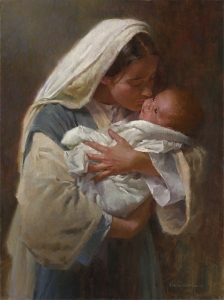 The perfect portrait of God is Jesus. And this changes everything.
 Three-plus months, thirteen weeks, and this is the picture that met me when I sat in the doctor’s office the other day.

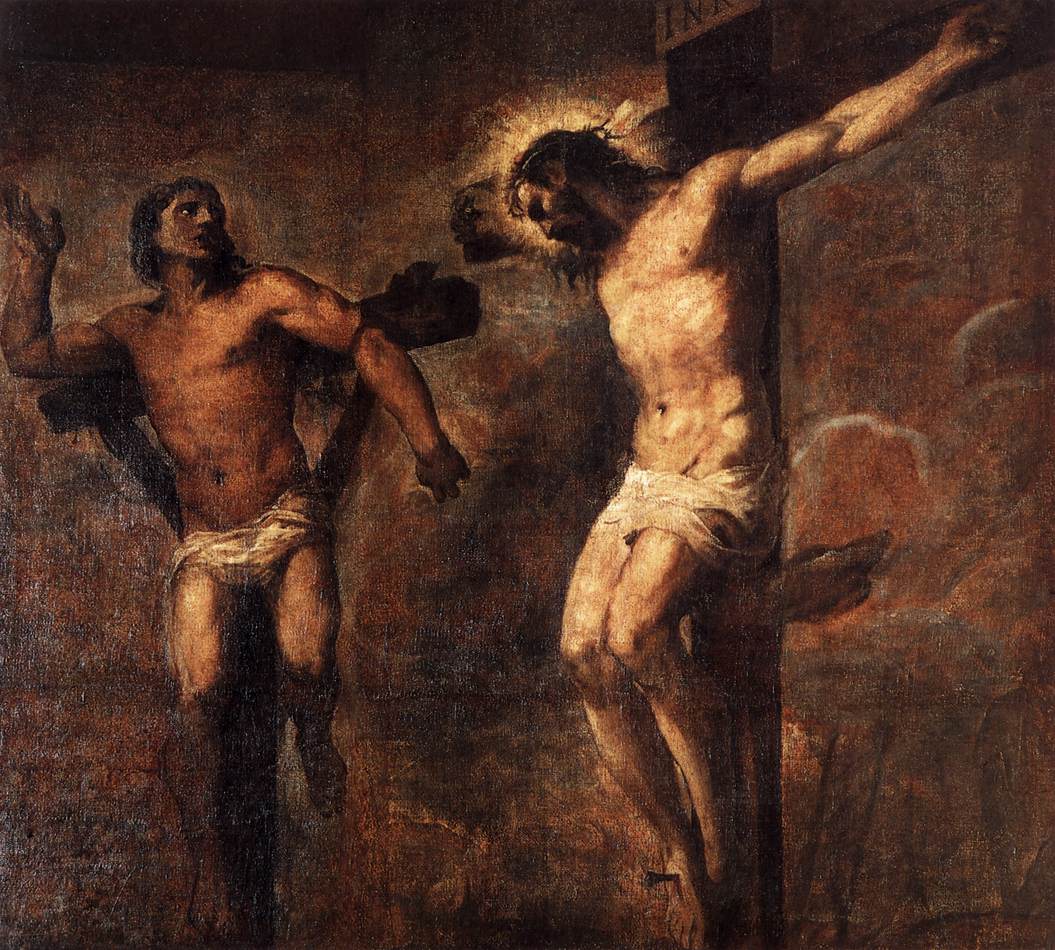


![Title: The parable of the sower [Click for larger image view]](https://i0.wp.com/diglib.library.vanderbilt.edu/cdri/jpeg/Mafa039.jpg)


 These questions lurk in the background of every single hot-button, emotionally charged, divisive issue Christians wrestle with today, from homosexuality to human evolution.
 I don’t know what comes to mind for you when you think of “literature.”


 Michael Pahl