Have you read 1 Corinthians 10 recently? I mean, really read it? Because there are some pretty odd things going on there.
In the passage Paul refers to several stories in ancient Israel’s history, stories we find in our Old Testament books of Exodus and Numbers. Most of us probably know these stories.
There’s the story of Israel’s exodus, being freed from slavery in Egypt. There’s the story of Israel crossing the Red Sea. There are the stories of Israel wandering in the wilderness, receiving manna from the skies and water from a rock. And there are the stories of Israel grumbling and complaining, rejecting God and worshiping other gods.
There are at least half a dozen different Old Testament stories about Israel that Paul alludes to here in 1 Corinthians 10. That’s not what’s odd. What’s odd are things like this:
Paul says the Israelites were “baptized into Moses” when they went through the Red Sea under the pillar of cloud.
Paul says that the manna that fell from the sky was not merely some kind of bread, but it was “spiritual food.”
And the rock they got the water from? That rock, Paul says, was actually Jesus. Christ was a “spiritual rock” that “followed them” everywhere they went, and he provided “spiritual drink” for them, not merely H2O.
None of this is actually found in any of the stories in Exodus or Numbers. Rather, Paul is reading these things into the biblical stories.
In other words, Paul is using a pretty hefty dose of imagination in reading his Bible.
Paul is imagining Jesus always present in the background of the Bible—even those passages that don’t say anything about Jesus. And Paul is imagining the church as the intended audience of the Bible, even being in the biblical stories as if they were there—even though the stories were written for people long since gone.
What Paul does in this passage might seem really strange. In fact, I wouldn’t stretch the text of Scripture quite as far as Paul does, or in exactly the same ways (hey, he’s an apostle). But Paul’s example of using his imagination to read the Bible is still a helpful model for us today, in three particular ways.
First, when we read the Bible we should imagine Jesus as its fulfilment.
I don’t think we should try and see Jesus behind every rock or prophecy in the Old Testament. But we should imagine how Jesus relates to everything we read.
For example, try reading the biblical stories and imagining Jesus among those who were oppressed, who suffered and were killed—not among the strong conquerors. That is, in fact, the story of Jesus, that he identified with the weak and the suffering, not the powerful and successful. And if we use our imaginations in this way, suddenly new stories might pop out at us in fresh ways.
We might see Jesus in the life of Ruth, the Moabite woman trying to find her way in a patriarchal Israelite world. We might see Jesus in the life of Mephibosheth, the disabled grandson of King Saul, and in the way King David treated him with surprising mercy and compassion. We might see Jesus in the life of Jeremiah, the prophet who spoke truth to power and in so doing endured ostracism and imprisonment.
Here’s a second idea: When we read the Bible we should imagine ourselves in the story.
We should use our imaginations when we read the stories of the Bible, and put ourselves in the sandals of each character in the story, whether “good” or “bad,” big or small.
Jesus’ stories are particularly good for imagining ourselves in them as different characters. In fact, he invites us to do this imagining.
You know the story of the Good Samaritan in Luke 10: the Jew robbed on the way to Jericho, the priest and then the Levite passing him by, the despised Samaritan stopping to help him. As Luke tells the story, Jesus invites his hearers to use their imagination: “Which of these three, do you think, was a neighbour to the man who was robbed?”
Put yourself in each of their sandals, Jesus says. Imagine yourself in their place. Which one was the true neighbour?
And you can almost feel the struggle in his Jewish listeners, afraid to put themselves in the sandals of a Samaritan, then being forced to admit that their scorned enemy was in fact a loving neighbour.
This is what we need to do, if we really want God to speak directly to our hearts through the Bible. We need to imagine ourselves in the story, even when it challenges our preconceptions, even when it hurts our ego.
A third suggestion: When we read the Bible we should imagine how its message can be lived out in our lives.
Jesus doesn’t end the story of the Good Samaritan by simply getting the right identification of the hero from his audience. He ends the story with these words: “Now go and do likewise.”
Go and do likewise.
Not, “Go and repeat exactly the same thing.” Not, “Go and find someone who was robbed and beaten and then bind up their wounds and take them to a safe place to heal”—though, of course, that’s not a bad thing!
No, it’s “Go and do likewise (homoiōs), do similar kinds of things.” Follow this example of mercy shown to a neighbour, a stranger, a foreigner, an enemy, the “other.” But there may be a billion different ways this same neighbour-love can be shown. It depends on our context, the needs around us, where we are at in our own story. And so this requires some imagination.
1 Corinthians 10 gives us a window into how the Apostle Paul and the other early Christians read their Bibles—loaded with imagination. We’re invited to do the very same thing when we read our Bibles.
Where is Jesus in the biblical story? Is he right there, front and centre, like in the Gospels? Or is he in the background, where we can just see the contours of his character? Does the story prompt a question that Jesus answers, or pose a problem that Jesus solves? How does what we see in the story relate to the way Jesus lived his life, the things he taught?
Where do we fit in the biblical story? Are we one of the “good guys” or one of the “bad guys”? (Don’t presume to know the answer!) Are we up among the powerful and privileged in the story, or down among the weak and lowly? Are we one of the insiders, or one of the outsiders? What is God saying to us, whichever role we find ourselves in at this particular time?
How does the biblical story fulfilled in Jesus intersect with our life? What encouragement does it give us? How does it challenge the way we think, the way we live? How can we “go and do likewise” in following Jesus in the particular circumstances of our lives?
Where is Jesus? Where are we? And how do we then live? May God stir our imaginations to answer these questions as we read the Scriptures, both on our own and together as God’s people.
I broke my foot just over three weeks ago. I’m strapped into my accursed amazing AircastTM for another four weeks or so, probably at least three of those still on crutches. I’ve named my crutches, we’re on such good terms: Starsky and Hutch. (Starsky’s the one with the scratch about halfway down.)
Aircast, Starsky, and Hutch
As far as difficult life experiences go, this one doesn’t rank near the top. I’ve seen too much death, experienced too much loss, for a mere broken meta-something-or-other to even crack the top ten. (Okay, bad choice of words, “crack.”)
But a broken foot is still no small thing. It hurt like Hades when it happened, and also for the first four days whenever I walked on it before I saw a doctor (don’t ask). Even now I’m up to the daily maximum on extra-strength Advil, just to keep up with the constant, cramp-like ache and the occasional bout of throbbing.
Actually, my body aches in places that shouldn’t ache. My shoulders and the heels of my hands ache from all that hopping around with Starsky and Hutch (I’d forgotten that hands even had heels). My AircastTM-ed leg aches from stiffening in place. My other leg aches from bearing all my weight on every other step, turning on the spot, lifting me up and down.
Every trip is an adventure. (Actually, let’s not use the word “trip.”) A stray sock on the floor is now a perilous threat. A heavy door is an impenetrable barrier. A row of steep steps is a sheer cliff (one “bonus”: I’ve not watched as much TV, the TV being in the basement). Even small, routine actions—picking up that book, carrying it to the chair, sitting in the chair—involve numerous, awkward steps to accomplish. I literally think ahead through all the distinct actions needed just to get ready for bed.
And then there’s the restlessness, the feeling of antsy-ness I get from sitting around, from not being able to go and do. Good thing I’m not generally a “go-er” or a “do-er,” a Type A kind of personality, or this would be much worse. But still there’s a nagging feeling of uselessness, a desire to be useful beyond just emailing and phoning and reading and thinking and planning and sermonating and—oh, yes—praying.
I’ve made it to a few meetings. I’ve even served at a funeral and preached at two Sunday services and stayed upright for some other church events and community activities. But still, the feeling of antsy uselessness remains. I was all excited the other day when I could actually run a couple family errands (the bank in Winkler has a drive-thru, as does Tim Hortons).
But enough about my woes. What you really want to know is, what have I learned from all this? Isn’t that, after all, why these things happen to us, to teach us?
Well, in spite of my misgivings about the theology that is often behind that idea (more on that later), I think I am learning a thing or two as I ponder my broken foot.
I’m learning patience, for one thing.
Patience with the process of healing. Healing of any kind—outward or inward, of the body or of the heart or mind—takes time, and is impossible to rush. In fact, trying to hurry up the healing can often make it worse.
Patience with myself. Yes, there are 143 separate steps involved in getting ready for bed (give or take), but they all have to be done, and in order, and safely. Time is secondary.
The beach where I broke my foot while saving my family from the bear.
Patience with others. I need to rely on others more than I’m used to (another thing I’m learning). That means that others are doing things for me that I normally do for myself. And, let’s just say, I can have very particular ways that I like to do those things (alright, I can be pretty anal about some things). So I’m learning to be patient with others, with the way they do things, and to accept their gracious gifts with humility (okay, another thing I’m learning).
Here’s something else I’m learning: empathy.
You know all that maneuvering around with Starsky and Hutch? All those impenetrable barriers (doors) and sheer cliffs (steps) and perilous threats everywhere (socks on the floor)? All that things-taking-extra-time and that needing-to-rely-on-others?
Imagine what it’s like for those who face these realities all the time.
Imagine what it’s like to never be able to get into that building, or up to that floor, or into that room, because you have a disability and the place is inaccessible.
Imagine what it’s like to be always dependent on the goodwill of other people, especially if you are living alone and the people you have to depend on are mostly strangers.
Imagine what it’s like to be in constant pain or exhaustion, or to be utterly spent after doing just a few basic, household tasks.
Many people around us face these sorts of realities every day. My broken foot pales in comparison, but it does give me a small window onto the experience of those with these greater, ongoing challenges.
There’s one more thing I’m learning—or really, that I’ve had confirmed: God did not do this, nor did God allow it to happen.
I know there are many Christians who find deep comfort in the belief that “God allowed this to happen” whenever they face an illness or a death, a job loss or even a broken foot. I can understand this. It can help people cope with a difficult circumstance if they believe there is some larger purpose behind it, that God is in control of our lives and allows even the bad things to happen in our lives in order to accomplish that larger purpose.
But I don’t believe that to be true—at least, not in the way most people mean.
I don’t believe God does anything that causes harm. I don’t believe God even allows anything that causes harm, if by “allow” you mean “knows about it in advance, could do something about it, but either passively does nothing about it or even actively permits it to happen.”
I know, I know. I know all the Bible verses and theological rebuttals. More importantly, I’ve seen the comfort this belief brings to some people. I do not want to take that comfort away from you, if this belief brings you comfort.
But I can’t believe it for myself. I can’t believe in a God who would allow a child to be raped for some greater good. I can’t believe in a God who would permit millions of people to be slaughtered in genocide for some larger purpose. It’s obscene to put my broken foot in the same category, but the principle applies all the way down the line: God does not cause harm, or even allow harm, ever.
The biblical portrayal of God in all this is rather mixed—let’s be honest. But the biblical vision of God and God’s creation, at both the beginning and the end of the story, is that God brings flourishing life, not death. That which brings harm, which brings death, is decidedly not-God. Even more importantly, this is the biblical portrayal of God as shown in Jesus. God brings abundant life; it is the enemy who steals and kills and destroys.
But note—and this is really, really important—this is not the same thing as saying that God cannot work through our experiences of harm. God does not cause harm. God does not even sit by and give permission for harm to happen. But God can and does enter into our experiences of hardship and pain and craft those experiences toward good ends. This is in fact the story of Jesus, the story of the gospel: God enters into our human experience in Jesus, God enters into our human-induced experience of suffering and sorrow and even death, and God weaves that experience into something life-giving and good.
The Jesus I’m following. Even he stumbled and fell and needed help. (DeGrazia, Way of the Cross)
This I’m convinced of, sitting here with my AircastTM-ed foot, swallowing another extra-strength Advil: God didn’t do this, I did. But God is with me through the pain and healing, and God can use this experience to shape me more closely to the image of Jesus.
In the beginning God created the heavens and the earth. The earth was a formless void and darkness covered the face of the deep. Then a wind from God stirred over the face of the waters.
Light burst from the darkness. Matter coalesced out of the void. Order emerged from the chaos.
God, the Master Creator, was creating.
The wind from God stirred again.
The land shifted. The water sloshed. Pent-up energy erupted from the briny depths, and the first cells of life were formed.
God, the Master Creator, was creating.
The wind from God stirred again.
Plants began to grow, in water and then on land: reeds and grasses, flowers and shrubs and trees. Animals surfaced from the depths: swimming, slithering, creeping, crawling, climbing, walking, flying, soaring. The world was all reds and blues and greens and golden hues, rainbows of colour in a spectrum of living, breathing diversity.
God, the Master Creator, was creating.
The wind from God stirred again.
One of those animals—an awkward, gangly, hairless thing, but with a curious brain and a social sensibility—took on a special function, a special purpose: to be the image of the Creator God in the world, to care for each other and all living things and the very earth itself.
We are those creatures, you and me and every human being: created in the image of the Creator, continuing the work of the Creator in the world.
God, the Master Creator, is still creating—through you and me.
The wind from God that first blew over that dark and formless deep, still stirs among us—stirring our hearts and minds, stirring our imaginations, to the glory of God our Creator.
God is the Creator of all things. Everything that exists, exists because God is. All things come from God, through God, and for God.
God saw nothing and imagined something—and it came to be. God saw dark, formless void—chaotic emptiness—and imagined a universe of gravitational force and electromagnetic radiation and quantum particles and atoms and molecules and cells and organs and living things and planets and stars and galaxies—and it came to be.
As Creator, God imagines what is not, and then brings it into being. God imagines what is not yet a living reality, and then brings it to life.
This is the Apostle Paul’s description of God in a nutshell: as he puts it in Romans 4:17, God is the one “who gives life to the dead and calls into existence the things that do not exist.”
God is the Great Imaginer. God is the Master Creator.
But here’s the thing: we are created in God’s image. We are each like a mirror reflecting God: reflecting God’s love, God’s faithfulness, the goodness and truth and beauty of God. But we are also created to reflect this most basic attribute of God: God’s imaginative creativity.
God the imagining Creator has created us in God’s image, to be imagining creators ourselves.
Now don’t get me wrong. I’m not saying we are God. God alone is: we are sustained by God’s being, we are only because God is. God alone can create all this, out of utter emptiness.
But this is a theological reality we must embrace: we are created in the Creator’s image, to create. And to create means to imagine, to imagine what is not and bring it into being, to imagine what is not yet a living reality and bring it to life.
You might hear this and think, “But I’m not an artist! I can’t create anything! I have no imagination!” Don’t believe it!
You are probably more creative than you think, for one thing. Most people think they can’t sing, or write, or draw, when in fact they can, with some encouragement and maybe a bit of basic instruction. Sure, we’re not all Da Vincis or Mozarts, but don’t let the presence of giftedness stop you from nurturing your own creativity.
But I’m not just talking about artistic creativity. We use our imaginations for far more than writing or music or art, or woodwork or quilting or floral displays. We use our imaginations all the time, particularly as Christians.
Every time we read our Bibles and try to make sense of what we read, we are using our God-given imagination.
We imagine ourselves in the Bible stories. There we are: we’re Adam or Eve or Ruth or David or Peter or Mary, failing or persevering or disobeying or trusting, just like them! Or we imagine biblical teaching in our own day. What, for example, does “turn the other cheek” mean for us today, in a world of terrorism and automatic weapons? We need our imaginations to help us figure that out.
Every time we exercise empathy and compassion, we are using our God-given imagination.
We imagine ourselves in the other person’s shoes. How would that feel, if that were me, coping with that illness or living under that injustice? We imagine the other person’s shoes on ourselves. So this is what they have to walk in, every single day! Our imagination is crucial to our morality.
Every time we think about God or try to make sense of our world or our human experience, we are using our God-given imagination.
We imagine God in a certain way. God is like a father or a mother, God is like a sovereign king or a noble lord or a lowly servant. We imagine our world or our experience through a certain lens. Our life stories are controlled by grand narratives like “I’m a wretched worm,” or “I am loved and I have significance,” or “God is in control,” or “God helps those who help themselves.” Our thought-life is governed by our imaginations, whether we realize it or not.
Every time we gather together for worship, we are using our God-given imagination.
We use our imagination to enter the world of the songwriter when we sing their words. We use our imagination to enter into the world of the biblical author when we read their words. We use our imagination to enter into the world of the worship leader or preacher when we hear their words. We use our imagination to enter into the presence of God here on earth as it is in heaven.
And every time we leave here and move out into the world as God’s people, into our homes, our workplaces, our schools, our shops, and more, we are using our God-given imagination.
We imagine what it looks like to be Jesus to our neighbours, our co-workers, our family, our friends. We imagine what it looks like for God’s kingdom to come, God’s will to be done, here on earth as it is in heaven. Our imaginations are vital to our worship and mission as people of God.
We are created in the image of our Creator to create: to imagine that which is not, in order to make it a reality in our thoughts, our feelings, our relationships, our everyday lives; to imagine that which is not yet a living reality, in order to bring it to life in the real world.
May God stir our imaginations in a multitude of ways—in our reading of Scripture, in our thinking about God and the world, in our worship together, in our empathy and compassion for others, in our sense of mission as a church, and more—and then “accomplish abundantly far more” than all we can ever imagine!
We all get those emails, forwarded to us by a concerned friend or family member. Or we see the posts as we scroll through our Facebook feed. Or we hear the reports in the coffee shop, passed along in solemn tones. Something alarming has happened in the world, or is about to happen, or is being planned even as we speak.
You know the ones I mean. I’m talking about those emails or posts or reports that claim that we’re about to be overrun by violent Muslim extremists masquerading as refugees, or that Donald Trump is following Hitler’s playbook, or that there’s some gay agenda to take over our schools, or that climate change is a hoax, or that we’re all going to die in fifty years because of climate change, or whatever.
Usually, when I see these kinds of posts or get forwarded these kinds of emails, I sigh out loud and then hit the delete button or keep on scrolling. Maybe you’re the same way.
But sometimes the email or post requires a response, or maybe it’s something we feel we should be aware of if only to know what people are talking about when they mention it. Or, maybe something about it even grabs our attention and we think, “What if it’s true?”
What do we do then?
In our era of instantly, constantly available “news,” how do we sift through the chaff and find the truth? How should we even think or feel about the relentless storm of bad news, conspiracy theories, and conflicting claims that swirls around us in this age of dis/mis/information?
When sigh-and-delete is not an option, there are three things I try to do. Maybe you will find these things helpful, too.
First, I remind myself that we are called to be people of faith, not fear. These kinds of reports are always driven by fear: at bottom they exhibit a profound lack of trust in God.
These reports are driven by fear, not motivated by faith. The fear may be understandable, it might seem natural, but it runs counter to the fundamental stance of a follower of Jesus: a stance of faith in God.
Second, I remind myself that we are called to be people of love, not enmity. We are commanded by Jesus to love our neighbours—anyone we encounter who is in need—but also to love our enemies—anyone who opposes us, even violently.
The fear that I’ve just mentioned often leads to a kind of “defensive antagonism”—we get our hackles up (it’s the “fight” in the “fight or flight” response built into our most primitive intuition). That defensive antagonism can sometimes leap immediately to the extreme of physical violence, but more often it takes the form of hostile attitudes that settle in our hearts, which then build toward offensive words and aggressive (or passive-aggressive) actions.
This is essentially the nature of prejudice or bigotry: fear, when fueled by ignorance and left unchecked by genuine faith and love, leads to hostile attitudes that separate “us” from “them,” and ultimately to more direct actions of injustice and oppression.
But we are called to empathy and compassion, not prejudice and bigotry. We are called to love, not enmity.
And this leads to the third thing I do: I remind myself to gain knowledge about a situation and to learn more about the “other.” It’s important that we do our best to discern the truth about our world and one another, in order to love each other better. Knowledge dispels ignorance, which is crucial for dismantling bigotry and oppression.
For myself, I avoid the so-called “news” sources on either the extreme right or extreme left. Instead I try to get my news from major news outlets—whether leaning left or right—that follow basic codes of journalistic integrity. When I come across a specific item, I first look to its source to see if it fits the bill.
I might also do some quick fact-checking on sites like Snopes.com or TruthorFiction.com (for popular stories), FactCheck.org or PolitiFact.com (for American politics), or Wikipedia (for general info). If more in-depth research is needed I’ll follow the links at those sites, or, even better, I’ll search more academic or technical sources of information such as research pages at university websites, scholarly research portals, various UN sites, or others. I’ll check multiple sites if needed to avoid getting only one angle on things.
Yes, this all takes time, and it doesn’t always yield clear and simple results. Discerning truth is like that. And sometimes we just have to say, “I’m not sure what’s going on, but I still choose to live in faith and love.”
It has never been easy to be a discerning follower of Jesus in the world, being, as Jesus put it, “wise as serpents yet innocent as doves.” In some ways it’s even harder now, with millions of terabytes of information at our fingertips, both true and false, used both for good and for ill.
May God give us wisdom as we seek to discern the truth in our complex world, and may God give us faith and love—and hope!—in a world that at times seems determined to rob us of these gifts.
What is the Bible? And, as Christians, how should we read it?
These questions lurk in the background of every single hot-button, emotionally charged, divisive issue Christians wrestle with today, from homosexuality to human evolution.
The reasons for differences of opinion among Christians are complex. Personal experience, social and cultural realities, traditions that can in some cases stretch back centuries—all these play into why we believe what we believe about anything. But this is a crucial part of the mix: what we understand the Bible to be, and how we think it should be read.
These questions are also often on the minds of Christians as we navigate through the uncharted waters of a post-modern, religiously plural world. The very humanness of Scripture, its historical origins, can no longer be ignored—this has been mainstream scholarship for more than a century. And we are more aware now than ever of the sacred texts of other religions, as well as their similar and competing religious claims.
In light of these things, how should we as Christians view our sacred text, the Bible? How should we read it?
Over the past two-plus decades as a biblical theologian and pastor I have found it helpful to think of the Bible in four inter-related ways: as inspired Scripture, as ancient literature, as diverse anthology, and as witness to Jesus. And understanding the Bible in these ways has some very practical implications for how we read it.
The Bible as Inspired Scripture
“All Scripture is inspired by God…”
It may well be that no words in the Bible have had more read into them than these words.
These well-known words are from 2 Timothy 3:16. For the moment let’s leave aside whether this is the best way to translate the Greek text. And let’s bracket off the question of whether this description of the Jewish Scriptures (our Old Testament) should also be applied to the New Testament. Those are valid questions. But even if we move past those hurdles, there’s at least one significant thing 2 Timothy 3:16 doesn’t say: it doesn’t say how Scripture is “inspired” or “God-breathed.”
Rather, we have to import our own ideas about the how of inspiration into our reading of 2 Timothy 3:16. And very often our ideas of exactly how Scripture is inspired come from some very questionable assumptions.
We imagine, maybe, that the human authors of the Bible—Moses, David, Isaiah, Luke, John, Paul, to name a few—sat down at their writing desks, quill in hand, parchment laid out before them. Perhaps they reflected prayerfully on what God wanted to say through them, and then, as the Spirit moved in them, they began to write. Steadily, thoughtfully, carefully, always attuned to the Spirit’s inner promptings. When they finished, there before them was an inspired, inerrant manuscript—God’s very words in still-drying ink.
But wait a moment. Is that really how it worked? Consider this:
Paul used a scribe (Rom 16:22). Likely, even for a literate person such as himself, this was his normal practice. Perhaps, if the scribe was well-trusted, Paul might even have just dictated notes to the scribe, who would then flesh out those notes into a letter, getting Paul’s authorization—and maybe a brief handwritten note (Gal 6:11)—for the final product.
Luke used sources (Luke 1:1-4). He read previous writings about Jesus, he talked with people who knew Jesus, and then he carefully planned out his two-volume story of Jesus and the early church. In other words, he did the work of an ancient—not modern, mind you, but ancient—historian.
John’s Gospel was edited by others (John 21:24). There’s a “beloved disciple”—possibly John, the son of Zebedee, but who knows for sure?—who “testified to” and “wrote down” certain things about Jesus. But then there’s a “we” who comes after, who collectively added their own testimony to this earlier disciple’s testimony.
The Psalms were collected over centuries (Pss 23:1; 90:1; 137:1). Even if we take the Psalms’ opening ascriptions at face value—another difficult question—we have to face the fact that we have a psalm that claims to go back to Moses, right alongside several that state they are David’s, mixed in with some that clearly come from Israel’s exile in Babylon.
Use of scribes, use of prior sources, later editing by an individual or even a community, collection by different peoples over many centuries—the fact is, these realities are the norm for the writings we have in the anthology of ancient literature we call the Bible.
These realities are also the bread and butter of biblical scholars. They are the basics of the business: comparing ancient manuscripts, discerning prior sources, tracing out later editing, sketching out how these writings have been received and read over the centuries.
But these realities are not easily accepted by many Christians—and much of the reason for this is all those questionable assumptions we import into 2 Timothy 3:16, bringing in some (quite frankly) untenable ideas about what “inspiration” must involve. For it turns out that our imagined biblical author—the individual person before God, perfectly in tune with God’s Spirit, producing inerrant truths in written propositions—is a projection of our own modern sensibilities. This image has nothing to do with the way the biblical writings actually came to be.
Are the biblical writings actually inspired by God? I believe so. As a church we confess this to be so. “All Scripture is inspired by God through the Holy Spirit for instruction in salvation and training in righteousness,” our church denomination’s Confession of Faith says. But we stop short of insisting on a particular view of how God inspired these ancient human writings. Instead, we are wise simply to say, as our Confession of Faith goes on to say, that “God was at work through the centuries in the process by which the books of the Old and New Testaments were inspired and written.”
To say, then, that the Bible is inspired by God, is to say that God was at work in this complex and very human process, through authors and scribes and editors and compilers and communities—and that God can speak to us through this ancient, diverse collection of human writings.
The Bible as Ancient Literature
Because that’s what we have in our Christian Scriptures: the Bible is an anthology of ancient literature.
I don’t know what comes to mind for you when you think of “literature.” Merriam-Webster defines it as “writings in prose or verse; especially writings having excellence of form or expression and expressing ideas of permanent or universal interest.” That’s not a bad definition, both the generic side of it (“writings in prose or verse”) and the more specific (“writings…expressing ideas of permanent or universal interest”).
To say that the Bible is a collection of “literature” means, then, that what we have in the Bible is “writings in prose or verse.” More specifically, we have different kinds of writing in prose or verse, different literary genres—and these different genres are not unique to the Bible.
A few examples:
The opening chapters of Genesis are ancient origins stories, akin to origins stories from Egypt and Mesopotamia and elsewhere. The move from original chaos to order and abundance? Humans made from mixing dirt and divine essence? Sounds like Genesis, and it is, but these and other features are also found in other—and even earlier—ancient origins stories. Yes, the Genesis stories are distinctive—giving a strong monotheistic, “one true and living God” outlook, for instance—but as literature they’re in the same ballpark as these other stories.
The collections of laws of Exodus, Leviticus, and Deuteronomy are in the same vein as other ancient legal codes.Hammurabi’s law code from ancient Babylonia covers religious matters, slavery, military service, social conduct, and more—just like the Law of Moses. “Eye for an eye”? It’s in there, a few hundred years before Moses. The biblical laws flow in this stream of ancient legal codes, even as they present some distinctive perspectives on God and religion and society.
The stories of Jesus we know as the Gospels are ancient biographies, similar to those of Plutarch, Lucian, and the like. A focus on a particular individual, skimming their adolescence and jumping into their public life, presenting some of their important sayings and key life events, highlighting their death, all to commend them as worthy of admiration or imitation—these elements of other ancient biographies are evident in the Gospels. The claim that the subject of your biography is the promised king in David’s line bringing about Yahweh’s reign on earth, or that he rose from the dead? Not so much—but then that’s what Christians claim makes them “gospel,” or “good news.”
The book of Revelation is an example of ancient apocalyptic literature, one of a dozen or so such Jewish or Christian apocalypses from that era. Things like angelic guides and multi-headed beasts and repeated numbers might seem weird to us, but they’re the basic grammar of ancient apocalypses. They’re subversive literature, the literature of a minority feeling under siege, re-imagining their world in light of God’s coming kingdom—and John’s Revelation is no exception.
Like all the scribes and sources and editing and collecting behind the Bible’s production (see above), these kinds of historical and literary features are commonplace for biblical scholars. They are part of the scholar’s everyday work of understanding the biblical writings in their historical and cultural settings.
But these sorts of things can be scary for many Christians. And, as I suggested earlier, much of the reason for this fear is all those questionable assumptions we bring to what inspiration must involve. We have a view of inspiration—even just a view of the way God works in the world in general—that assumes that if God does something it must be clearly, discernibly divine, nothing human about it.
That’s strange, really, when you think about it. After all, one of the most fundamental convictions of Christianity is the claim that God has become human in Jesus—both fully divine and fully human, the eternal God revealed in the man Jesus.
If that’s true, why do we then insist inspired Scripture be somehow less than human?
But even if we can move past those wrong assumptions and accept the divine-voice-through-human-words of Scripture, even if we can confess that this anthology of ancient literature is in fact inspired by God, a crucial question remains: How do we hear God’s voice in Scripture?
We’ll get to that in a bit. But first, there’s still more we need to explore about what Scripture is.
The Bible as Diverse Anthology
A key idea I’ve emphasized here is that whatever we mean by Scripture’s divine inspiration, it cannot mean that the biblical writings are somehow not genuinely human writings. As I said earlier:
Written in ordinary human languages and idioms, making use of conventional genres, employing scribes, relying on prior sources, edited by individuals and communities, collected by different peoples over many centuries—the fact is, these realities are the norm for the writings we have in the anthology of ancient literature we call the Bible.
This really shouldn’t bother us. If anything, we who believe that God has been revealed most clearly and fully in a human being, the man Jesus, should expect that God’s voice in Scripture is to be heard only through the utterly human voices of the biblical authors.
And it truly is a diversity of voices in Scripture. The Bible is not really a single “book.” It is, as I’ve just described it, an “anthology”—a collection of different writings by different human authors.
Consider some examples:
We have two different creation stories side by side in Genesis. The first (Gen 1:1-2:3) describes God as Elohim, the Mightiest One, who stands beyond the earth and speaks creation into existence, crafting a well-ordered and richly filled palace-temple for himself, with humans as his priest-kings and priestess-queens. The second (Gen 2:4-25) describes God as Yahweh Elohim, God in covenant with Israel, who comes to earth and gets their hands dirty in shaping the Human to care for their flourishing garden.
We have two different histories of Israel in the Hebrew Bible, the Christian Old Testament. The first (Samuel-Kings) tells the story through the lens of Deuteronomy: good kings uphold the covenant of Moses, bad kings do not, and in the end it all goes bad because the people of Israel and Judah abandon Moses’ Law. The second (Chronicles) tells the story through the lens of David: the worship established by David in the Temple built by David’s past son must continue, and the kingdom promised to David will be restored to David’s future son.
We have 150 Psalms giving a dozen different portraits of worship. The rugged individualist hanging out with God in nature? The Temple liturgist composing for antiphonal choir amidst all the smells and bells? The bibliophile scribe caught up in the wonders of the Torah? The exiled poet leading others by a foreign river, pining for a temple, doing the best they can with what they’ve got? Glorious tapestries of song, rich in theological expression? The “God, give me what I want and I’ll praise you” kind of worship? It’s all there.
We have four different biographies of Jesus in the New Testament. There’s Mark’s sparse, orally crafted story exploring what it means to claim that this crucified Jesus is “the Messiah, the Son of God.” There’s Matthew’s didactic adaptation of Mark, highlighting the Moses-like teachings of Jesus for a Jewish Christian audience. There’s Luke’s well-crafted, liturgically rich alternative to Matthew’s story, presenting Jesus to a wider audience: not just Jews but Gentiles, not just men but women, not just rich but poor. And then there’s John’s alternative to all the rest, giving the “beloved disciple’s” expanded re-presentations of Jesus’ life and teachings as the Word made flesh, come to bring life to the world.
This diversity can be problematic for Christians. For some, it’s terribly uncomfortable. We want God to speak clearly and consistently, a single voice on every issue. Some even go to great lengths to harmonize all these differences, to reassure ourselves and our communities that there is one clear biblical teaching on x and y and z. So when we begin to recognize the Bible’s diversity, especially on some central matters of Christian belief and practice, we get antsy.
This diversity can be problematic beyond just the discomfort we feel about it. For the history of biblical interpretation makes one thing abundantly clear: we can justify almost anything by appeal to the Bible, even things that are contradictory.
All of these things are “biblical.” All of these things are “clear from Scripture.”
The problem, again, is one of wrong expectations based on false assumptions. We assume the Bible’s divine inspiration ensures a uniformity of teaching on all things, but the biblical writings never actually claim such a thing. There are plenty of claims in Scripture about Scripture—claims of biblical commands or promises being God’s “word” or “message,” of God “revealing” God’s self or God’s will in or through them, of Scripture being “useful for teaching” for faith and life, or of Scripture reliably “testifying” to Jesus, of Scripture being “true.” But it’s only our assumptions that make us think these claims must mean Scripture presents a clear, uniform perspective on any particular question or issue we might face.
But there is something that unites these diverse writings. An “anthology” is not just a random collection of writings, and the Bible is no exception. There is something that unites this anthology, that makes it make sense as a collection. And, I would suggest, we are indeed right to see in that “something” the Voice of God that we are searching for.
So how do we get there? How do we find that “something” that unites this inspired Scripture, this diverse anthology of ancient literature? To answer that question, let me start with a few general observations.
The unity of Scripture is not uniformity, but unity in diversity. It’s not a monochrome picture, but a whole spectrum of colours. It’s not univocal, a single voice, but polyvocal, many voices. It’s not a monotone, but a whole array of tones: sometimes discordant, sometimes harmonious, often haunting, profound, encouraging, challenging.
The unity of Scripture is not static, but dynamic. There is change in thought from earlier to later biblical books, sometimes even intentional, direct change. This change is good, we say by faith: it’s a progression, not a moving backward, or sideways. This change is even sometimes that of a trajectory that aims beyond Scripture, giving an unfinished arc that invites us to step in and complete it.
And the unity of Scripture has a significance greater than the sum of its parts. The “something” that unites Scripture is in fact a Someone. The many voices of Scripture are like echoes of their Voice in a dark tunnel, which we hear, dimly. Or they’re like the many voices of a choir that together make a single choral Voice—which is the whole point of these many voices, their very raison d’être.
In other words, the progressive unity in diversity of Scripture, the Voice through the Bible’s many voices, is rather like this:
Okay, so the Bible is inspired by God, but this doesn’t deny its humanness. It is a diverse anthology of ancient literature. But its inspiration by God does mean that God speaks through Scripture, somehow. The Voice of God can be heard through Scripture, if we have ears to hear. But how does that work? How does God speak through this ancient collection of diverse human writings?
By pointing us to Jesus.
The Bible as Witness to Jesus
Imagine that you’re reading a really good story. It’s the kind of story you hate to put down and you can’t wait to get back to. It’s got an interesting premise, a believable world, compelling characters, and a riveting plot. It’s enlightening and challenging and entertaining and disturbing and refreshing.
Now imagine that you’re reading along in this story, you finish a chapter, you turn the page—and it’s blank. The story just ends, abruptly. “Wait a minute,” you think, “that can’t be it. There must be more!”
So you talk with others who have read the same book, and you find they feel the same way. There are too many expectations unfulfilled, too many questions unanswered, too many tensions left unresolved, too many characters undeveloped, too many loose ends. The story is terrific—it’s just incomplete. It needs a sequel.
As you talk with other fans of the story, though, you realize everyone has different views on how the story should end. You argue back and forth, and different camps emerge: some say the story would best be completed in one way, others say, “No, it has to finish this way!” and still others think they alone have the best ending to the story.
This was the way it was for the people of Israel after the time of the Old Testament, after the ancient kingdoms had fallen, after the exiles to Assyria and Babylon and beyond, after some had returned to Jerusalem to rebuild a city, a temple, and a way of life. In those centuries, the Jewish people read their Bible just like this story: it’s compelling, it’s enlightening, it’s challenging—but it’s incomplete. There was something more to come. There just had to be.
The Jewish Scriptures presented a story in search of an ending. But Jews of that day disagreed about how the biblical story should end, and different views emerged.
Some expected God to come in a mighty supernatural act to overthrow God’s enemies and establish God’s kingdom on earth. Others longed for that same result, but thought God would only act if everyone followed the Law of Moses the way they were supposed to. Still others thought God would not act supernaturally, but God would only act through God’s people, so the Jews needed to be prepared to fight God’s enemies when God came. Some thought they needed to begin the fight right now. And still others thought all this was nonsense: God comes among us now when we worship in the Temple, they said, or when we study the Law of Moses.
Today we know of these different groups as the Pharisees, the Sadducees, the Essenes, the Zealots—and there were others, and factions within them. Each of these groups saw Scripture as a story in search of an ending, and they each offered a different ending to the story.
For the first followers of Jesus, the earliest Christians, nearly all of them Jews, Jesus was the proper end to the biblical story. To use the Apostle Paul’s words, Jesus is the “end” of the Law of Moses—he is its telos, its “completion,” its purpose and goal, its fitting conclusion (Rom 10:4). To use language especially loved by Matthew, Jesus “fulfills” the Scriptures (e.g. Matt 5:17-18). All those biblical expectations of God coming to God’s people, of God acting on behalf of God’s people, of God bringing in God’s kingdom on earth—Jesus fulfills these expectations. All throughout the New Testament, this same idea comes through in different ways (e.g. Luke 24:13-27; 1 Cor 15:3-4; 2 Tim 3:15-17; 1 Pet 1:10-11).
The Jewish Scriptures—the Christian Old Testament—present a story in search of an ending. And, for Christians, Jesus is the fitting ending to the Old Testament story.
To say that is an act of faith, of course. Not everyone in Jesus’ day agreed with this, and not everyone agrees with it today. But one of the earliest and most basic confessions of Christian faith is “Jesus is the Christ, the Messiah,” and to confess that is to say exactly this: we believe Jesus is the promised king in the line of David, the one who will bring in God’s kingdom on earth and fulfill God’s purposes for Israel and all humanity. In other words, Jesus is the fitting ending to the Old Testament story.
We also, of course, need to be careful how we say this. We must not devalue the Old Testament in its own right. These are the sacred Scriptures of Judaism, the Tanakh, and they are challenging and entertaining and disturbing and refreshing and enlightening—through the many voices of these Scriptures one can still hear the voice of God. But even Jews today acknowledge in some sense the “incompleteness” of these Scriptures centred on the Torah, the Law of Moses, and so they look to a long line of interpretive traditions, most significantly the Talmud, to complete them through explanation or expansion. Many Jews await a completion still to come.
So the Old Testament is a story in search of an ending. And by faith we as Christians say that Jesus is the fitting ending to the Old Testament story. But what difference does this make for how we should read the Old Testament? Let’s go back to that picture we started with: reading the story that ends abruptly.
Let’s say that in talking with others about this unfinished story, someone shares an ending to the story that is so compelling you can’t help but wonder if they are reading the author’s mind. All those unfinished plot threads are woven together. Characters are developed in believable ways. The questions are answered, the problems are resolved, the expectations are fulfilled. It’s a fitting ending to the story.
But let’s say this ending is surprising. We’ve all read books or watched movies that have a surprise ending. It’s still a fitting ending to the story, it makes sense of the story and brings everything to a satisfactory conclusion, but it’s different than anyone could have guessed.
What do you do with that book or movie? Well, the next time you read that book or watch that movie you’ll read or watch it differently, won’t you? The story is the same as it has always been, and much of it won’t seem any different. But you’ll see hints of that surprise ending that you never noticed before. Some of those things that seemed odd now make sense. Whole sections of the story take on new significance. You might even reconsider what the story’s really all about, now that you know how it ends.
That’s what it’s like for us reading the Old Testament, confessing that Jesus is its fitting ending. Because Jesus certainly is, in many ways, a surprise ending to the story.
Most Jews in Jesus’ day expected a Messiah, but no one expected a Messiah like Jesus: a Messiah who fed the poor and healed the sick and touched the lepers and ate with outcasts and forgave sinners.
Most Jews in Jesus’ day expected God to bring in God’s kingdom on earth, a kingdom of peace and justice, but no one expected the kingdom to come about like Jesus did it: not with an army but with a dozen straggling followers, not with swords but with words of truth and deeds of love, not with power and might but in weakness and self-sacrifice.
Most Jews in Jesus’ day expected God to act on behalf of Israel, but no one expected God to act like Jesus did: born into poverty, living in utter humility, utter humanity, suffering and dying in shame and disgrace.
Jesus is a fitting ending to the biblical story, but he is also a surprise ending to the story.
So what do we do with that surprise ending? We re-read the story in light of it.
This is just what the Apostles and the earliest Christians did, and we follow in their footsteps left for us in our New Testament. They proclaimed Jesus, they explained Jesus, and they did this in large part by re-reading their Scriptures in light of Jesus, the completion to the story.
This doesn’t mean we try to find Jesus explicitly on every page of the Old Testament. No, the plural “Let us make” in Genesis 1 is not a reference to the Trinity. No, the “angel of God” that appears to Abraham is not a pre-incarnate Jesus. No, there is no secret Bible code in the patterns of Hebrew words that spells out “Jesus” (not even ישוע). We still need to read the Old Testament in light of its genres, its different kinds of writing. We still need to hear the different voices of the various Old Testament writings.
Rather, it’s more that Jesus answers questions that are raised in the Old Testament. Jesus solves problems that are posed in the Old Testament. Jesus resolves tensions that are presented in the Old Testament. Jesus fulfills expectations that are prompted in the Old Testament. Jesus lives out values and virtues that are affirmed in the Old Testament. Jesus brings together important ideas that are highlighted in the Old Testament.
So, for example, we see in Jesus an emphasis on love, that God loves us deeply, that the most important thing we can do is love God and love other people—and so we read the Old Testament as Jesus did and find running through it streams of hesed and tsadiq, loyal love and covenant faithfulness.
We see in Jesus a rejection of physical violence, a refusal to repeat the cycle of violence, a willingness to absorb violence himself in order to spare others that fate—and so we see in the violence of the Old Testament something less than God’s ideal, and we highlight the Old Testament calls for forgiveness and mercy and enemy love.
We see in Jesus God bringing about healing for broken people, even a broken creation—and so we find in the Old Testament a recurring pattern of God creating something good, then humans distorting that good thing through sin, and God never giving up, always responding with forgiveness and restoration.
So as Christians we read the Old Testament as if Jesus is the fitting ending, yet the surprise ending, to the Old Testament story. We read the Old Testament in light of Jesus, and we see in the Old Testament all those threads that are woven together in Jesus—threads of peace and justice, repentance and forgiveness, liberation and healing, suffering and joy, love and life, death and resurrection in the kingdom of God.
But there’s still more to the story. And this “more” is the most surprising thing of all.
Let’s go back once more to that image: reading that story that ends so abruptly, the unfinished story. Let’s say you hear that ending to the story that you find compelling, that surprise ending that still completes the story in a satisfying way.
But let’s say a big part of the surprise at the end is this: the author has written themselves into the story.
Because that’s what you find in Jesus. The New Testament claims that the Author of it all, the God who has shaped humans out of the stuff of earth and breathed life into them, the God who has taken up the writings of Scripture and “breathed” life-giving power into them—this God has entered the human story in Jesus.
Take a look at the opening words of Hebrews, for example: “Long ago God spoke to our ancestors in many and various ways by the prophets, but in these last days he has spoken to us by a Son.” Jesus is this “Son” who is the very voice of God in “these last days,” this time in which God is bringing to completion God’s purposes for human history. The passage goes on to say this about God’s Son, Jesus: “He is the reflection of God’s glory and the exact imprint of God’s very being” (Heb 1:1-3).
It’s quite the statement. Jesus has come, and everything has changed. God still speaks to us in many different ways—through creation, through each other, through many surprising ways, and yes, through Scripture, written by many different prophets and apostles in the past. But Scripture is no longer the best voice of God we have. We now have a better Voice of God, an exact imprint of God: Jesus.
This idea is expressed in a variety of ways throughout the New Testament. Colossians describes Jesus as “the image of the invisible God,” the one in whom “the whole fullness of deity dwells bodily,” and thus the one “in whom are hidden all the treasures of wisdom and knowledge” (Col 1:15-18; 2:3, 9). Matthew’s Gospel ends with Jesus saying this: “All authority in heaven and on earth has been given to me”—in other words, the authority of God (Matt 28:18-20). Revelation describes Jesus as “the Alpha and the Omega, the first and the last, the beginning and the end”—that is, the one who brings together the whole of human history (Rev 22:13).
But there’s one passage that highlights this truth in an especially profound way: the opening to John’s Gospel. Take a fresh look at some of those most familiar statements.
“In the beginning was the Word, and the Word was with God, and the Word was God” (John 1:1). Jesus is the eternal, divine “Word”; Jesus is God’s eternal message, the message God has been speaking from eternity past.
“And the Word became flesh and lived among us, and we have seen his glory, the glory as of a father’s only son, full of grace and truth… From his fullness we have all received, grace upon grace. The law indeed was given through Moses; grace and truth came through Jesus Christ” (John 1:14-17). The eternal, divine “Word,” God’s eternal message, the message God has been speaking from eternity past, has become human and lived among us in Jesus of Nazareth. This Living Word, this living message of God, is connected to the messages God has given before, like the Law of Moses, but it’s also different: it is the embodied message of God’s grace and truth, the enfleshed glory of God.
“No one has ever seen God. It is God the only Son, who is close to the Father’s heart, who has made him known” (John 1:18). Jesus of Nazareth, God’s unique Son, the eternal, living message of God, has made the invisible God visible to us.
Again, it’s quite the statement. Jesus has come, and everything has changed. God still speaks to us in many different ways, including Scriptures like the Law of Moses. But these other “words” of God, including various commands and promises of God reflected in Scripture, are at best echoes of the eternal “Word” of God. We now have a better Voice of God, the eternal message of God come in the flesh, showing the world the fully embodied grace and truth of God: Jesus.
Jesus is the Voice of God we have been searching for. Jesus is the ultimate revelation of God, not Scripture, whether Old Testament or New. Jesus is the fullest and clearest picture of God we have.
So if we want to hear God’s Voice most clearly, most fully, we need to look through Scripture to Jesus—through the Bible’s many voices, through the Bible’s mixed messages, through the Bible’s diverse genres in different eras, to the Jesus who lived and taught and healed and died and rose again, who lives among us still by his Spirit.
If we want to know who God is, we need to look through Scripture to Jesus—and we find an eternal Creator who comes near to us, who becomes one of us, who lives among us, who loves us deeply and wants us to experience full and flourishing life.
If we want to know the way God works in the world, we need to look through Scripture to Jesus—and we find God doing surprising things, working through the humble and lowly, through suffering and weakness, always to bring about good for humanity and all creation.
If we want to know what God values, the things God thinks are important, we need to look through Scripture to Jesus—and we see that God values people, and the earth, and self-giving love and loyal faith, and repentant sinners and joyful parties and little children and telling stories.
If we want to know what God requires of us and desires for creation, we need to look through Scripture to Jesus—and we find that God wants us to love, to care for each other even when it hurts, to show compassion even to an enemy, to do justice and love mercy and walk humbly with our God.
If we want to know God and do God’s will, we need to look through Scripture to Jesus. In other words, we need to read the Bible to follow Jesus.
And that’s the final surprise in all this: Jesus invites us to continue the story. Jesus calls us to take his yoke upon us and learn from him. Jesus calls us to take up our own cross and follow him. Jesus calls us to come out of our tombs, and live. Jesus calls us to continue the story, our story set within his story, his story set within the story of Israel, the universal human story, the story of God.
This doesn’t mean we learn the words of the story and repeat them by rote. It doesn’t mean we learn the precise movements of its characters and act them out over and over. In other words, it doesn’t mean we treat the Bible—Old Testament or New—like an owner’s manual or a rule book, prescribing once and for all our every move for every time and place.
It means entering Jesus’ story ourselves, soaking Jesus’ story into ourselves, his teachings and actions, his attitudes and values, his character and virtues—living in the Spirit of Jesus. And then it means stepping out in faith and hope and love, improvising our parts together within the drama of life as we respond to the always-fresh, always-surprising movement of the Spirit of Jesus among us.
One of my parishioners in a former church used to say that preachers really only have two or maybe three different sermons. “Every sermon they preach—doesn’t matter the text or the title—is really just a variation of one of those two or three sermons,” he’d say.
I’m not quite that cynical about the average pastor’s ability to navigate through a wide terrain of topics and Biblical texts. But I do think my friend was on to something. In fact, as I’ve been reflecting back on three years of preaching here at Morden Mennonite, I think pretty much all of my sermons—along with my pastoral counsel—can be boiled down to one of these two basic exhortations:
Trust in God.
Love one another.
Exploring the mystery of the divine? Trust in God.
Dealing with the latest hot issue? Love one another.
Facing a financial crunch? Trust in God.
Wondering how to strengthen your marriage? Love one another.
Grieving the loss of a loved one? Trust in God.
Got a difficult situation with a co-worker? Love one another.
Needing to make a major decision? Trust in God.
Your son has just come out as gay? Love one another.
Of course, by themselves these refrains—“Trust in God” and “Love one another”—can sound trite. They can be trite: overly simplistic, pat answers, bumper sticker slogans empty of any real meaning or usefulness. Life is complicated, and these statements need to be nuanced and explained, their significance teased out in practical ways.
And in my preaching and teaching and pastoral guidance I certainly say a whole lot more than just “Trust in God” and “Love one another.” I attempt to set biblical texts within their ancient context, and then try to let them speak to us in our current context. I invite us to enter into the theological and moral imagination of Jesus and his first followers. I talk about what this “faith” and “love” looked like when Jesus did them, and what they might look like for us today, in our particular circumstances.
And yet, distilled to their most concentrated form, my sermons and conversations always seem to be some version of these two simple appeals:
Trust in God.
Love one another.
I’ve been reflecting again on the Gospel of John lately. It’s curious how I keep coming back to that Gospel, or maybe more that John’s Gospel keeps coming back to me. I gravitate toward the Synoptic Gospels—Matthew, Mark, and Luke—and the letters that bear Paul’s name. And yet every time I attempt to articulate the core message of these other writings, or the heart of my Christian faith, I seem to end up using John’s language to do so. So it is once again.
Because in the living waters of John’s Gospel two verbs keep rising to the surface, over and over again: “believe” and “love.”
The first one, “believe,” is pisteuō in Greek. This word is not as narrow as the English word “believe.” We tend to use “believe” as “I believe x to be true,” where x is some statement or claim. Or we simply say “Just believe!” or (same thing) “Believe in yourself!”—be authentic to who you are, trust your instincts, your own inner resources. In John’s Gospel, though, as throughout the New Testament, “believe” is more the idea of “I trust in, I rely upon, I am committed to God/Jesus.” It’s a personal thing, an interpersonal thing, our dependence upon and fidelity to the God embodied in Jesus of Nazareth.
The second verb, “love,” is John’s comprehensive ethic: it’s every good thing that anyone does for anyone else. God loves Jesus. God loves the world. Jesus loves his disciples. Jesus’ disciples love Jesus, and love God, and love each other. This love is not about natural attraction or permissive tolerance, but rather selfless giving: a Father giving his beloved Son for the world, a Son giving his life for his disciples, his disciples giving themselves for one another and the world.
Trust in God.
Love one another.
Simple, isn’t it? Maybe. But it’s certainly not easy. In fact, these are the most difficult things we can do.
Trust in God—even when the whole world seems paralyzed by fear of the unknown other, the unknown future.
Love one another—even when the whole world seems caught up in a self-righteous cycle of harm and offense, hostility and retaliation.
Trust in God—right at that moment when your resources are low and your worry is high and you can’t see a way out of this mess.
Love one another—yes, even that person, the most unlovable, annoying, strange, disturbing, [insert negative adjective here] person you know.
Trust in God—cry out to God with your anger, your fear, your unbearable sadness, your overwhelming loneliness, and then look for God’s presence right where you least expect it, right where you most need it.
Love one another—hold that hand in awkward silence, listen to that wounded heart, speak up for that voiceless person, give that fifty bucks, change that flat tire, celebrate that achievement, learn about that culture, learn that child’s name.
Trust in God—pray and worship, weep and lament, sing and rejoice, question and complain, contemplate and meditate, explore with raw wonder the transcendent mystery and immanent presence that is God.
Love one another—be kind, be generous, show compassion, show respect, speak truth, seek justice, be patient, be gentle, be humble, be delighted, be encouraging, forgive, forgive, and forgive again.
Simple, but not easy.
Hard, but necessary.
The essence of Christianity, the essence of human life—and, apparently, the only two sermons I ever preach. No coincidence there—they’re also the two things I most need to be reminded of myself.
In Christ Jesus you are all children of God through faith. As many of you as were baptized into Christ have clothed yourselves with Christ. There is no longer Jew or Greek, there is no longer slave or free, there is no longer male and female; for all of you are one in Christ Jesus. (Galatians 3:26-28)
When I was a kid, my Lego was pretty simple. The bricks were all the good old-fashioned boxy types: lots of red two-by-four bricks, some white, some yellow, some black and green and blue. But mostly red two-by-fours, a few two-by-twos, other sizes more rare still.
In my Lego world, all the castles and spaceships were red and square, red with a bit of white or yellow trim. The coolest, and most coveted, pieces were the sloped bricks—you know, the ones that you used for the roof? All of them were red.
If I wanted to organize my Lego, it was pretty easy. Whether I sorted by colour or by type, either way I would only need maybe five or six different containers to put them in. Life was simple back then.
I still remember when my friend Garth got a spaceship Lego set. I think it was a Beta-1 Command Base. Soon after that I got my own, and my Lego world would never be the same.
Lego minifigures, with space helmets! Translucent yellow one-by-fours! Two-by-two round pieces! Plates of all sizes! And grey—so much grey.
Everything was suddenly much more complicated. But oh, the worlds we could create! The stories we could play! Satellite dishes became interstellar laser cannons to protect the base from monstrous aliens. Oxygen tanks were taken off and used as double-barrelled water cannons for firefighters to battle a sudden blaze. It didn’t take long for the moon buggy to be converted into a tiny Corvette.
The Lego universe has only become more complex since then. Now, if you want to sort your Lego you you’ve got 55 different colours and about 2,400 different types. Not kidding.
It’s not just the Lego universe that is complex and difficult to sort out. The real universe is like that too, only more so. And it’s human nature to try to make sense of our complicated world by sorting things into categories, putting things into boxes, naming things. It helps us make sense of our world if we have some basic hooks to hang our experiences on.
We are constantly sorting out the Lego of our lives, both consciously and subconsciously.
And part of that complexity that we sort out is the complexity of other people. Whether we realize it or not, we categorize people. We sort them into boxes from the moment we first meet them, to simplify things for us, to help us make sense of our experience of meeting a new person. Our first impressions—formed in as little as a tenth of a second—can stick for a lifetime.
Red two-by-four Lego brick—normal, safe.
Orange inverted two-by-two slope—strange, not sure what to do with them.
Categorized. Sorted. Slotted away.
All this is natural. It’s part of how we as human beings have survived in a complicated and potentially dangerous world for many thousands of years.
Filter out extraneous information. Simplify our options. Stick with what we know.
The problem is, the world isn’t that simple. It’s incredibly complex. And that includes the world’s people, all 7.4 billion of them.
So it may be natural to create rough first impressions and stick to them, to categorize people into “safe” or “dangerous” or “proceed with caution,” or simply “one of us” or “one of them”—but is it right? In the long run, is this a good thing for us to do?
Put another way, is this the way of Jesus?
In Galatians Paul mentions some of the categories that folks in the ancient world used to sort people out.
The first one is “Jew or Greek.” This, of course, was from a Jewish perspective. A Jew meeting someone new would ask themselves, “Is this person a Jew, one of us? Or are they a ‘Greek,’ a Gentile who has soaked themselves in Greek ways of thinking and living?”
A Mennonite not that long ago would have said “Mennonite or English.” Same thing: it’s a quick and easy way to slot people into “one of us” or “one of them,” someone who is from our culture and speaks our language and knows our ways, or someone who doesn’t.
Then there’s “slave or free.” This was about distinguishing along basic lines of social status and value. A slave was merely a living tool, valuable to their owner for the service they could provide. A slave had no intrinsic value, no inherent worth, and so was given no honour in wider society.
Finally, there’s “male and female”: a basic distinction along gender lines. Ancient societies, like all societies, had particular expectations of “males” and “females,” about what it meant to be a “real man” or what it meant to be “feminine.”
All three of these pairs reflect common categories we use to sort people out in our minds. By ethnic background, culture, language, or religion. By social status or gender, however those are defined in our society. These are part of the first impression we form when we meet someone, that initial assessment we make, the box we sort them into so we know what to expect from them and how we should interact with them.
A white, straight, middle-aged male, well-groomed, no unusual ticks or quirks. A red two-by-four Lego brick—normal, safe.
A Métis young woman with streaks in her hair and tattoos on her arm, holding hands with her lesbian partner. An orange inverted two-by-two slope—strange, not sure if they’re safe.
Again, it may be natural to create rough first impressions and stick to them, to categorize people into “good” or “bad” or “one of us” or “one of them”—but is it right? In the long run, is this a good thing for us to do?
Once again, is this the way of Jesus?
Anyone who spends time reading the Gospels knows the answer. Every one of those boxes we build to sort people out—ethnicity, culture, language, religion, status, gender—Jesus crossed all of those social boundaries, and got himself in trouble for doing so.
Speaking with respect to a Samaritan woman with questionable background. Healing a Roman centurion’s beloved servant. Touching a non-Jewish leper to restore him and cleanse him. Forgiving the sins of an adulterous woman caught in the act. Just pick one of these stories and you’ve got Jesus shattering multiple categories.
In fact, the way Jesus acted you’d think he deliberately shattered those categories—and you’d be right. This was the very pulse of Jesus’ mission in the world. Finding the lines we draw among ourselves and erasing them. Locating the walls we build between us and tearing them down. Opening up the boxes we sort people into and letting them out, to be who they are, who God created them to be.
This is what Paul taps into when he says, “There is no longer Jew or Greek, there is no longer slave or free, there is no longer male and female; for all of you are one in Christ Jesus.” These distinctions may still exist, evident in the DNA or experience or backstory of each individual person. But in Jesus these distinctions are no longer lines in the sand, boxes to be slotted into, boundaries between “one of us” and “one of them.”
Take a look at the picture of assorted Lego to the right. It’s hard to find any two pieces exactly the same. Many different colours, all different types. This is almost complete and total diversity.
Yet there is one thing all those pieces hold in common: they are all Lego. It’s just like us: under all those distinguishing features that we use to categorize other people—ethnicity, culture, language, religion, social status, gender—under all this we are all human, persons created in God’s image and loved relentlessly by Jesus.
And just like this pile of Lego, in spite of all that diversity, we are created to fit together, to build new worlds together out of our imagination, to tell new stories together filled with beauty and goodness and truth—worlds and stories that are far richer, far more meaningful, than if we were all exactly the same, a simple, safe pile of red two-by-four boxy bricks.
We who are “in Christ,” we who claim Jesus as our primary identity marker, we are to be a different kind of society, a new humanity, a humanity without borders, without divisions, without walls that distinguish between “us” and “them.” In Christ Jesus we are all children of God; we are all one in Christ Jesus. This is what the church is supposed to be like.
But this also means that we who are “in Christ,” we who claim to follow Jesus by the energy of the Spirit, we are to work toward a world in which people are no longer divided by ethnicity, culture, language, religion, status, or gender. We are the body of Christ in the world, continuing the mission of Jesus. This is what the church is called to do.
May we follow in the boundary-breaking footsteps of our crucified and risen Lord, and may God’s kingdom come on earth, God’s reign of justice and peace for all, as it is in heaven.
This post is modified from a sermon delivered on June 19, 2016, at Morden Mennonite Church.
I was getting ready for a busy Sunday at church when I saw something on my news feed about a “shooting in Orlando.” I thought little more than “Here we go again” as I put the finishing touches on my sermon. A sermon on the Greatest Commandment, as it happens, the command to love.
At church someone mentioned it to me, saying it looked like the worst mass shooting in American history. I raised my eyebrows at this with a “Really?” and knew I’d have to check it out once the church day was done.
By the time I heard the full story it was already late afternoon. My mind was filled with Sunday school wrap-up, church picnic and races, church people’s stories and faces—and my sermon from the morning, that sermon on the Greatest Commandment, the command to love.
It’s a strange feeling, that grief you feel for someone you never knew. Especially when it’s multiplied 50 times, then multiplied again for their parents, sisters, brothers, and friends, then multiplied yet again for the injured, the traumatized, and all their kith and kin.
I was numbed into silence, this strange grief an ever-present aura even as we went about a normal Sunday evening as a family. Talking, teasing, laughing. Eating, cleaning up, singing. Playing games, watching hockey, praying. That’s what we did. And always in the back of my mind—all those families, what were they doing?
Mourning. Weeping. Consoling each other. Seeking answers. Demanding an end to all this death.
No doubt some were ashamed. Ashamed of their child, where they were found. No doubt some of these felt a pang of guilt at their flush of shame, maybe even greater guilt at the way they had treated their child, the things they had said, or left unsaid.
I can’t think of any recent tragedy this close to home visited by so many of the scourges currently plaguing humanity. Homophobia. Religious extremism. Gun violence.
When will we repent of our stark greed, our desire for power over others, our willful ignorance and fear of the other, our propensity toward violence in word and deed? We who have power and privilege—especially middle-aged, white, straight males like myself—when will we be willing to set aside our own desires and needs, to give up our own rights and privileges, to ensure a better future for all of us together?
In other words, when will we be willing to follow Jesus?
I grieve that strange grief for those I do not know, those who have died, those who have been injured, all their families and friends. But I grieve another grief as well, a grief for those touched more indirectly—yet just as truly—by this tragedy.
I grieve for LGBTQ+ persons, who have already borne the brunt of so much misunderstanding, rejection, and violence, even in places that should be safe spaces, like homes and churches. O God, may you keep them safe in the aftermath of this horrific act of hate.
I grieve for Muslims, the vast majority of whom simply want to live in peace and safety with their families and friends, able to practise their religion and work an honest living and watch their children and grandchildren grow up. O God, may you keep them safe from backlash to this horrific act of hate.
And I grieve for all humanity, sometimes even despairing for the human race, until I am reminded of God’s relentless love, and the moral universe’s long-bending arc toward justice, and the many times in human history when heaven has broken through the hell of earth, resurrection bursting out from death. O God, may your kingdom come, your will be done, your kingdom without borders, your will for justice and peace, on earth as it is in heaven.
Love will win. Love must win, or we all lose.
One of the scribes came near and heard them disputing with one another, and seeing that he answered them well, he asked him, “Which commandment is the first of all?”
Jesus answered, “The first is, ‘Hear, O Israel: the Lord our God, the Lord is one; you shall love the Lord your God with all your heart, and with all your soul, and with all your mind, and with all your strength.’ The second is this, ‘You shall love your neighbor as yourself.’ There is no other commandment greater than these.”
Then the scribe said to him, “You are right, Teacher; you have truly said that ‘he is one, and besides him there is no other’; and ‘to love him with all the heart, and with all the understanding, and with all the strength,’ and ‘to love one’s neighbor as oneself’—this is much more important than all whole burnt offerings and sacrifices.”
When Jesus saw that he answered wisely, he said to him, “You are not far from the kingdom of God.” (Mark 12:28-34)
“Streets of gold,” “no more tears”—sounds like “heaven,” by which we mean “where we go when we die, where we will spend eternity.” But is that what’s really going on here?
What do we see in Revelation 21-22? What should we see?
In Revelation 21-22, we see the Lord’s Prayer fulfilled.
You probably know the Lord’s Prayer: “Our Father, who art in heaven. Hallowed by your name. Your kingdom come, your will be done, on earth as it is in heaven.”
There it is, the overarching desire of the whole prayer. Not, “May we enter your kingdom in heaven.” But rather, “May your kingdom come on earth.” God, may you fully reign, may your will be fully realized, here on earth just as it already is in heaven, in your immediate presence.
That’s the goal of all things: God’s kingdom coming on earth, God reigning over all things on earth, God’s good desires for all things being brought about on earth.
Put another way: God does not want to take us from earth to heaven; God wantsto bring heaven down to earth.
And this is in fact what we find in Revelation 21—here are the opening verses:
Then I saw a new heaven and a new earth; for the first heaven and the first earth had passed away, and the sea was no more. And I saw the holy city, the new Jerusalem, coming down out of heaven from God, prepared as a bride adorned for her husband. And I heard a loud voice from the throne saying, “See, the home of God is among mortals. He will dwell with them; they will be his peoples, and God himself will be with them.”
In Revelation 21 and 22, we see God dwelling among us on earth, God’s immediate presence among us on earth.
In other words, we see heaven come down to earth. We see God’s kingdom come on earth.
We see the Lord’s Prayer fulfilled.
In Revelation 21-22, we see God’s people beatified.
Okay, that word might seem a little strange—but I use it intentionally. The word “beatitude” means “divine blessing,” and it’s usually associated with the eternal blessing of God’s people in God’s glorious presence.
And this vision of Revelation is loaded with language and imagery that points to the people of God in the presence of God.
The new Jerusalem, the city of God come down from heaven, is described as “the bride, the wife of the Lamb.” It is prepared as a bride on her wedding day, arrayed in beautiful gems and sparkling jewels and glittering gold.
The bride of Christ? This should be enough of a clue what’s going on.
But then we’re told that the city has 12 gates named for the 12 tribes of Israel; its wall has 12 foundations named for the 12 apostles of Christ.
All Israel and the whole Church represented? That clinches it.
The city is not a literal city. The city is not where God’s people live—the city itself is God’s people, Jews and Gentiles together united with Christ.
There is no temple among God’s people, no special place where God meets with them—because God dwells among all of them, among all people on earth. God is immediately present among God’s people, God’s glory shining like a light for all the earth.
And God’s people “will see God’s face,” Revelation 22 says. Think of that: throughout Scripture we’re told we cannot see God’s face, at most we can catch glimpses of God, until Jesus comes and we see the face of God in Jesus. And here, in this new creation, God’s people see God’s face—they are eternally blessed by God in God’s glorious presence. They are “beatified.”
But there’s another reason I use the word “beatified” to describe what’s going on here. I want to recall the “Beatitudes”—Jesus’ specific promises of divine blessing in the Sermon on the Mount. Here at the end of Revelation, we see God’s people “beatified”—experiencing the fulfillment of those Beatitude promises.
Those who were lowly and poor in spirit—God’s kingdom is now theirs.
Those who mourned—they are now comforted.
Those who were meek—they have now inherited the earth.
Those who hungered and thirsted for justice—they are now eating and drinking their fill of it.
Those who were pure in heart—they are now seeing God.
Those who were peacemakers—they are now pronounced God’s children.
Those who were persecuted and oppressed and unjustly treated for the sake of justice—God’s kingdom is now theirs.
In Revelation 21 and 22, we see God eternally blessing God’s people in God’s glorious presence.
In other words, we see all wrongs made right, all injustices overturned, all oppression ceasing, all who have yearned for God’s kingdom being finally and fully satisfied in the immediate presence of God.
We see God’s people beatified.
In Revelation 21-22, we see the nations of the earth healed.
After the people of God are described as this beautiful city, with God’s glorious presence immediately among them, we hear these words:
The nations will walk by its light, and the kings of the earth will bring their glory into it. Its gates will never be shut by day—and there will be no night there. People will bring into it the glory and the honor of the nations.
“Nations” here doesn’t mean “nation states,” but more “peoples,” “tribes,” all the different ethnic groups of the world with their distinctive languages and cultures. In this new creation, the “nations,” all the “peoples of the earth,” live by the light of God and the Lamb. In this new creation, the peoples of the earth bring their glory and honour into the city of God—the cultural riches of all peoples are woven into the life of God’s people.
Then the angel showed me the river of the water of life, bright as crystal, flowing from the throne of God and of the Lamb through the middle of the street of the city. On either side of the river is the tree of life with its twelve kinds of fruit, producing its fruit each month; and the leaves of the tree are for the healing of the nations.
The tree of life hasn’t been seen since the city was a garden, back at creation, in Genesis 2-3. There humans were banned from eating of the tree of life because of their sin. But here again, in this new creation, the tree of life is accessible once more—and its leaves are for the healing of the nations.
In Revelation 21 and 22, we see God dwelling gloriously among God’s people—yet this is not just for our benefit. It is for the benefit of all peoples of the earth, who are made whole by the tree of life sustained by the waters of life.
In other words, we see justice and peace and flourishing life for all the peoples of the earth, every tribe and language, from Anishinaabe to Chokwe to Faroese to Han to Kurds to Maori to Tatars to Zhuang—and everyone in between.
We see the nations of the earth healed.
In Revelation 21-22, we see all creation renewed.
Revelation 21 opens with the vision of a “new heavens and earth,” a brand new creation. The “first heaven and earth” are no more—the world saturated by human sin, the world permeated with powers that be gone wrong, that world is gone. Creation needs a new start, a new beginning.
In this new world, Revelation 21 says, “Death will be no more; mourning and crying and pain will be no more, for the first things have passed away.” In a nutshell: “There will be no more curse.” All the harms we inflict on one another, on ourselves, on our world, all the devastating consequences of our human sin and evil—all this will be done away with.
“Behold,” God says, reigning from the throne, “I am making all things new.”
All things. Humans and nations, persons and peoples. But also rivers, lakes, and streams. Oceans and seas. Mountains and trees and valleys. Fish and fowl, flora and fauna. All renewed, entire ecosystems cleansed from the tragic effects of our human selfishness, pride, and greed.
All creation, made whole again.
What a vision! This is so much more than “where we go when we die, where we will spend eternity.”
This is a vision of heaven come down to earth, God’s kingdom come on earth, the Lord’s Prayer fulfilled.
This is a vision of God’s people eternally blessed in God’s glorious presence, God’s people beatified.
This is a vision of all peoples experiencing justice and peace and flourishing life, the nations of the earth healed.
This is a vision of all creation made new, restored to glow with the glory of God.
And as Revelation 1:19 promised, this is a vision of both the present and the future, both “what is now, and what will be.”
What is now—because, as Jesus says, “The kingdom of God is among you.” What is now—because, as Paul says, “If anyone is in Christ, there is a new creation.” What is now—here, right now, heaven can come to earth if we seek it, if we let it.
What will be—because, as Jesus teaches, we continue to pray, “May your kingdom come on earth as it is in heaven.” What will be—because, as Paul teaches, we groan along with all creation, along with God’s Spirit, for creation’s full liberation and our complete redemption. What will be—when Jesus comes to finish what he started, to renew all things.
May God give us the strong assurance that we will always be with the Lord, both in life and in death. May there be no doubt about that.
But may God give us an equally strong assurance, an assurance of faith that gives birth to the yearning of hope, that God is at work even now to bring about God’s new creation, God’s reign of justice and peace and flourishing life, heaven come down to earth.
“The one who testifies to these things”—Jesus the Alpha and the Omega, the beginning and the end, the end which is a new beginning—“The one who testifies to all these things says, ‘Surely I am coming soon.’ Amen. Come, Lord Jesus!”
All images are from a mandala of Revelation 4-5 created by Margie Hildebrand.
Jesus, coming as a divine warrior to slaughter God’s enemies.
How do we make sense of this vision of judgment in Revelation 19?
Let’s sharpen the question: How can we reconcile this Jesus with the Jesus of Revelation 5, where Jesus the Lion reigns not by slaughtering his enemies but by being the Lamb slain by his enemies? Or the Jesus of Revelation 12, where Jesus the King comes not as invincible and all-conquering but as a vulnerable child?
Or, to sharpen the question even further: How can we reconcile the Jesus of Revelation 19 with the Jesus of the Gospels? What happened to “Love your enemies” and “Father, forgive them for they know not what they do”? Does God get to the end of human history and say, “Just kidding!”?
Keep these questions in mind. Let yourself feel some inner tension. Allow yourself to be made uncomfortable by this image of Jesus.
But to help make sense of this vision of Jesus the divine warrior, let me give two things: a thought, and a story.
Here’s the thought: think of the power of the spoken word.
A simple word, like “Thanks.” A phrase, like “I’m sorry.” These can be powerful words.
Or something more, a fuller statement of some kind: an invitation, or a pledge, or a confession, or a command, or an assessment, or an entreaty. These can be powerful things in our lives.
Now expand that thought: think of the way in which a single statement—a declaration, a pronouncement, a promise—can cut two ways, the way a single statement can be received in two completely different ways by different people.
A judicial declaration—“You are acquitted of all charges”—can bring relief and happiness to the person so acquitted, but bitterness and anger to an injured person still seeking justice.
A marriage pronouncement—“I now pronounce you husband and wife”—is a cause for great rejoicing for the couple, but might be a cause of deep anguish for a former spouse who had hoped to be reconciled.
A parental promise—“We will go for ice cream after your concert”—will probably bring excitement to the child, but might cause resentment by another (“Why didn’t we go for ice cream after my concert?”).
The power of the spoken word—and the ways in which a single word can cut two ways. Keep that thought planted in your mind as I tell the story.
It’s a familiar story—the story of Jesus. But it’s the story of Jesus through the lens of the spoken word that cuts two ways.
Here’s the story.
In the beginning was the Word, the Word of God, God’s powerful, spoken message. And this word was light and life. This word was love. This word was good news for all creation.
God spoke this word at many times and in various ways through history, including through the prophets of ancient Israel. Isaiah was one of those prophets.
Isaiah assured God’s people that the divine word, God’s powerful, spoken message, would go out into the world and accomplish God’s purposes—like rain falling from the heavens. God’s word of light will bring light. God’s word of life will bring life. God’s word of love will flood the earth with justice and peace.
Isaiah had a name from the one who would bring this “word of God” to the world: he calls him the “Servant.” Here’s how Isaiah puts it—in the Servant’s own words:
The Lord called me before I was born,
while I was in my mother’s womb he named me. He made my mouth like a sharp sword…
The Lord God has given me
the tongue of a teacher, that I may know how to sustain
the weary with a word.
And what is this spoken word that cuts like a sword? What is this spoken word that sustains the weary? It is the “good news” of God’s kingdom, God’s reign over all things. Here again is how Isaiah puts it:
How beautiful upon the mountains
are the feet of the messenger who announces peace,
who brings good news,
who announces salvation,
who says to Zion, “Your God reigns.”
The spirit of the Lord God is upon me,
because the Lord has anointed me;
he has sent me to bring good news to the oppressed,
to bind up the brokenhearted,
to proclaim liberty to the captives,
and release to the prisoners;
to proclaim the year of the Lord’s favour.
This word of God, this spoken message of God, sustains the weary. This gospel of God’s kingdom is good news for the oppressed, comfort for the brokenhearted, freedom for all held captive by the dark powers of this world.
This word of God is a powerful word—but it cuts two ways. The message of good news for the oppressed means judgment on the oppressors. The word of comfort for the brokenhearted is a denunciation of all who break those hearts. The promise of freedom for all held captive is a blunt warning to their captors.
God has spoken this double-edged message at many times and in various ways through history, including through the prophets of ancient Israel, including Isaiah.
Think about how Jesus defined his mission in Luke 4:
The Spirit of the Lord is upon me,
because he has anointed me
to bring good news to the poor.
He has sent me to proclaim release to the captives
and recovery of sight to the blind,
to let the oppressed go free,
to proclaim the year of the Lord’s favour.
That’s Isaiah again, which Jesus says he is in the business of bringing about.
And this is indeed what Jesus does: Jesus speaks the word of God, the message of God from the beginning of the world, the good news of God’s reign. And this word cuts two ways.
Trust in God, for God is bringing justice and peace and life! But this means you must repent of your harmful and destructive ways.
A powerful word that cuts two ways.
Or think about how Luke’s Gospel presents Jesus’ beatitudes:
You who are oppressed by rich landowners,
you who are impoverished by greedy tax-collectors,
you who are dealt death by sword-wielding soldiers—
you are the truly blessed by God, and God will make things right.
But that means woe to you wealthy 1%,
woe to you privileged white males,
woe to you nuke-wielding powers that be—
your time is up, for God will make things right.
Words of comfort, words of healing, words of hope. Yet those very same words: challenging words, disturbing words, words of judgment.
A powerful word that cuts two ways.
Jesus carried no sword. He used the metaphor of the sword in his teaching, but that’s what it is: a metaphor. The one time Peter took him literally about carrying a sword, Jesus ended up rebuking him for actually using it and healed the man whom Peter had injured. No, Jesus was not speaking of literal swords.
Jesus carried no sword. To use Paul’s words in 2 Corinthians 10, Jesus did not use the weapons of this world, because he was not waging the war of this world. Rather, he used powerful and persuasive speech, seeking to (as Paul puts it) “destroy arguments and every proud obstacle raised up against the knowledge of God, to take every thought captive to obey Christ.”
Jesus carried no sword. To borrow from Paul again, this time in Ephesians 6, Jesus did not fight against flesh and blood, against any human persons, even his enemies. Rather, he was waging war on the oppressive powers of this world, the rulers who wielded their power for their own gain. He was waging war on (as Paul puts it) “the rulers, the authorities, the cosmic powers of this present darkness, the spiritual forces of evil.”
Jesus carried no sword. Rather, his word was his sword: the eternal message of God, the good news of God’s reign, the word of love, the word that brings light and life.
This word is a sharp sword: “living and active, sharper than any two-edged sword, piercing until it divides soul from spirit, joints from marrow; it is able to judge the thoughts and intentions of the heart.” Menno Simons echoed this when he declared that “We know of no sword, nor commotion in the kingdom or church of Christ, other than the sharp sword of the Spirit, God’s word.”
This spoken word of God cuts to the heart—and it cuts two ways. The gospel proclaimed and embodied by Jesus comforts the disturbed but disturbs the comfortable. It is blessing for the poor and oppressed but judgment for the wealthy oppressors. It is light for those in darkness and life for those walking in the shadow of death, but it is condemnation for those who dole out darkness and deal in death.
Once we’ve grasped this thought set within the story of Jesus, we can step back into Revelation 19 and make sense of this difficult image of Jesus the divine warrior.
Heaven opens, and out comes Jesus, “Faithful and True,” riding on a white horse to bring “justice.”
He himself is called “the Word of God.” He is himself God’s message, spoken from eternity past, God’s message of light and life, God’s message of love—and so God’s message that condemns all hatred and violence and darkness and death.
And from his mouth comes a sharp sword, by which these enemies are defeated. He speaks God’s message, and the evil powers of this world—beasts of empires, beasts of oppressive systems and unjust structures, followed slavishly by the powers that be, the kings of the earth—all these evil powers are condemned in one fell swoop.
This, then, is Jesus the divine warrior. This, then, is the judgment of God.
Not a sword, but a word: a powerful word, a word that names and condemns evil among us while also bringing justice and peace and flourishing life for all.
Not a sword, but a word: the word of the gospel, the Word which is Jesus himself.

 In the passage Paul refers to several stories in ancient Israel’s history, stories we find in our Old Testament books of Exodus and Numbers. Most of us probably know these stories.
 You know the story of the Good Samaritan in Luke 10: the Jew robbed on the way to Jericho, the priest and then the Levite passing him by, the despised Samaritan stopping to help him. As Luke tells the story, Jesus invites his hearers to use their imagination: “Which of these three, do you think, was a neighbour to the man who was robbed?”



 These questions lurk in the background of every single hot-button, emotionally charged, divisive issue Christians wrestle with today, from homosexuality to human evolution.
 I don’t know what comes to mind for you when you think of “literature.”


 When I was a kid, my Lego was pretty simple. The bricks were all the good old-fashioned boxy types: lots of red two-by-four bricks, some white, some yellow, some black and green and blue. But mostly red two-by-fours, a few two-by-twos, other sizes more rare still.
 Red two-by-four Lego brick—normal, safe.
 Take a look at the picture of assorted Lego to the right. It’s hard to find any two pieces exactly the same. Many different colours, all different types. This is almost complete and total diversity.

 And this vision of Revelation is loaded with language and imagery that points to the people of God in the presence of God.
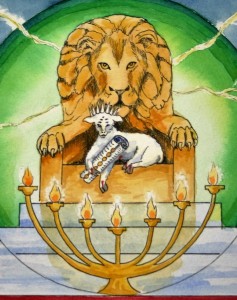 The tree of life hasn’t been seen since the city was a garden, back at creation, in
  Or, to sharpen the question even further: How can we reconcile the Jesus of Revelation 19 with the Jesus of the Gospels? What happened to “
 Michael Pahl