Which Jesus is the “Real Jesus”?

Recently I came across an article about ten wrong Jesuses that we should stop worshiping. The premise of the article was good. We all subconsciously make a Jesus in our own image, or the image we wish we were, and so we must become more self-aware of this tendency and more self-critical of our understanding of Jesus. And some of the Jesuses we create are particularly pernicious (ahem).

But where do we go to find the “real Jesus”? The author of the article had an answer: we need to look to “the original Jesus of Scripture.” This impulse is right, but there’s a problem: the New Testament points us to at least ten distinct Jesuses.

There’s “Matthew’s Jesus.” Like all the New Testament sketches of Jesus, Matthew’s Jesus is Israel’s Messiah bringing in God’s reign on earth. However, Matthew’s Jesus brings in God’s kingdom primarily through his teaching: his teaching is the Messianic Torah, upholding and fulfilling the Torah of Moses. Obedience to Jesus’ teaching is both the mark of true discipleship and the way in which God’s kingdom is visible on earth prior to the final fulfillment of God’s reign at Jesus’ return.

“Mark’s Jesus” is also Israel’s Messiah, but he brings in God’s kingdom primarily through his actions, especially his Servant-like suffering and death on the cross, subverting the strong power of the world through the weak power of self-giving. While both Matthew’s and Luke’s portraits of Jesus retain this motif, Mark’s Jesus is especially fixated on it. Mark’s Jesus is thoroughly human—while he acts on behalf of God and with God’s power, there is nothing in Mark’s Gospel that suggests a “God-incarnate” Jesus.

“Luke’s Jesus” shares many similarities with Mark’s and Matthew’s. With Mark, Luke’s Jesus brings in God’s kingdom through weak power, through his self-giving suffering and death. With Matthew, Luke’s Jesus provides crucial teaching that is to shape the way Jesus’ followers live under the reign of God in the world. However, for Luke, the kingdom Jesus brings is for all, right from the start. It’s not just for Jews, but for Gentiles. It’s not just for men, but for women. It’s not just for the wealthy or the noble or the free, but it’s especially for the poor and the oppressed.

Then there’s “John’s Jesus.” While Mark’s Jesus is thoroughly human, and Matthew’s and Luke’s Jesuses are “divine men,” John’s Jesus is unequivocally the eternal and divine “Word made flesh.” John’s Jesus is still Israel’s Messiah, but John prefers to speak more in terms of Jesus as the unique Son who, through his enigmatic discourses and miraculous “signs,” reveals the Father to the world and brings light and life to a dark and dead world.

Four Gospels, four distinct Jesuses. But we’re not done yet.

There’s also “Paul’s Jesus,” the earliest window on Jesus we have. While Paul knows of some teachings of Jesus, and is aware of at least a rudimentary narrative of Jesus’ ministry, his focus is on Jesus as crucified Messiah and resurrected Lord—probably because that’s the Jesus Paul believed he met near Damascus. Thus, all of Paul’s thinking is grounded in Christ crucified and risen, the living Lord present in and among his people by his Spirit: this is Paul’s Jesus.

Then there’s “Hebrews’ Jesus.” Hebrews presents Jesus as a divine Son, somewhere between Matthew’s/Luke’s and John’s on a crude human-to-divine spectrum. For the author of Hebrews, Jesus is an obedient Son in God’s house—greater than household servants like Moses, and greater than the angels who serve those human servants. Yet Hebrews’ Jesus is thoroughly human, sharing in our humanity in order to free us from evil and death, in order to be both perfect priest and perfect sacrifice for sin. In doing this, Jesus has carved a path for us to follow, a path of obedient, patient suffering that leads to a better resurrection.

How about “James’ Jesus”? The letter of James doesn’t speak much of Jesus, actually, but there are some tantalizing clues in it. For the author, Jesus is the “glorious Lord and Messiah” who had been condemned and killed unjustly—behind this is likely a basic narrative of Jesus crucified and resurrected. But, whereas Paul builds his whole theology on Jesus’ death and resurrection while virtually ignoring his teaching, James pretty much does the opposite. Scattered throughout James’ letter are parallels to several of Jesus’ teachings especially found in Matthew and Luke. James’ Jesus is, much like Matthew’s, the devout Jewish Messiah who teaches Torah for his followers to obey.

We can’t leave off without mentioning “Revelation’s Jesus.” In some ways, Revelation’s Jesus is like a hodge-podge of most of these others, but cast in an apocalyptic light. He’s the child of Israel whose birth sparked an eruption of evil on earth. He’s the Messianic Lion of Judah who reveals himself in the world as the suffering and slain Lamb. He’s the divine and eternal Son, the living Lord who has conquered death and still teaches his Church. And he’s coming again to make right all wrongs, to bring a just peace in a new creation.

That’s eight distinct “Jesuses,” and that’s not even all of the New Testament.

But let me add a couple more, discerned also, at least in part, through the New Testament.

There’s the “Historical Jesus.” This is the Jesus reconstructed by historians using historical methods, a “historically plausible” Jesus. In actual fact, there are many different “historical Jesuses,” as many as there are historians who study Jesus. But one might speak of a kind of “consensus historical Jesus.”

This “consensus historical Jesus” grew up in Galilee, was baptized by John, taught about God’s kingdom, and was known to be a healer and miracle-worker. Around the time of one particular Passover he went to Jerusalem, caused a disturbance in the Temple courts, ate a final meal with his disciples, was arrested and interrogated by Jewish authorities, was executed on a cross by order of Pontius Pilate, and was subsequently claimed to have been seen alive by some of his followers.

And then there’s what I might call the “Apostolic Jesus.” This is not really the “historical Jesus,” though this Jesus is detected at least partly through historical means. Nor is this “Paul’s Jesus” or “Matthew’s Jesus” or any of the distinct New Testament portraits of Jesus, though this Jesus stands behind them all. It’s the Jesus presented in one of Paul’s rare snippets of traditional teaching which he received from others before him. It is the earliest of the earliest portraits of Jesus we have:

that Christ died for our sins in accordance with the scriptures,
and that he was buried,
and that he was raised on the third day in accordance with the scriptures,
and that he appeared to Cephas, then to the twelve.

Some might call this the “kerygmatic Jesus” because it reflects the preaching, or “kerygma,” of the earliest Christians. I call it the “apostolic Jesus” because, according to Paul, it’s the Jesus at the heart of all the diverse teaching of the apostles: Jesus the Messiah, dying to deal with human sin, resurrected in divine vindication, all in continuity with the Jewish Scriptures.

So which of these 10+ New Testament-based Jesuses is the “real Jesus”? The answer, I’m afraid, will satisfy no one: none of them, and all of them.

None of these is the “real Jesus,” because none of them is an actual person, but rather a literary creation or theological interpretation or historical reconstruction. Each one is a collection of facts and ideas, and real persons are much, much more than that. None of these brings us into direct contact with the living person of Jesus, either as he was or—if you believe the kerygma—as he is. To claim that any of these is the “real Jesus” would be like me claiming that my Dad’s obituary is the “real William Pahl.”

And yet, all of these are the “real Jesus”—or, at least, all of them give us a glimpse, a sketch, a particular perspective on the “real Jesus.” These 10+ portraits of Jesus are the earliest pictures of Jesus we have (or can reconstruct) and, while they don’t get us back right to Jesus, they are as close as we’re going to get. We can choose to believe one or more of them or not, but we’re not free to ignore them in our search for Jesus, or to put other portraits of Jesus in their place.

A little more than a century after Jesus, there was a movement sparked by a man named Tatian to harmonize the four canonical Gospels into a single Gospel. The idea took hold among some Christians, but in the end all rejected it. The reason was simple: no single portrait of Jesus could capture the real Jesus perfectly.

We are right to look back to the New Testament for our understanding of Jesus. But the New Testament doesn’t present us with a single, uniform picture of Jesus. As much as is possible, we need to attempt to discern each of its distinct portraits of Jesus, not blurring them together, allowing each to give us an important angle on the Jesus who lived, who still lives, and whom we as Christians claim both to worship and to follow.

© Michael W. Pahl

“The Things that Make for Peace”

“Peace? Sure, we have peace. Jesus brings us peace with God. But no more war? Not in this world!”

I can’t tell you how many times I’ve heard this sentiment. Not necessarily in those exact words, but the idea has been repeated so many times it’s become a truism.

“Yes, Jesus came to bring peace: peace with God and peace with each other. But while we can have peace with God now, which gives us peace in our hearts, and while we should strive for peace with each other, we need Jesus to come back before that ‘no more conflict, no more violence, no more war’ thing can become reality.”

Hogwash, I say.

Jesus has given us everything we need for peace now, peace in every way. Either we just don’t realize it, or we don’t really believe it.

At least, that’s how Luke describes things.

In the first chapter of Luke’s Gospel is the well-known Advent-y story of John the Baptist’s birth. His father, the priest Zechariah, had been struck dumb during Elizabeth’s pregnancy. But now that the child is born and named he bursts out in praise of God. In the middle of all the hubbub, Zechariah speaks this prophecy:

And you, child, will be called the prophet of the Most High;
for you will go before the Lord to prepare his ways,
to give knowledge of salvation to his people
by the forgiveness of their sins.
By the tender mercy of our God,
the dawn from on high will break upon us,
to give light to those who sit in darkness and in the shadow of death,
to guide our feet into the way of peace.

Zechariah’s prophecy is linking back to Isaiah 40, the “Comfort, comfort my people” passage. And that prophecy, Isaiah 40, is written for Israel in Exile, scattered among the nations, immersed in a world of violence and oppression and injustice and fear. A world, in other words, that needed peace.

So here’s what Isaiah promised, and what Zechariah repeats: Good news! Yahweh, the God of Israel, is coming! The Lord, the Most High, is coming, and we must get ready! His coming will be like the coming of the dawn for a dark and dying world! His coming will bring salvation from our most ominous enemies, forgiveness from our most devastating and destructive sins! He will guide us in the way of peace!

What a promise! Imagine if, in our world of darkness and death, our world of genocide and carpet bombs, our world of armed robberies and hate crimes, our own hearts soaked in fear and anxiety—imagine if those words were said to us today. Don’t worry! Someone is coming who will show you how to have peace—peace within you, peace among you!

This is the first of Luke’s peace prophecies—exactly what that world needed, exactly what our world needs.

Simonet - Jesus Weeps Over JerusalemBut jump ahead now to a second peace prophecy, this one in Luke 19. It’s the story of Jesus’ triumphal entry into Jerusalem. After years of intense ministry, Jesus is coming to his God-ordained end. And as he sees the city and its glorious temple, the jewel of his people, Jesus weeps. He weeps, and speaks this prophecy:

If you, even you, had only recognized on this day the things that make for peace! But now they are hidden from your eyes. Indeed, the days will come upon you, when your enemies will set up ramparts around you and surround you, and hem you in on every side. They will crush you to the ground, you and your children within you, and they will not leave within you one stone upon another; because you did not recognize the time of your visitation from God.

Jesus is speaking of the future destruction of Jerusalem, which happened within a generation of his prediction. The Roman armies indeed set up ramparts around Jerusalem and laid siege to the city. The citizens of Jerusalem were indeed crushed to the ground, they and their children within them. The city and its glorious temple were indeed pulled down, stone by stone by massive stone.

And why did that happen? According to Jesus here in Luke, because the people “did not recognize the time of their visitation from God.” They did not recognize “the things that make for peace.”

Luke is linking Jesus’ prophecy here to Zechariah’s prophecy back in chapter one. There, God is coming, God’s visitation is near. Here, God’s visitation has happened, but they’ve missed it. There, God in his coming would “guide their feet into the way of peace.” Here, God has come, but they have missed “the things that make for peace”—and so they would find themselves on the wrong side of a bloody, destructive war.

These two passages—one looking ahead to Jesus’ ministry, the other looking back at it—suggest that the “way of peace,” the “things that make for peace,” have in fact already been revealed during Jesus’ earthly ministry. According to Luke, then, if we want to know the “things that make for peace,” if we want to know God’s “way of peace” for the world, we need to look back at all those peace-making things Jesus has already done.

Here’s just a few of these “lessons in the way of peace” Luke’s Jesus has taught.

Luke 3: Jesus is baptized by John, anointed by the Spirit and appointed by God. He is God’s Son, the Messiah, the King who will bring in God’s kingdom, but he is also the well-pleasing Servant of Isaiah, who will bring about God’s purposes through suffering and death. The lesson? The way of peace is a path of self-giving, maybe even suffering.

Luke 4: Jesus is tempted in the wilderness, three times. He says no to satisfying his own needs through his power. He says no to keeping himself safe because of his special status. He says no to ruling over the world if it means venerating evil. The lesson? The way of peace requires us to resist the temptation to bring about even good things through raw power or evil means, or by putting our own provision and protection ahead of others.

Luke 5-6: Jesus heals any who are sick, laying hands on them, touching them in compassion in spite of any regulations about clean and unclean, in spite of any laws about Sabbath and holy days. The lesson? The way of peace is a way of compassion, choosing compassion over fear, choosing compassion over rules, choosing compassion regardless of what society thinks.

Tissot - Jesus TeachingLuke 6: Jesus pronounces both blessings and woes, and it’s absolutely the opposite of what we expect: the poor, the hungry, the weeping, are the blessed ones, while the rich, the full, the laughing, are warned with woe. And then Jesus keeps the surprises coming: “Love your enemies. Do good to those who hate you. Give to everyone who asks. Do not judge, but instead forgive. In everything, do to others as you would have them do to you.” The lesson? The way of peace requires us to embrace the other, even the completely opposite other, with generous love.

Luke 11: Jesus teaches his followers to pray. “Father, you are holy. May your rule be established on earth. Provide for all of us, all our daily needs. Forgive all of us, all our sins, as we forgive each other. Protect all of us, from every evil.” The lesson? The way of peace means recognizing that we’re all in this together, one humanity under God, and basic provision and security and mercy for one requires provision and security and mercy for all.

Luke 12: Jesus teaches his followers to trust, and not to fear. “Don’t put your trust in riches, things that spoil and fade! Don’t be afraid of those who can kill the body but not touch the soul! Don’t worry about what you will eat or what you will wear! Trust in God, who watches over even the smallest sparrow and clothes even the simplest flower.” The lesson? The way of peace is a path of faith, patiently trusting in God for all things and through all things.

These, and more, are Jesus’ lessons in the “way of peace.” Show compassion. Be generous. Reject violence and fear. Don’t judge others. Forgive them. Remember, we’re all in this together. In all things, trust in God.

In Luke’s Gospel these “things that make for peace” are repeated over and over, in many different ways. Deny yourself and take up your cross, daily. Love others like a good Samaritan. Joyfully embrace repentant sinners like a father of a prodigal son returned. Attend to those on the lowest rungs of society: the poor man outside your gates, the children sitting along the edges. Trust in God for the long haul, like a farmer patiently waiting for that little mustard seed to grow, like a baker patiently waiting for that yeast to do its work.

Simple things, but so hard to put into practice moment by moment and day by day. They go against the grain of our “fight or flight” instincts. They run counter to our inclination to fear, to judge, to lash out, to look out for number one. Yet these are the “things that make for peace,” these are God’s “way of peace,” peace within us, and peace among us.

Jesus has already brought everything we need for peace, in every way. And yet here we are, two thousand years later, still fighting wars and telling rumours of wars, still engaged in global conflicts and petty catfights, still resorting to physical and psychological and verbal and emotional violence against one another.

Will we learn “the things that make for peace”? Will we learn God’s “way of peace” through Jesus?

Or does Jesus weep over us as he wept over Jerusalem, because we too refuse to recognize the time of God’s visitation two thousand years ago, bringing God’s way of peace?

This post is adapted from a sermon preached at Morden Mennonite Church on December 20, 2015. For more from this sermon see my follow-up post, “MLK and ‘The Things that Make for Peace.'” Cross-posted from http://www.mordenmennonitechurch.wordpress.com. © Michael W. Pahl

Politics and Power, the Jesus Way

Politics.

I saw you cringe. It’s one of those topics not fit for polite conversation. It may be entertaining for some, intensely interesting for others, but for many it’s one of those “change the subject” kind of subjects.

Cartoon of crumbling Greek buildingBut politics are everywhere. There are politics any time we humans organize ourselves in order to make decisions for our collective interest. Actually, that’s pretty much the definition of “politics.”

And any time we are talking about making decisions, we’re talking about power: the ability to bring about change. Where there’s politics, there’s power.

Yep, there are even politics and power dynamics in church. Yep, even your church.

Politics and power are inevitable in collective human life. They are neither good nor bad; they just are.

But I sure do understand that feeling of “Ugh!” when you hear the word “politics.” After all, so much of the way we do politics—you might say “the politics of the world”—is just not very nice.

We polish up our résumés and show off our good sides: all strength, no weakness allowed.

We shore up support through strategic relationships and backroom deals and hollow promises.

We appeal to our base through polarizing rhetoric: it’s “us” versus “them.”

We listen to those who agree with us, and we ignore—or even disdain—those who don’t.

We appeal to truth—when it’s convenient for us. Otherwise it’s half-truths, sometimes a full-on lie.

We manipulate emotions through sugary, empty rhetoric. Our only harsh words are for our opponents.

We take control whenever we can, holding all the crucial resources and making all the important decisions.

We do all this either consciously (“That’s just politics!”) or subconsciously (our capacity for self-deceit is astonishing).

And we do all this, we like to think, for the ultimate good of all. We know what is best, and we’ll do whatever it takes to bring about that ultimate good. In the politics of the world, the ends justify the means.

I bet you think I’ve just described politics in Canada or America. That may be, but what I actually had in mind was politics in the church.

Go back through the list again. That, all too often, is church politics. That, folks, is just politics, whether in the church or in society.

But Jesus calls us to another way. Jesus calls us to a radically different politics, a radically different power.

The gospel—and the Gospels—are shot through with Jesus’ upside-down politics and power.

Jesus is anointed by God’s Spirit and appointed by God’s decree: “You are my beloved Son (my chosen Messianic King, in other words); with you I am well-pleased (my chosen Suffering Servant, that is).” Jesus is King, but he’s not like other kings. Jesus brings in a kingdom, but not the way other kingdoms come.

Jesus then immediately and persistently follows through on this: he resists the temptation to seize power through evil or idolatrous means, to establish God’s kingdom through the use of overwhelming force or meticulous control—in stark contrast to the ways and means of the world.

Instead Jesus teaches love of God, love of neighbour, even love of despised enemies—and then he goes out and does it: embracing those on the fringe, exhorting those at the centre, attending to the weak, admonishing the powerful.

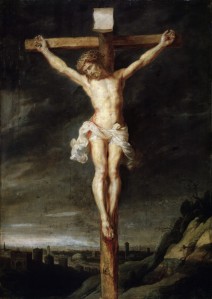
Rubens - Jesus on CrossSince his followers are slow to get the point, he states it bluntly: “You know that the rulers of the Gentiles lord it over them, and their great ones are tyrants over them. It will not be so among you; but whoever wishes to be great among you must be your servant, and whoever wishes to be first among you must be your slave; just as the Son of Man came not to be served but to serve, and to give his life a ransom for many.”

And finally, in the penultimate end, Jesus is enthroned on a cross. He gives his life for the good of others, he embraces utter weakness and relinquishes total control, he refuses right to the bitter end to respond with raw power or naked force. In the politics of Jesus, the means—the ways of the cross—are the ends.

In the middle of all this is a familiar story that sums up Jesus’ approach to politics and power.

In the story Peter declares that Jesus is indeed the Messianic King. Jesus accepts his declaration, but immediately emphasizes that the way to his throne is the way of the cross. Peter then rebukes Jesus: That’s not the way kingdoms are won! That’s not how the world changes! Everyone knows this, Jesus!

And in turn, Jesus rebukes Peter, with words that should strike holy fear in the heart of anyone who claims to be a Christian: “Get behind me, Satan! For you are not thinking the way God thinks about such things, but the way the world thinks.”

You are not thinking the way God thinks about such things—about kings and kingdoms, about politics and power—but the way the world thinks.

The world’s politics are about “strong power.” Overwhelming physical presence. Personal charisma and authority. Psychological intimidation and emotional manipulation. Coercive words, polarizing rhetoric, and subtle deceit. Full control.

Jesus’ politics are about “weak power.” Humility, not pride. Compassion, not apathy or antipathy. Persuasion, not coercion. Forgiveness, not blame. Persevering faith, not fear. Self-giving love, not self-serving self-interest.

The world’s politics are tempting, to be sure. You can get quicker results when you force your way through, when you unilaterally push your agenda for a better world. And the longer you spin your wheels trying to achieve a goal without results, or the more pressure there is to bring about a certain objective, not now, but right now—the more tempting it is to resort to strong power.

But the history of humanity—and the smaller stories in our own lives—show over and over again that these “good” results through strong power simply do not last, and they’re often more damaging in the long run. Even in the short run, there are almost always innocent victims, physical or psychological or emotional casualties left in our wake.

Jesus’ politics take longer to achieve any good thing—like small seeds growing, or yeast working through dough—and they demand much more of us—our very lives, in fact. But the end result is shalom for all involved: wholeness, harmony, justice, and abundant life.

So what does all this have to do with church politics? What (gulp) might this even have to do with politics of any kind?

Everything, in every way.

We must resist the temptation to bring about change, even positive change, through strong power. Strong-arm tactics, passive-aggressive behaviour, divisive fearmongering, meticulous control, and more, have no place—no place at all—among followers of the crucified Jesus, whether in the church or beyond it. We need to have a patient, persevering faith, truly trusting that God’s way, the way of weak power, is in fact best.

We must repent of the ways we have engaged in strong-power politics. Again, our capacity for self-deception and self-justification is truly astonishing. This is especially so when we are convinced that our way is the best way, or that we hold the morally superior or theologically correct position. We need constant, rigorous self-monitoring and self-examination—and the humility to accept correction by others.

We must embrace Jesus’ way of weak-power politics. Seeking to persuade rather than coerce: speaking truth to power, showing compassion for weakness. Serving others in humility, not posturing before others to gain status or controlling others to ensure the change we want to see. Forgiving others when they fail, not pouncing on their faults for political leverage. Patiently pursuing long-term shalom rather than short-term gain.

In particular, we must always attend to those on the margins. Always. Even when the margins shift, and those on the outside become those at the centre, and others are now on the margins. And especially when we’re the ones at the centre—along with our friends and family and all our favourite people. Any power for change we possess—through position, wealth, education, whatever—must be used in the way of the cross for those without such power, especially the most vulnerable and unjustly treated.

In other words, we must set aside our cultural brand of Christianity with its ways of the world and respond to Jesus’ radical call to discipleship: “If any want to become my followers, let them deny themselves and take up their cross daily and follow me. For those who want to save their life will lose it, and those who lose their life for my sake, and for the sake of the gospel, will save it.”

This is politics and power, the Jesus way. And it’s the only way to find real life: for you, for the other, for all.

Cross-posted from http://www.mordenmennonitechurch.wordpress.com. © Michael W. Pahl.

(Im)Possible Joy

I’ve always struggled with joy.

If I were an ancient Roman, sitting in the office of the famed physician Galen, he would have diagnosed me as a “melancholic,” having an excess of black bile in my body. Likely he would have prescribed a treatment of leeches. Leaving aside the black bile and leeches, he would have got the “melancholic” right: serious-minded, introverted, cautious, focused, conscientious—and susceptible to moodiness and sadness.

But melancholic or not, at some point life catches up with everyone. The rose-coloured glasses begin to fade. The half-full glass looks more and more empty.

Disappointments pile up, rejections and dead-ends and broken-down dreams. Injury or illness enters, disease takes up residence. A friend dies, or a sibling, or a parent—or a spouse, or a child.

And we become more aware of the world, more aware that there are seven billion other selves who are each experiencing these things—and far worse. Horrific abuse. Horrendous violence. Utter poverty. Plagues of disease. Cataclysmic natural disasters. Waves of war.

Yes, at some point, for all of us, life catches up with us. And it gets harder and harder to “rejoice in the Lord always” or “consider it nothing but joy whenever you face trials of any kind.”

What is joy? And how do we experience it? Can we truly experience it?

Let me start with this: “Rejoice always” cannot mean “be happy all the time.” Having “the joy of the Lord” cannot mean that we are perma-smiling, always happy, bubbling over with joy, every minute of every day.

You see, we are commanded by the Apostle Paul not just to “rejoice” but also to “mourn.” We are assured by Jesus that those who mourn are blessed by God. And then there’s the Psalms: filled with the whole range of human emotions, from deep sadness and despair to overwhelming delight and celebration.

These biblical commands and promises and descriptions reflect the full depths of the human soul, the whole spectrum of human experience. We are created for all these things: sorrow and gladness, sadness and joy, and everything in between. It’s no coincidence that the most enduring art, the most soul-touching music, the most profound ideas, have been produced by artists and thinkers who fully experienced the full range of human emotions.

As with Jesus himself.

Tissot - Jesus WeptAt least half a dozen times in the Gospels we hear of Jesus being filled with compassion for the suffering of others: compassion, empathy, entering into their suffering. Three times the New Testament describes Jesus weeping: at the death of his friend Lazarus, at Jerusalem’s rejection of his ways of peace, and as he faced his own suffering.

At Gethsemane Jesus confesses to his disciples: “My soul is overwhelmed with sorrow to the point of death.” At Golgotha Jesus cries out to God: “My God, my God, why have you forsaken me?” Isaiah certainly gets it right when he speaks of the coming Servant as “a man of sorrows, and acquainted with grief.”

So, no: “rejoice always” cannot mean we are to “be happy all the time.” That way of thinking about joy just doesn’t make sense of human experience, of the Bible, of Jesus himself.

In fact, very often in the Bible “joy” isn’t simply tied to feelings of happiness. “Joy” is more of a posture of joy, a settled disposition of joy, that opens us up to moments of joy, those feelings of joy.

The posture of joy is what we are called by God to develop, even when the feelings of joy are not there. This posture of joy is the “joy” that is the Spirit’s fruit in our lives, it’s the “joy” that characterizes God’s kingdom. This posture of joy is what Paul is getting at when he calls Christians to “rejoice in the Lord always.”

The “in the Lord” is the key. This posture of joy is grounded in the assurance of God’s work in the world through Christ and by the Spirit. It is rooted in the gospel, the good news that brings great joy for all people. God has already entered our world in Jesus, the crucified Jesus has been raised from the dead, and this means that every good thing is possible, even when the worst is happening.

This posture of joy, then, means having an underlying sense of love, trusting that God loves us thoroughly and deeply and wants us to experience all that is good and beautiful and true.

This posture of joy means having an underlying sense of hope, believing in the always-open possibility that God will do a good thing even in the midst of terrible things.

This posture of joy is this kind of settled disposition. It’s a Spirit-cultivated faith in the good news of God: hoping in God, trusting in God’s love, and so always being open to those moments of joy when they arrive.

And those moments of joy are there, if we have eyes to see them.

Rembrandt ProdigalMoments of joy in celebration. Celebrating achievements, whether yours or others. Celebrating the overcoming of obstacles, whether big or small. Celebrating milestones, birthdays and anniversaries and baptisms and more.

Moments of joy in delight. Delighting in a picturesque snowfall, a stunning sunset, the northern lights on display. Delighting in the laughter of a child, a good meal, a loved one’s warm embrace. Delighting in both the spectacular wonders of the world and the simple pleasures of life.

“Rejoicing in the Lord,” then, does not mean we have these feelings of joy all the time. The “joy of the Lord” is not about constant happiness, having a permanent smile on our face and laughter on our lips.

Instead, cultivate a posture of joy, regardless of whether the feelings are there or not. Practise faith and hope and love, until that becomes a settled disposition, the way you look at the world. This will open you up to those moments of joy when they come, those occasions of celebration and delight. You will see these moments of joy around you—and when you do, grab hold of them, fully experience them, cherish them. Enjoy them.

Hey, if it can work for this incurable melancholic, it’s worth a try, right?

This post is excerpted from my sermon preached at Morden Mennonite Church on Third Advent, Dec. 13, 2015. In my sermon I noted an important distinction between the sadness that everyone experiences, and depression. Depression can include feelings of deep sadness, but it can also include things like apathy, loss of energy, change of sleeping and eating patterns, and self-loathing—over an extended period of time. See the CMHA website for more information. If you think you may be suffering from depression, please talk to someone or even see your doctor.

Cross-posted from http://www.mordenmennonitechurch.wordpress.com. © Michael W. Pahl.

Love, in the Flesh

We are created to love and be loved in the flesh. Heard. Seen. Touched. Held. Through thick and thin.

You can think of the story of Scripture as the story of exactly this kind of love.

In the beginning, God creates human beings to love and be loved, in the flesh, through thick and thin—by God, by each other.

The claim in Genesis 2 that “it is not good for the Human to be alone” is not primarily about marriage, but about human companionship—the animals couldn’t be the equal partner the Human needed, so another Human was made, crafted from bone-of-bone and flesh-of-flesh. And then there’s that simple, powerful image in Genesis 3: God, seeking out the Human, to walk with them in the cool of the day in the shade of a garden.

But these first humans choose a different path. They choose proud selfishness over humble, trusting love, and the results are devastating: guilt and shame, futility and suffering, hostility and exclusion, everything that is not-love, everything that is not-life.

We’ve been choosing that path ever since. All too often, we follow in these tragic footsteps of our forebears, choosing self and separation over love and life. Danielle Lierow’s awful story is like a microcosm of our larger human story—exclusion, isolation, made for love yet untouched by it.

We often do this to others, whether in extreme ways like Dani’s case, or on a smaller scale with our everyday harms, or on a massive scale with our violent extremisms and weaponized war zones. Unlike Dani’s story, we often also do this to ourselves.

This is the story of Eden: humans banished from God’s paradise, isolated from God’s loving presence, not because of God’s desire, but because of our own distorted, selfish desires.

Salvi - Virgin and ChildAnd yet, as the stories of Scripture unfold, the story of God’s love continues on. God seeks out unlikely dance partners, everyone from Noah to Abraham, from Hagar to Jacob to Moses to Ruth. God handpicks David, the runt of the litter, and calls him King, and promises an enduring kingdom, God’s kingdom on earth.

God woos Israel like a lover. God nurses Israel like a mother. This is God’s hesed, Yahweh’s faithful love: unexpected, undeserved, unending.

Still the separation continues: Israel goes their own way, like sheep gone astray, and the nations follow. The edges of our God-created love are frayed; the seams that bind us together are split, hanging by a thread.

It seems impossible. Hopeless.

And then love steps in.

God created human beings to love and be loved, in the flesh—and so God comes in the flesh. In Jesus God becomes one of us: from beating-heart fetus to swaddling-clothed baby to rambunctious boy to full-grown man. In Jesus God takes on our hopes and fears, our joys and sorrows, our deepest desires and greatest longings.

God created human beings to love and be loved, through thick and thin—and so God enters the thickest and thinnest times of human life. In Jesus God walks our path: birth and health and sickness and fear, laughter and weeping and loneliness and temptation, stress and anger and spasms of joy. In Jesus God walks with us through death, through death into resurrection life.

This, all this, is love.

No more separation, no more distance, no more isolation. God has opened the door and stepped in, swept away the filth and swept us up in his arms.

We are created to love and be loved in the flesh. Heard. Seen. Touched. Held. Through thick and thin.

And this is exactly what Scripture says has happened in Jesus. Listen to these words from 1 John:

We declare to you what was from the beginning, what we have heard, what we have seen with our eyes, what we have looked at and touched with our hands, concerning the word of life—this life was revealed, and we have seen it and testify to it.

God is love. God’s love was revealed among us in this way: God sent his only Son into the world so that we might live through him.

Beloved, since God loved us so much, we also ought to love one another. No one has ever seen God; if we love one another, God lives in us, and his love is perfected in us.

The mystery of God’s love is revealed in Jesus, in the flesh, through thick and thin. And when we ourselves love in the way of God, the way of Jesus—loving and being loved, in the flesh, through thick and thin—the mystery of God’s love is revealed among us afresh.

It has always been so. During this Advent season and beyond, may it be so for us again.

This post is excerpted from my sermon preached at Morden Mennonite Church on Second Advent, Dec. 6, 2015. Cross-posted from http://www.mordenmennonitechurch.wordpress.com. © Michael W. Pahl.

Refugee Jesus

Let me paint a picture for you.

A family is fleeing for their lives: a husband and wife, with a child.

They are Middle Eastern: olive-skinned and brown-eyed, the man with thick, dark, curly hair and a finely trimmed beard, the woman with a shawl over her head, carrying the young child in her arms.

They stop to rest. They fled as soon as they heard the news—soldiers coming, coming to kill—and they’ve been on the move for 24 hours. Twenty-four hours through hills and desert, along a road by the sea, all their worldly possessions on their backs, or in their arms. They need to rest.

They stop at the crook of a stream, away from the traffic of the main road. They should be safe now, but one can never be too sure. They settle in for a restless night, snatches of sleep amidst dreams of terror.

The man keeps watch, one eye back on the road, the other on his wife and child. He feels all the things you would expect of any man: protectiveness, pride, worry, struggling to be strong for them.

Tomorrow will be a better day. Tomorrow has to be a better day.

The picture is one that has been seen all too often over the years. Too many years, but even more so in recent years. A refugee family, fleeing violence and terror, traumatized by the past, trying to look to the future.

We’ve heard the numbers. More than 60 million people worldwide forced to flee their homes because of war, persecution, or natural disaster. More than 10 million in Syria alone, of whom 4 million have been forced to leave the country. More than half of that 4 million are children. The worst refugee crisis in 70 years, since World War II.

We’ve also heard the stories. Whole cities, utterly destroyed. Mosques, churches, hospitals, burning. Boats capsizing, too many passengers, drowning. A boy washing up on a Mediterranean beach.

And we’ve been reminded of the stories from our own past. Our parents, or our grandparents, or our great-grandparents, themselves refugees fleeing war and violence for the safe haven of Canada.

So this picture—a refugee family, fleeing violence and terror, traumatized by the past, trying to look to the future—is an all too common one in our world.

But that picture I painted for you is actually of a particular refugee family, from 2,000 years ago. The picture I painted is of Joseph, and Mary, and the child Jesus, fleeing the violence and terror of Herod’s jealous anger, fleeing south to Egypt, fleeing as refugees.

The story is told in Matthew’s Gospel. It’s part of Matthew’s version of the Christmas story, but it’s not one we typically highlight in our church nativity plays. It’s much more comforting and cozy to end with the Wise Men kneeling before the baby Jesus tucked away in the manger. Herod’s slaughter of the infants, the Holy Family’s flight to Egypt as refugees—that’s not typical children’s story material.

And yet there it is, plain as the nose on Rudolph’s face: Jesus was a refugee, one of hundreds of thousands of Middle Eastern refugees over the centuries.

Many of you attend churches that celebrate Advent in some way: perhaps lighting Advent candles, maybe focusing on Advent themes, in the four weeks leading up to Christmas. In Advent, Christians look in two directions: we look back to the first coming of the Messiah, the baby sleeping in a manger; and we look forward to the second coming of the Messiah, the king sitting on his throne.

And so it’s appropriate for us not just to look back to the often untold Christmas picture of Jesus the refugee, but also to look forward to the often ignored Second Coming picture of Jesus the judge.

The picture is also painted for us in Matthew’s Gospel.

When the Son of Man comes in his glory, and all the angels with him, then he will sit on the throne of his glory. All the nations will be gathered before him, and he will separate people one from another as a shepherd separates the sheep from the goats, and he will put the sheep at his right hand and the goats at the left.

Then the king will say to those at his right hand, ‘Come, you that are blessed by my Father, inherit the kingdom prepared for you from the foundation of the world; for I was hungry and you gave me food, I was thirsty and you gave me something to drink, I was a stranger and you welcomed me, I was naked and you gave me clothing, I was sick and you took care of me, I was in prison and you visited me.’

Then the righteous will answer him, ‘Lord, when was it that we saw you hungry and gave you food, or thirsty and gave you something to drink? And when was it that we saw you a stranger and welcomed you, or naked and gave you clothing? And when was it that we saw you sick or in prison and visited you?’

And the king will answer them, ‘Truly I tell you, just as you did it to one of the least of these my brothers and sisters, you did it to me.’

Then he will say to those at his left hand, ‘You that are accursed, depart from me into the eternal fire prepared for the devil and his angels; for I was hungry and you gave me no food, I was thirsty and you gave me nothing to drink, I was a stranger and you did not welcome me, naked and you did not give me clothing, sick and in prison and you did not visit me.’

Then they also will answer, ‘Lord, when was it that we saw you hungry or thirsty or a stranger or naked or sick or in prison, and did not take care of you?’

Then he will answer them, ‘Truly I tell you, just as you did not do it to one of the least of these, you did not do it to me.’ And these will go away into eternal punishment, but the righteous into eternal life.

It’s a sobering picture. A judge. A judgment. A reward. A punishment.

And most sobering of all is what the judge looks for in that last day. Have you given food to the hungry? Have you given drink to the thirsty? Have you given clothing to the naked? Have you welcomed the stranger?

And most surprising of all is that the judge—Jesus—puts his own face on the faceless hungry and thirsty, the faceless naked, the faceless stranger. What we do for these, we do for Jesus himself.

Lentz - Christ of MaryknollJesus as “the least of these.” Jesus hungry, thirsty, naked. Jesus as a stranger, an outsider, a foreigner, in desperate need.

It’s hard not to wonder if Matthew’s Jesus was thinking back to his own experience, back to his own experience as a refugee child. I wonder, who welcomed him in with Joseph and Mary? Who fed him, and clothed him, when he was one of “the least of these”?

This Advent and Christmas season, I invite you to consider Jesus the refugee. I invite you to consider the refugee as Jesus. I invite you to resist fear and step out in faith, to step out in compassion for those around the world who are “the least of these,” the stranger waiting to be welcomed.

This post is adapted from a talk I gave this morning at the Morden Men’s Prayer BreakfastCross-posted from http://www.mordenmennonitechurch.wordpress.com. © Michael W. Pahl.

“What Would Jesus Do?” is the right question to ask, but…

WWJD BraceletWe all know about the WWJD gear. Those bracelets, of course. The t-shirts. The coffee mugs. The hippy Jesus doll. The hot air balloon.

All that peaked around the turn of the millennium, though it still percolates in our collective Christian consciousness. The idea was sparked by Charles Sheldon’s 1896 book, In His Steps, a story about an inactive church being activated by people asking themselves this one question as they went through their days: “What would Jesus do?”

I’ll admit, I’ve always had mixed feelings about the whole WWJD thing. So often “What Jesus would do” turns out to be “What I would want to do in the first place,” or “What my particular Christian subculture has conditioned me to think Jesus would do.” WWJD has been invoked to vote a certain way or support a certain cause—often in direct opposition to the actual teachings and example of Jesus.

All this has made me rather cynical about WWJD. But when I take a step back from my cynicism, I have to admit that “What would Jesus do?” is a good question to ask. It’s a simple way to guide Christians in making practical, ethical, day-to-day decisions.

Even more, the more I read my New Testament, I have to admit that WWJD is exactly the right question for Christians to ask.

The New Testament in various ways calls on Christians to be as Jesus in the world. We are to be Jesus’ “disciples” or apprentices, “following” Jesus in his way. We are to look to Jesus as our example, we are to think and act the way he does. As a church we are the “body of Christ” in the world: Jesus’ eyes and ears, his mouth, his hands and feet, with Jesus guiding and sustaining us as the body’s head. The whole goal of God’s work in us and among us, Paul says, is to shape us into the image of Jesus, moulded to his character, continuing his calling.

First John sums this all up nicely: “This is how we know we are in him: Whoever claims to live in him must live as Jesus did.”

It’s pretty straightforward. Live like Jesus. Be as Jesus in the world.

And so it’s appropriate, even good and right, for us as Christians to ask ourselves this question in any given situation: “What would Jesus do?”

But if we want to answer that question well, we need to realize that it has several other questions built into it. Before we get to the big question, “What would Jesus do?” we need to first answer at least three other questions.

There’s this one for starters: “What did Jesus do?” Assuming Jesus’ words and actions are consistent (here my ProoftextomaticTM pops up Heb 13:8), it strikes me as pretty important to know what Jesus has said and done if we want to know what Jesus might say and do.

And, of course, Jesus said and did many things.

He told stories of God’s kingdom, God’s vision for a just and peaceful world, an upside down realm where the last are first and the least are feasted and the lost are found. He taught that the most important thing, the all-encompassing command of God, was selfless love: giving oneself in allegiance to God above all other allegiances, giving oneself in compassion for the good of others, both neighbours and enemies.

He freely healed the sick, brought freedom for the oppressed, and life to the dead. He openly ate with sinners and outcasts, rich and poor alike. He boldly rebuked the powers that be, and then walked through suffering and pain to a Roman cross, exposing those oppressive powers for the emptiness and inhumanity of their unjust, even violent, even death-dealing ways.

How well do we know these Gospel stories? How much do we actually read them, study them, reflect on them, imagine ourselves into them?

calm-wwjdHere’s a second question: Why did Jesus do?” If we want to discern what Jesus might do in a twenty-first century situation the first-century Gospels could never have imagined, we have to try to get behind Jesus’ words and deeds to his underlying motivations. What drove Jesus to speak? What compelled him to act? Did he have an overarching sense of purpose? What sorts of specific reasons prompted his particular actions?
This is a trickier question than the first one, since the Gospel authors don’t speak much about Jesus’ inward thoughts and feelings. But one motivation comes up more than any other: love. Jesus did what he did out of love. He did what he did out of a sense of sympathy for the plight of others, a sense of compassion for others, to see them healthy and whole in a just and peaceful world.

Then there’s this third question: How did Jesus do?” This one’s a two-parter, looking at both ways and means.

In what way did Jesus do the things he did? What was his demeanor, his disposition throughout? Again, a tricky question to answer since we don’t get a lot of insight about Jesus’ inner thoughts from the Gospels.

But here’s a suggestion: You know all those virtue lists in the New Testament, like the “fruit of the Spirit” or the “love chapter”? We can think of these as descriptions of Jesus, whose Spirit shapes us into his image, whose example of love lies behind these descriptions of love.

This, then, is the way of Jesus, his demeanor: loving, joyful, peaceable, patient, kind, generous, faithful, gentle, self-controlled. This, then, is the way of Jesus, his fundamental disposition: trusting in God in faith, looking to God in hope, following God in love—and the greatest of these is love.

And with what means did Jesus do the things he did? For Jesus, did the ends justify the means, or were only certain means compatible with the kingdom of God?

Here the Gospels are pretty clear: for Jesus, the ends did not justify the means. He was not willing to do anything to see God’s kingdom come on earth—that’s what the three temptations were all about, what Gethsemane was all about.

Jesus rejected evil as a means to bring about good. He rejected violence as a means to bring about justice. He insisted that only love could conquer hate, that only light could dispel darkness. He was willing to die, but not to kill.

What did Jesus do?”

Why did Jesus do?”

How did Jesus do?”

It’s only after answering these questions that we can finally get to the question, “What would Jesus do?”

We are not called to simply repeat what Jesus said and did. Jesus lived in a very different time and place than we do.

But this is why these other questions are so important. They can help us to “live as Jesus lived” in our own time and place, motivated by the reasons that motivated him, compelled by the purpose that compelled him, showing his character, following his ways, putting into practice his teachings, living as Jesus lived—doing WJWD.

© Michael W. Pahl

“We should re-think our theology? Say what?”

Earlier this summer I preached a sermon on grieving the losses in our lives, whether it’s the loss of someone we love through death or the loss of something we have invested with great significance—a relationship, a career, a home. In the sermon I talked about the need to adjust to the new reality of life without that person or entity we have cherished so much.

I gave some practical suggestions of the kinds of adjustments that might need to be made, adjustments in how we think, in how we live our lives day by day. And one of those suggestions was this: we might need to re-think our theology in light of the loss we have experienced.

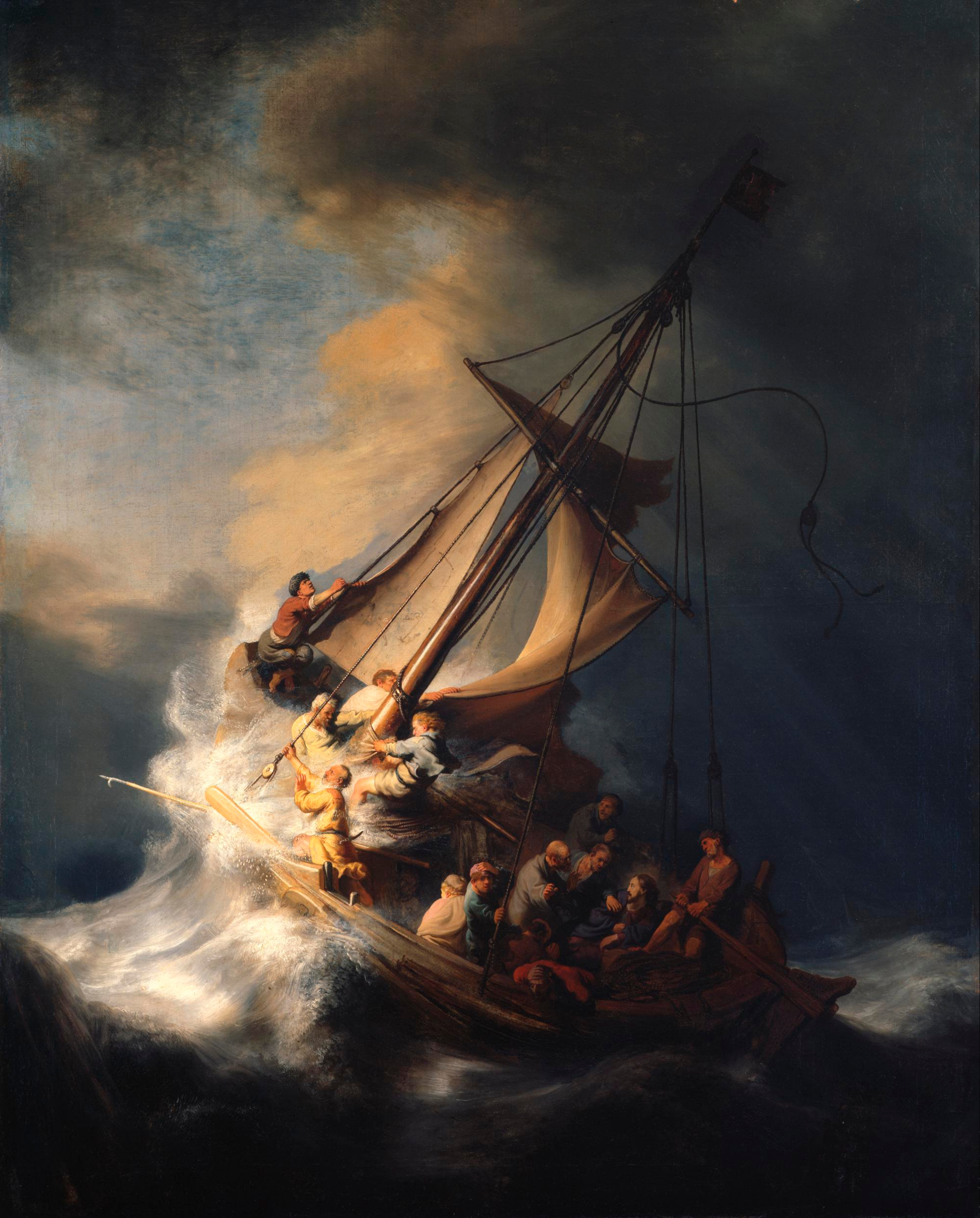
I got a bit of push-back on this. “Re-think our theology? No, our theology shouldn’t change according to our experience. Our theology should be a rudder that guides us through the difficult waters. It should be an anchor that holds us firm through the storms of life.”

I understand the impulse behind this push-back. We know we can’t always trust our feelings; how much less when we’re shell-shocked after a traumatic experience. And there is a lot of truth to the idea that whether or not we survive the storms of life depends in large measure on how well we have prepared ourselves—physically, emotionally, psychologically, and also theologically—during the calm before the storm.

It’s also true that the New Testament in various ways speaks of a body of Christian teaching common to all followers of Jesus—and so doesn’t change with the changing times. At its heart is the first-order, foundation-level “gospel” of Christ crucified and risen which Paul claims all the apostles proclaimed (1 Cor 15:1-11). This bare-bones, good-news story about Jesus focused on his death and resurrection, brought together with some early Christian traditions about God (e.g. Matt 28:19; 1 Cor 8:6), became the framework for this common Christian teaching—eventually expressed succinctly in the earliest creeds such as the Apostles’ Creed.

So what do I mean when I say we may need to re-think our theology in light our life experiences?

“Theology” is a human endeavour. It is something we as human beings do, our attempts at making sense of our experiences of God and of everything else in relationship to God.

There are many different theologies out there, even many different Christian theologies. In fact, if we want to get very specific, there are as many different theologies as there are human beings trying to make sense of God and the world around them. That’s a lot of theologies.

Even if we focus just on one particular branch of Christian theology—say, Anabaptist theology—it’s pretty obvious that this theology changes over time. Anabaptists today don’t believe everything in exactly the same way as the original Anabaptists did. We might try to remain faithful to what we believe are the essentials of Anabaptism, but there’s been a lot of theological water under the Anabaptist bridge in five hundred years—and a lot of streams branching off as theological differences have emerged.

This is also true of our own individual theologies. If you’re in your middle years like I am, I sure hope you don’t believe all the same things about God as you did when you were a child, or a teenager, or a young adult. If you do, pretty much any Christian would say your faith has not grown, you have not been maturing spiritually.

For myself, the basic structure of my theology hasn’t changed much since my early university days. But the details of my theology have altered significantly since then, and even how I understand that basic structure is very different. And then there are the peripheral matters—things you won’t find in the New Testament’s gospel summaries, for instance, or in the Apostles’ Creed, say. Many of these have changed 180° for me, or simply fallen by the wayside as unworthy of my strong conviction.

When I say our theology may need to change—or even that, over the course of our life, our theology had better change—this is what I mean by “theology”: our particular ways of understanding and expressing and prioritizing our beliefs about God and everything else in relationship to God.

But if our theology can or even should change over time, what is it that doesn’t change?

The answer, of course, is God.

Our understanding of God changes, but God doesn’t change. Our experience of God changes, but God doesn’t change.

YHWH LoveGod—Being, Person, Love—is the same God, always. Put in biblical terms, the God who created the heavens and the earth, is the God of Abraham, Isaac, and Jacob, is Yahweh the covenant God of Israel, is the Word made flesh in Jesus of Nazareth, is the Spirit indwelling the Church and blowing where it pleases in the wider world.

We don’t put our faith in theology. We put our faith in God.

Our theology supports our faith in God—but it is not God.

Our theology helps us make sense of our experience of God—but it is not God.

Our theology gives us some tools to think about God and speak of God—but it is not God.

It is God who guides us through the difficult waters. God is the anchor that holds us firm through the storms of life. If, when these storms come, we have put our faith in a system of beliefs and not in the true and living God, we may find our “faith” shattered beyond repair.

And sometimes, that’s exactly what we need.

Cross-posted from http://www.mordenmennonitechurch.wordpress.com. © Michael W. Pahl.

“All you ever do is talk about Jesus and love. Why don’t you preach the gospel?”

Okay, so I’ve never heard it put quite that starkly. And I don’t hear this in quite the critical tone of that title, at least not directly. (What’s said about me when I’m not around, well, that may be a different story!)

But I do hear some version of these kinds of questions fairly frequently, especially related to my preaching, mostly in a sort of puzzled tone:

“Why do you talk about Jesus and love all the time?”

sometimes juxtaposed up against

“Why don’t you preach the gospel?”

When that happens, I can’t help but smile to myself.

Many Christians have a particular idea of what it means to “preach the gospel.” For them it means to preach an “evangelistic sermon.” It means giving a Billy Graham-esque explanation of the gospel: that Jesus died on the cross in our place, taking the punishment that we deserved for our sin, and that if we confess our sins to God and believe in this message we can be saved, given the assurance of eternal life with God even beyond the grave. This gospel preaching is often completed with an altar call, an appeal to pray a particular prayer confessing one’s sins and expressing belief in this message.

If I don’t do these things, then, according to many Christians, I’m not “preaching the gospel.”

The problem is, this way of thinking about “preaching the gospel” is not really all that biblical.

Sure, it uses some biblical terms and ideas, words like “gospel” and “sin” and “Jesus” and “cross” and “belief” and “confession” and “salvation” and “eternal life.” But many of those words don’t mean what this popular notion of “preaching the gospel” means by them, and the way those terms and ideas are put together in this popular perspective doesn’t reflect the way the New Testament authors put those terms and ideas together.

Take a look at a few New Testament summaries of the “gospel” or “good news”:

“The beginning of the good news of Jesus Christ, the Son of God…” introducing Mark’s entire story of Jesus. (Mark 1:1)

“Jesus came to Galilee, proclaiming the good news of God, and saying, ‘The time is fulfilled, and the kingdom of God has come near; repent, and believe in the good news.’” (Mark 1:14-15)

Jesus “unrolled the scroll and found the place where it was written: ‘The Spirit of the Lord is upon me, because he has anointed me to bring good news to the poor. He has sent me to proclaim release to the captives and recovery of sight to the blind, to let the oppressed go free, to proclaim the year of the Lord’s favor’…Then he began to say to them, ‘Today this scripture has been fulfilled in your hearing.’” (Luke 4:16-21)

“…the gospel of God, which he promised beforehand through his prophets in the holy scriptures, the gospel concerning his Son, who was descended from David according to the flesh and was declared to be Son of God with power according to the spirit of holiness by resurrection from the dead, Jesus Christ our Lord, through whom we have received grace and apostleship to bring about the obedience of faith among all the Gentiles for the sake of his name.” (Rom 1:1-5)

“Now I would remind you, brothers and sisters, of the good news that I proclaimed to you, which you in turn received, in which also you stand, through which also you are being saved… For I handed on to you as of first importance what I in turn had received: that Christ died for our sins in accordance with the scriptures, and that he was buried, and that he was raised on the third day in accordance with the scriptures, and that he appeared to Cephas, then to the twelve…Whether then it was I or they, so we proclaim and so you have come to believe.” (1 Cor 15:1-11)

“Remember Jesus Christ, raised from the dead, a descendant of David—that is my gospel.” (2 Tim 2:8)

That’s just a sample—the noun “gospel” or “good news” (euangelion) and the verb “preaching the gospel/good news” (euangelizomai) together occur about 125 times in the New Testament, and several of those sketch out what this “gospel” message is that’s being preached.

For sure, some of these passages can be read to fit the popular, Billy Graham-esque idea of the “gospel” I’ve described above. But many, if not most, just don’t make sense in that understanding of the gospel.

The gospel is about all of Jesus’ life, not just his death on the cross?

The gospel is about the kingdom of God?

The gospel is good news for the poor, the blind, the imprisoned, the oppressed?

The gospel is about Jesus being a descendant of David?

The gospel is about Jesus being Lord?

Many of these ideas are prevalent in New Testament descriptions of the gospel, or of the early Christians’ gospel preaching in Acts, yet they are conspicuously absent from the popular Christian notion today of what the gospel is and what it means to “preach the gospel.”

Yet any understanding of the “gospel” we have must try to make sense of the entire witness of the New Testament to the gospel, not just a few ideas read into a few select passages. This means, also, that any understanding of the “gospel” we have must be flexible enough to allow for the varied descriptions of the gospel we find in the New Testament.

The “gospel” is euangelion, it is “good news,” a “good message,” a message of good things, a message that should bring joy to its hearers.

The “gospel” is “according to Scripture,” anticipated by and in continuity with the Jewish Scriptures, the Christian Old Testament.

The “gospel” is about God, the one true and living Creator, the one in whom all things exist, the one in whom we live and move and have our being, the one who works in and through all things to bring about good purposes.

The “gospel” is about the man Jesus of Nazareth, about his life, teachings, good deeds, miracles, death on a Roman cross, and resurrection from the dead.

The “gospel” is about Jesus, that this crucified and resurrected Jesus of Nazareth is the Jewish “Messiah” or “Christ,” the “Son of God,” who is the promised King descended from David who fulfills ancient Israel’s longings for God’s eternal reign of justice and peace and flourishing life for the Jews, for all people, and for all creation.

The “gospel” is about Jesus, that this crucified and resurrected Jesus of Nazareth is therefore “Lord,” the rightful ruler over God’s people, all people, the entire world.

The “gospel” is about “salvation” from “sin,” God rescuing the world through this crucified and resurrected Jesus of Nazareth from all the ways we humans harm each other and the rest of creation through our attitudes, words, and actions, and so work against God’s purposes and desires for us and all creation.

Simply put, the gospel is the good news that God has acted in Jesus to make right all that has gone wrong in the world because of human sin.

This “act of God in Jesus” is an act of grace and mercy, an act of undeserved favour, an act of restorative, self-giving love. And God calls us to respond to this divine love by persistently turning from our harmful, destructive ways (“repentance”), resolutely declaring our allegiance to the world’s true Lord, the crucified and risen Messiah Jesus (“faith”), and daily following in his footsteps of restorative, self-giving love for others and all creation (still “faith”).

Read the Gospels—there’s no “four spiritual laws.” The gospel is not about individual sinners being saved from hell to heaven, but about a sinful world being redeemed so that God’s reign of life and justice and peace might come on earth.

Read Acts—there’s no “sinner’s prayer.” The gospel addresses human sin, right down at its roots, but it does so in a way that impacts not just personal sins but also social sins, systemic sins, all the ways we harm and destroy.

Read Paul’s letters—there’s no “altar call.” The gospel does call for a response, but it’s a summons of allegiance to one who has given himself in humble, selfless love.

And all this is why, when I hear someone say something like, “All you ever do is talk about Jesus and love. Why don’t you preach the gospel?”—I smile to myself.

Yes, all I talk about is Jesus and Jesus’ way of love.

That’s because I’m preaching the gospel.

© Michael W. Pahl

How Should We Then Love?

Love is All We NeedScripture and Jesus on Love | What is Love?
Love, Above All | How Should We Then Love?

I started the week by getting up on my soapbox and boldly declaring: “Love is all we need, folks! All we need is love!”

In our complex, chaotic, confusing world, we Christians don’t need greater certainty about our particular brand of doctrine. We don’t need to find the latest and greatest or oldest and truest form of worship. We don’t need more political engagement, more activism for the Christian cause.

Theology, liturgy, politics, and more are not inherently wrong, of course, and can even be very good, even vitally important—but none of these is the one thing we most desperately need.

We need to love each other.

All we need is love.

Love is all we need.

I’ve spent the last three parts in this series making my case for this claim, and sketching out what this love looks like.

I say, “Love is all we need,” because I believe Scripture points us to this. I believe Jesus points us to this. That was part two.

I say, “Love is all we need,” because I believe all other divine commands and human virtues—including holiness and truth-speaking—are subsumed under love, governed by love, even defined by love. That was part four.

I say, “Love is all we need,” because I believe the love Scripture and Jesus point to is not mere tolerance, or mere affection, but something far more, far more substantial, far more necessary. That was part three.

But what does this love look like in practice? In the nitty-gritty of the real world, where the rubber meets the road of life, what might it look like for us to love each other in the way of Jesus?

The New Testament itself gives some practical suggestions.

Here’s Jesus: “In everything do to others as you would have them do to you” (Matt 7:12; Luke 6:31). This has been analyzed and critiqued from every possible angle, but it seems to me this Golden Rule is simply Jesus’ rough-and-ready guide for putting “Love your neighbour as yourself” into action.

Before you speak or act, pause and think:

How would I feel if someone said this to me? If it would be a good or necessary feeling, say it. If not, zip it.

If I were this person, how would I react if someone did this to me? If my reaction would be positive, do it. If not, don’t.

What would I want someone to do for me if I were in this situation? Do it for them, if you’re at all able.

Then there’s the Good Samaritan story, Jesus’ own commentary on “Love your neighbour as yourself” (Luke 10:25-37). In the story, the Samaritan shows compassion for the Jew—typically hostile neighbours, these—caring for one who was violated, left destitute, left for dead. He treats the man’s injuries, brings him to a place of rest and ensures his continued care, all on his own dime, irrespective of who this man was or whether he was “worthy” of such care.

In a similar vein, James connects this neighbour love with how the poor are treated—not just in terms of caring for their material needs, but also in terms of showing them honour and respect (Jas 2:1-9). And John asks this piercing question: “How does God’s love abide in anyone who has the world’s goods and sees a brother or sister in need and yet refuses help?” (1 John 3:16-18).

“Go,” Jesus says after telling of the Good Samaritan, “and do likewise.”

That woman violated by her abuser—care for her in this way.

That family left destitute after a sudden job loss—love them like this.

That returning veteran dead inside from the trauma of war—show her compassion like this.

That whole mass of people without adequate health care, education, or even food for the table—treat them in this way.

That Muslim immigrant, that gay couple, that redneck conservative or that flaming liberal, whatever your “despised other” is—shower them with this kind of love.

Another angle on putting this Christ-like love into action can be seen in the many “one another” passages, mostly found in Paul’s letters. If “love one another as Jesus has loved us” sums up all the virtues and ideals for Paul, then all the “x one another” passages are expressions of this love.

“Love one another” means “patiently tolerate one another” (Eph 4:2)—yes, those people you dislike, or disagree with.

“Love one another” means “accept one another” (Rom 15:7)—welcome others with open arms, open homes, open tables, even those you might not normally associate with.

“Love one another” means “encourage one another” (1 Thess 5:11)—don’t tear down others with harsh or cruel words, but build them up with kind words (even on the internet).

“Love one another” means “honour one another” (Rom 12:10)—show respect to everyone, even the “nobodies” and “nothings” among you, those on the fringes around you.

“Love one another” means “bear one another’s burdens” (Gal 6:2)—we’ve all got them, those difficult burdens of life, so let’s lend each other a hand with them.

“Love one another” means “do not judge one another” (Rom 14:13)—unless you wear a robe to work and bang a gavel all day, that’s not your job, ever.

“Love one another” means “forgive one another” (Eph 4:32; Col 3:13)—just let it go, release them from the heavy burden of guilt and yourself from the choking tangle of bitterness.

And many more—all specific attitudes and actions that flesh out what it looks like to love one another in the way of Jesus.

The Golden Rule, the Good Samaritan, these “one another” commands—all of these connect to some ideas I’ve suggested already.

In my third post I described this Jesus-love this way: freely giving ourselves for others so that they might experience flourishing life together with us, even if we feel they don’t deserve it, even when it hurts us to do so. This “flourishing life” that is the goal of love, I suggested, is at minimum having our basic, universal human needs met—and this, too, can give us a window on love in action.

Clean air is a basic human need—so love might mean pushing for tougher regulations on polluting industries.

Clean water is a basic human need—so love might mean giving money for clean water initiatives in developing countries.

Nourishing food is a basic human need—so love might mean volunteering at a breakfast program in your local elementary school.

Adequate warmth in clothing and shelter is a basic human need—so love might mean donating blankets and jackets to an inner city soup kitchen before winter hits.

Simple health and safety is a basic human need—so love might mean supporting restorative justice programs in your community. 

Positive relationships with others is a basic human need—so love might mean learning about the complexity of human sexuality so you can better empathize with LGBT persons.

A sense of belonging in a group is a basic human need—so love might mean inviting your new-to-town neighbour to your weekly bowling night.

A sense of meaning or purpose, of experiencing and contributing to beauty, truth, and goodness in the world, is a basic human need—so love might mean starting a community children’s choir or a neighborhood book club.

There is no one-size-fits-all answer to the question, “How should I love others?” Each person is unique, each interaction between people is unique—and each person needs love, every single time we interact with each other.

We can’t do all these things I’ve suggested in this post. We can’t do everything we could ever imagine. We can’t love everyone. We can’t even love all the time.

But we can love this person. We can love in this moment. We can start with one act of love, however small, and let it grow from there.

That’s how kingdoms are born, after all.

Treat others the way you would like to be treated, in your attitudes, your words, your actions toward them.

Give yourself—your time, your energy, your attention, your compassion, your money, your things, your very self—for others.

Do these things, striving for flourishing life together: our basic needs as human persons met, all shared together.

And do these things for all others you encounter: neighbours and enemies, friends and strangers, family and foreigners, good and bad alike.

Sounds simple, and in a way it is. Love cuts through the chaos and confusion of our complex world, it slices through all our insistence on right doctrine or correct morality or proper ritual, right down to what matters most.

But it’s not easy. It is the most difficult thing we can do in life, loving each other.

It’s also the most important.

This kind of love is the foundation for true justice.

This kind of love is the basis for lasting peace.

This kind of love is the source of flourishing life.

This kind of love is the love that God is, the love that God has shown us in Jesus, the love that God calls us as followers of Jesus to live out, energized by the Spirit.

We need to love each other.

All we need is love.

Love is all we need.

Love is All We NeedScripture and Jesus on Love | What is Love?
Love, Above All | How Should We Then Love?

Cross-posted from http://www.mordenmennonitechurch.wordpress.com. © Michael W. Pahl.